


MAS signals possible tightening as Middle East conflict pushes import costs higher
Singapore’s inflation outlook is under renewed pressure as rising global energy prices force policymakers to reassess risks ahead of the April monetary policy decision.
Rising Energy Prices Reshape Outlook
Singapore’s central bank is set to update its inflation outlook in April, as global energy prices surge amid ongoing conflict in the Middle East. Authorities warn that higher import costs are likely to feed into domestic prices in the near term.
As a highly import-dependent economy, Singapore remains particularly vulnerable to external shocks, with energy-driven cost pressures expected to ripple through multiple sectors.
Inflation Risks Tilt to the Upside
While current forecasts place 2026 inflation between 1 and 2 per cent, economists increasingly believe risks are skewed upwards. Prolonged high oil prices could push both core and headline inflation beyond earlier projections.
The effects are still emerging, but early signs already show rising costs in fuel, transport, and travel-related expenses, suggesting broader inflationary pressures may build over time.
Possible Early Policy Tightening
Analysts now expect the Monetary Authority of Singapore (MAS) to potentially tighten monetary policy sooner than previously anticipated. A stronger Singapore dollar would help reduce import costs, though it could weigh on exports.
This shift reflects growing concern that inflation could accelerate if global energy markets remain volatile for an extended period.
Cost Pressures Spreading Across Sectors
Beyond fuel, higher energy prices are likely to increase operating costs for businesses, particularly in logistics, utilities, and services. Over time, these costs may be passed on to consumers through higher prices.
Economists warn that second-round effects — where businesses adjust prices more broadly — have yet to fully materialise, meaning inflation could climb further in the coming months.
Mixed Signals in Recent Inflation Data
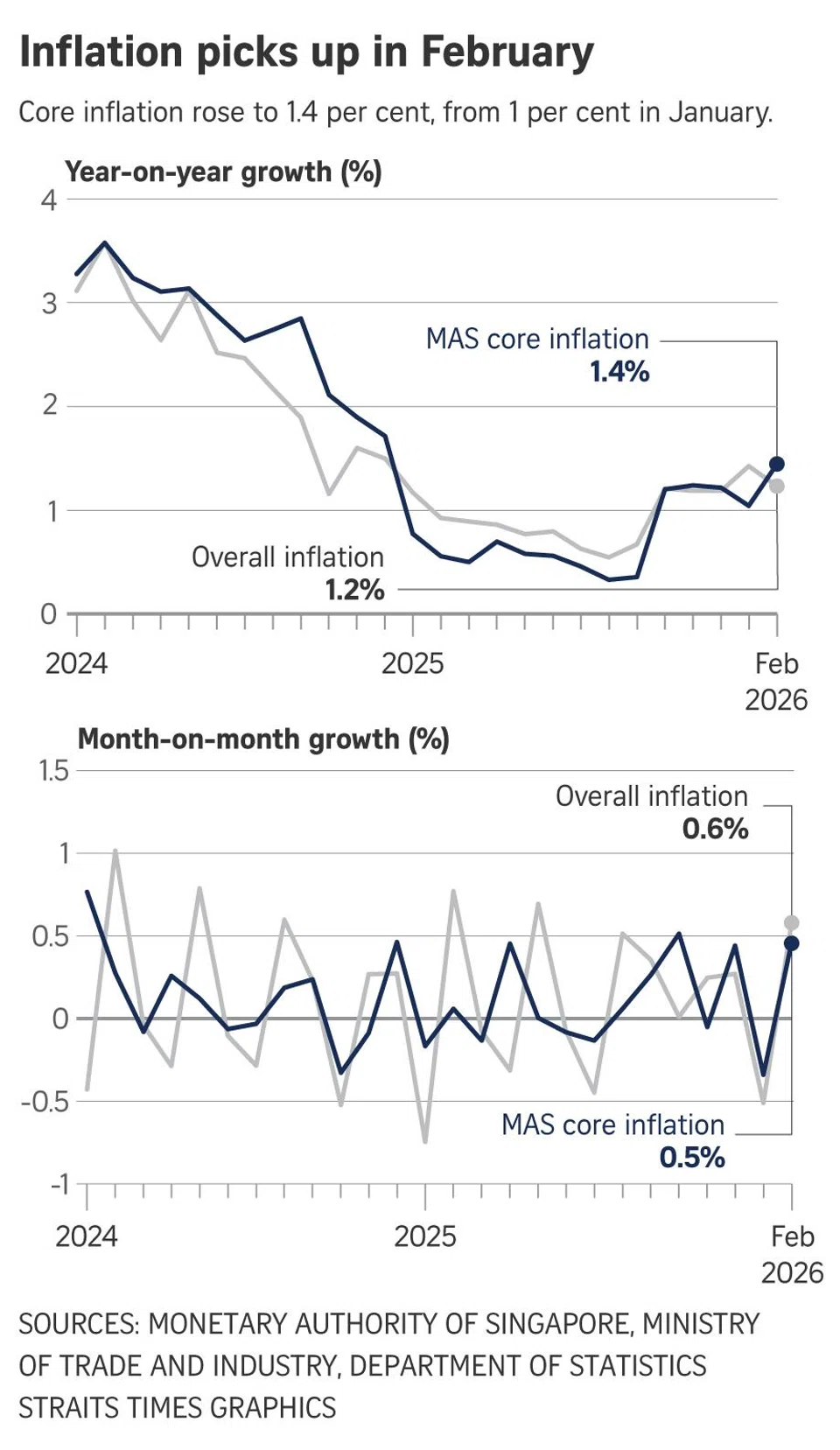
Recent data shows a complex picture, with core inflation rising while overall inflation eased slightly due to lower accommodation and transport costs. However, increases in food, services, and retail prices highlight underlying pressure points.
This mixed trend suggests that while inflation remains contained for now, underlying momentum could strengthen as global conditions evolve.
Singapore’s inflation trajectory is entering a more uncertain phase, with global energy shocks likely to test the resilience of its policy framework and economic stability in the months ahead.
Sources: Straits Times (2026) , The Star (2026)
Keywords: MAS Inflation Forecast, Singapore Energy Prices, Monetary Policy SG, Core Inflation Singapore, Global Oil Impact


