


Satellite tag deployment off Kupang opens new chapter in whale migration research
A team of Indonesian researchers has successfully deployed a satellite tag on a rare pygmy blue whale using a drone, marking a major breakthrough in ethical marine research and cross-border conservation efforts.
Ninth Attempt Brings Success
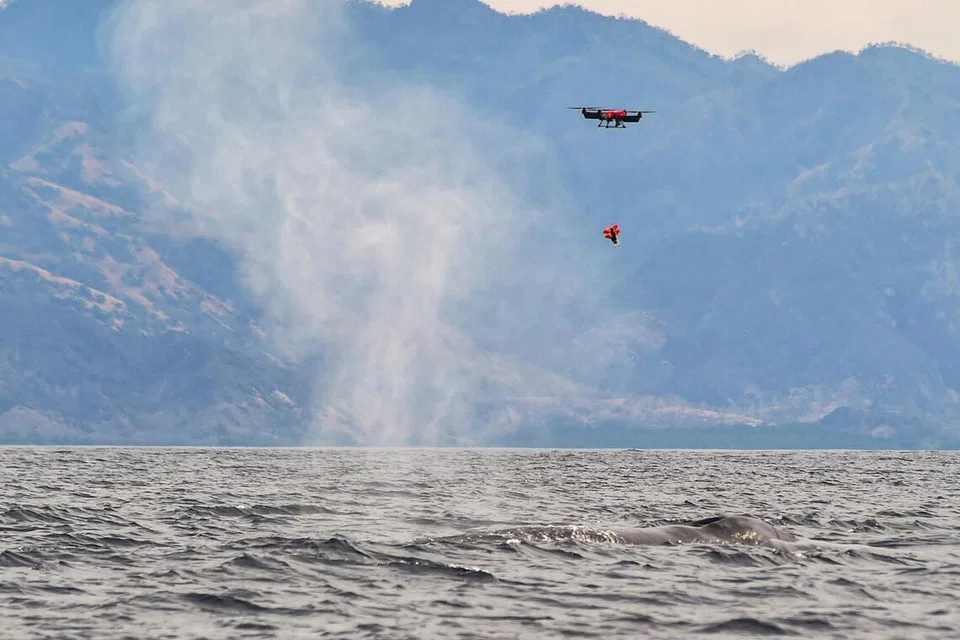
In October 2025, researchers off the waters of Kupang had only seconds to deploy a satellite tag as a pygmy blue whale surfaced before diving again.
On their ninth attempt, a drone successfully attached a low impact minimally percutaneous electronic transmitter (LIMPET) tag onto the whale’s back, prompting cheers from the team observing from about 300 metres away.
The expedition was led by Konservasi Indonesia, in partnership with the Centre for Whale Research in Western Australia, Thrive Conservation and other institutions, with Timor-Leste researchers joining as trainees.

Safer, Less Invasive Method
Previously, LIMPET tags were attached using airgun-based systems that required boats to approach whales closely, posing risks of tissue damage, stress and even collision.
The drone-based method allows scientists to deploy tags from a safer distance while reducing disturbance to the animals. If the attempt fails, the tag can also be recovered more easily, lowering financial losses — each tag costs around US$5,000.
Mr Mochamad Iqbal Herwata of Konservasi Indonesia described the approach as a more ethical and less invasive solution for whale research.
Tracking A 2,000km Journey
After the successful deployment, the whale travelled approximately 2,000 kilometres before the tag stopped transmitting after 10 days.
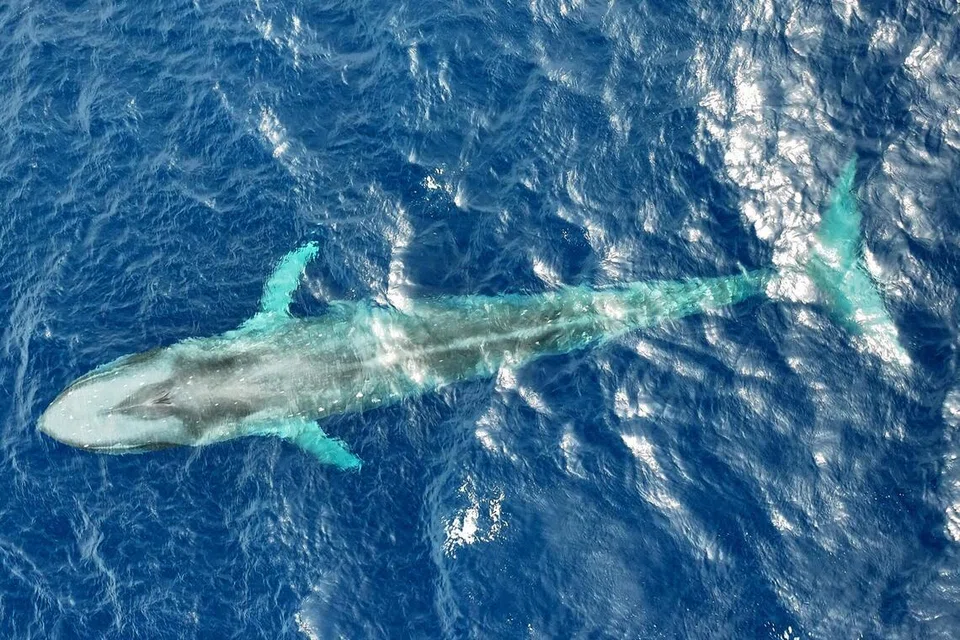
The data provided new insights into how pygmy blue whales move from Indonesia through Timor-Leste and towards Australian waters — a migration pattern that remains among the least documented in the region.
Researchers plan additional tagging missions in the second half of 2026, focusing on areas such as the Ombai Strait, a high-traffic marine corridor where improved monitoring could reduce whale-ship collisions.
Supporting Marine Protected Areas
Understanding whale migration routes is key to identifying critical resting and feeding grounds.
In December 2025, Indonesia established the West Wetar Marine Protected Area (MPA) along part of the whale migration pathway.
By mapping whale movements and seasonal feeding hotspots, scientists can guide the placement of additional MPAs and strengthen long-term conservation planning.
Economic And Community Benefits
Beyond conservation, the research carries economic implications.
Marine protected areas can help rebuild fish stocks by safeguarding nursery habitats. Whales are often indicators of productive waters rich in prey, which also support commercially valuable fisheries.
Improved data can also boost community-based ecotourism in Timor-Leste, Alor and Wetar, offering alternative livelihoods tied to sustainable ocean management.
Ms Patricia Chu of Mana Impact noted that well-managed ecotourism can generate both environmental and economic benefits, provided long-term sustainability is prioritised over short-term gains.
The successful drone-based tagging of a pygmy blue whale represents more than a technical achievement — it signals a shift towards safer, data-driven marine conservation in Southeast Asia. As researchers gather clearer insights into migration corridors across national borders, the findings could shape future marine protected areas, strengthen fisheries management and unlock sustainable economic opportunities for coastal communities.
Sources: Straits Times (2026) , RRI (2026)
Keywords: LIMPET Satellite Tag, Drone Whale Tagging, Kupang Waters, Konservasi Indonesia, Whale Migration Data


