


From retirement to Olympic glory, Alysa Liu’s journey is a testament to self-discovery and the courage to redefine success on her own terms.
Alysa Liu’s gold medal at the 2026 Winter Olympics in Milano Cortina marks a historic comeback after a two-year retirement. Once a teenage prodigy burdened by pressure, she returned on her own terms and delivered a commanding free skate to score 226.79, ending a 24-year Olympic gold drought for American women in figure skating. Supported by her father Arthur Liu, and competing against Japan’s Kaori Sakamoto and Ami Nakai, Liu’s victory represents not only athletic excellence but a cultural shift toward authenticity, mental well-being, and self-defined success in elite sport.
In a performance that fused audacity with artistry, Alysa Liu soared to Olympic gold at the 2026 Winter Olympics in Milan, ending a 24-year drought for American women in figure skating. The medal glinted under arena lights, but its true weight lay elsewhere. This was not simply a podium finish. It was a reclamation.
Her triumph in Milano Cortina was not only a victory for Team USA. It was a manifesto: that stepping away is not surrender, that joy can be rediscovered, and that greatness—when chosen freely—burns brighter.
The Prodigy Who Walked Away
Elite figure skating thrives on precocity. Champions are often minted before adulthood; expectations crystallise early and harden fast. Liu was no exception. At 13, she became the youngest-ever U.S. national champion, an anointed successor in a sport hungry for its next icon. By the time she competed at the Beijing 2022 Olympics—where she finished sixth—and secured a World Championship bronze medal, she had already lived a lifetime in the spotlight. Then, at 16, she did the unthinkable: she retired.
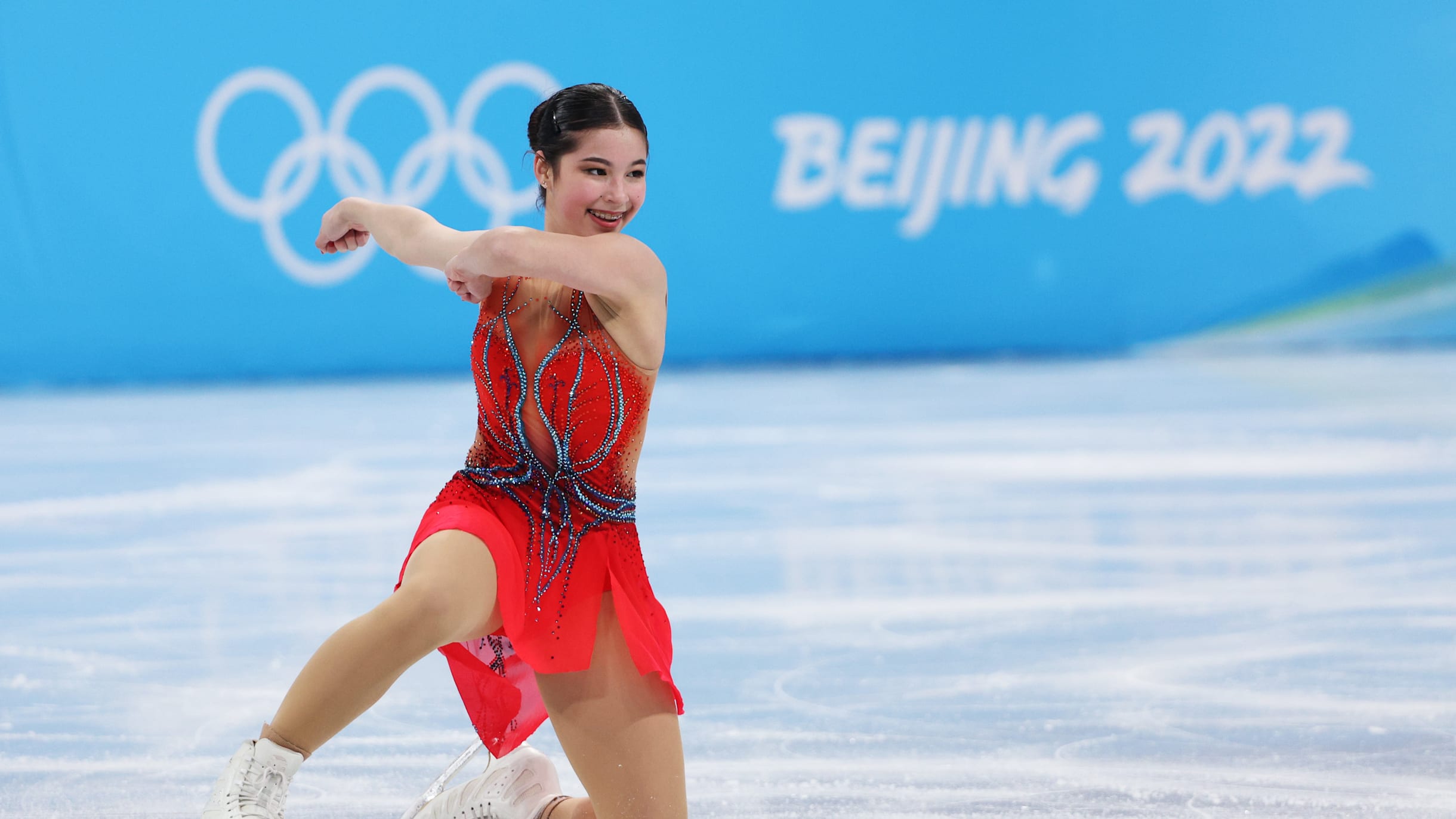
The announcement stunned the skating world. Yet for Liu, it was neither impulsive nor dramatic. It was survival. The joy that had once propelled her jumps had curdled into obligation. The rink, once sanctuary, had become stagecraft under pressure. Walking away was not a rejection of skating. It was a reclamation of self.
The Golden Comeback
Two years later, Liu returned—not as a prodigy, but as a young woman in command of her narrative. Her comeback was not choreographed by expectation. It was chosen. She spoke openly about rediscovering her love for skating, about wanting to create rather than merely execute. That shift was visible long before the medals followed.

At the Milano Cortina Games, she delivered a free skate that felt less like competition and more like declaration. Skating to Donna Summer’s “MacArthur Park Suite” in a glittering gold dress, Liu radiated defiant joy. The jumps were precise, the transitions fluid, the performance expansive. Her total score—226.79—sealed the gold medal.
But numbers tell only part of the story. What captivated judges and audiences alike was the ease. The ownership. The sense that she was skating not to prove something, but to express something. In doing so, she secured the first Olympic gold for an American woman in figure skating since 2002—an achievement that recalibrates the sport’s narrative in the United States.
A Father’s Love, and a Reckoning
Behind Liu’s ascent stands a story as complex as any program layout. Her father, Arthur Liu, is a political refugee who fled China following the 1989 Tiananmen Square protests. A single father of five, he raised Alysa and her four younger siblings—each born via surrogacy—with the help of his mother. It was he who first placed five-year-old Alysa on the ice. He also managed her early career, guiding a trajectory that few parents could have imagined. Yet success brought strain.

In an emotional interview with USA Today, Arthur Liu reflected candidly on the pressures his daughter faced. A coaching change and the decision to have her train away from home, he admitted, contributed to her burnout. “In retrospect, I feel I made a mistake,” he said. “She started to hate skating and stuff until she quit.”
Such candour is rare in elite sport, where parental ambition and sacrifice often go unscrutinised. His willingness to confront regret—and to support his daughter’s return on her own terms—adds depth to the fairy tale. This was not redemption through denial. It was redemption through listening.
The International Stage: Japan’s Enduring Strength
The women’s final at the 2026 Winter Olympics was a showcase of global excellence. Japan’s Kaori Sakamoto, a three-time world champion, delivered a commanding performance to claim silver with 224.90. It marked a fitting coda before her retirement from Olympic competition. Seventeen-year-old Ami Nakai captured bronze with 221.16 in her Olympic debut, signalling the arrival of another formidable force in Japanese skating.

The presence of two Japanese skaters on the podium underscores Japan’s sustained dominance and depth in women’s figure skating. The final was not merely an American resurgence. It was a global summit of technical mastery and artistic innovation—proof that figure skating’s centre of gravity is increasingly international.
A Cultural Shift on Ice
Liu’s gold may signal more than a generational change. It hints at a cultural one. For decades, figure skating has been shaped by narratives of sacrifice: childhoods compressed, identities streamlined, individuality muted in pursuit of perfection. Liu’s journey disrupts that script.

Her distinctive “alt girl” aesthetic—halo hair, lip piercing, unapologetic self-expression—injects authenticity into a sport often perceived as tradition-bound. More significantly, her emphasis on joy over relentless optimisation reframes what success can look like.
This is not a rejection of discipline. It is a rebalancing. Mental well-being, autonomy, and personal fulfilment are no longer peripheral themes; they are central to performance longevity. In an era where athletes speak openly about burnout and boundaries, Liu’s story becomes emblematic of a broader transformation in elite sport.
The Human Element of Triumph
Strip away the sequins and scoring sheets, and Liu’s story remains profoundly human. It is about a teenager who felt overwhelmed. About a family navigating ambition and love. About the courage to pause when the world demands acceleration. And about the rare clarity required to return, not because others expect it, but because one genuinely wants to.
Her gold medal gleams, but its deeper resonance lies in what it represents: self-acceptance, recalibration, and the freedom to redefine excellence.
A Global Inspiration
Alysa Liu’s Olympic gold at the 2026 Winter Olympics transcends national pride. It offers a template for resilience in a world that often confuses endurance with success. For audiences in Southeast Asia—where winter sports remain niche—her journey carries particular weight. It proves that geography need not dictate aspiration, and that authenticity can be as powerful as athleticism. Passion, when chosen rather than imposed, becomes sustainable.
Liu did not merely win gold. She rewrote the script on how to get there. For more in-depth analysis, global sports insights, and stories that illuminate the human drama behind the headlines, visit our homepage and continue the conversation.
Sources:
[1] Alysa Liu caps joyful comeback story with gold medal at Milano Cortina Games
[2] Winter Olympics 2026: USA’s Alysa Liu storms to Olympic title, first American woman to claim gold in 24 years
[3] Alysa Liu’s father shares conflicting emotions after Olympic gold | Exclusive
[4] USA superstar Liu wins women’s skating Olympic gold
[5] The improbable comeback of figure skater Alysa Liu
[6] Alysa Liu, bursting with joy, wins first U.S. Olympic women’s figure skating gold in 24 years
Keywords: Alysa Liu Olympic Gold, Alysa Liu, Winter Olympics, Figure Skating, Olympic Gold, Team USA, Milano Cortina 2026, Comeback Story, American Figure Skater, Arthur Liu, Kaori Sakamoto, Ami Nakai, Olympic Figure Skating Final, Women’s Figure Skating, Athlete Mental Health, Sports Comeback


