



Largest rhino horn seizure exposes global trafficking routes through Singapore and Asia
A foul smell at Changi Airport last November uncovered more than a routine customs violation. It revealed how global wildlife crime networks exploit geography, belief systems, and modern logistics to move endangered species parts across continents.
A Record-Breaking Seizure in Singapore
On Nov 8, Singapore customs officers intercepted 20 rhino horns weighing 35.7kg, alongside 150kg of animal parts including bones, teeth, and claws. Hidden in a shipment of furniture fittings from South Africa, the haul was valued at S$1.13 million and marked Singapore’s largest-ever rhino horn seizure. The cargo was en route to Laos, following a trafficking route that stretches nearly 9,000km across continents.
Why South Africa Remains the Poaching Epicenter
South Africa dominates global rhino horn seizures because it hosts the largest remaining rhino populations. According to WWF South Africa, the country is home to about 12,000 white rhinos and 2,300 black rhinos. Dense populations in areas like Greater Kruger National Park make them easier targets for poachers, despite intensive conservation efforts and patrols.

Inside Mafia-Style Wildlife Syndicates
Experts describe modern rhino poaching as a highly organized, syndicated crime. Typical poaching teams include a shooter, an axeman to remove the horn, and a logistics coordinator. These groups often spend weeks tracking animals while evading patrols using helicopters, night-vision gear, GPS devices, and silenced rifles. The syndicates also engage in human trafficking, arms dealing, and drug smuggling, making wildlife crime part of a broader criminal economy.

Conservation Efforts and Their Limits
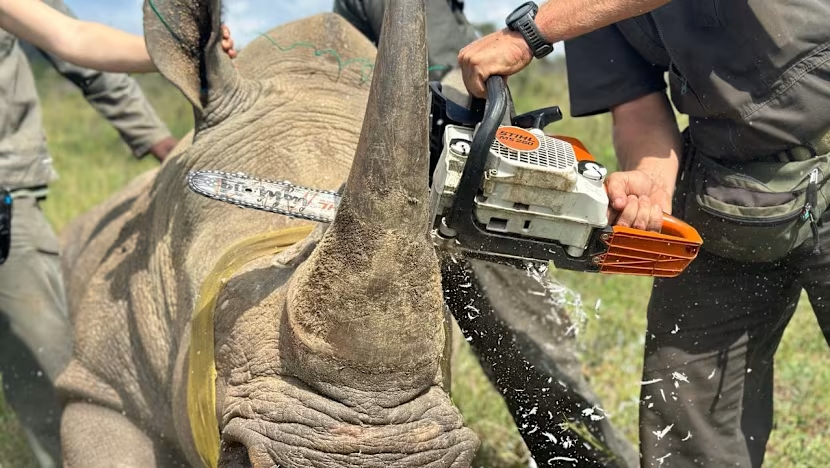
Some measures have shown impact. In Hluhluwe-Imfolozi Park, mass dehorning of rhinos led to an 80 percent reduction in poaching last year, saving an estimated 120 animals. However, the procedure is costly and temporary, as horns regrow and must be removed again every 18 to 24 months. Criminal networks continue adapting faster than protections can scale.
Singapore’s Geography Challenge
Singapore’s role in the trade is driven by connectivity, not intent. With limited direct flights from Southern Africa to Asia, traffickers route shipments through global transit hubs like Singapore, Hong Kong, and Dubai. Wildlife groups such as ACRES note that Singapore’s position along major air and sea routes makes it vulnerable to exploitation by smugglers moving illicit cargo through its transit channels.


A Multi-Layered Defense at the Border
Singapore has adopted a zero-tolerance stance on wildlife trafficking. NParks deploys specially trained sniffer dogs capable of detecting wildlife products that are undetectable by scanners. Under the Endangered Species Act, trafficking Appendix I-listed species without permits can lead to fines of up to S$200,000 per specimen and jail terms of up to eight years. Authorities also work closely with INTERPOL and use DNA forensics to trace trafficking patterns and origins.

Demand That Continues the Killing
Despite global bans under CITES, demand persists due to unfounded beliefs that rhino horn has medicinal properties and its continued use as a luxury status symbol. Experts warn that the distance between consumers and poaching sites creates moral detachment, allowing the trade to continue. As ACRES leaders emphasize, as long as horns are valued more than living animals, the killing will continue.

The rhino horn trade highlights how transnational crime thrives on weak links between continents, cultures, and enforcement systems. Singapore’s record seizure underscores both the scale of the problem and the importance of vigilant border controls. For Indonesia, Singapore, and the wider region, combating wildlife trafficking requires sustained cooperation, public awareness, and a clear rejection of myths that turn endangered species into commodities.
Sources: Channel News Asia (2025)
Keywords: Rhino Horn Smuggling, Wildlife Crime Networks, Singapore Transit Hub, CITES Enforcement, Illegal Wildlife Trade


