


Sixteen like-minded economies unite to reinforce open, fair and resilient global trade systems.
Malaysia and Paraguay have officially joined the Future of Investment and Trade (FIT) Partnership, marking a major expansion for the coalition of small and medium-sized economies working to safeguard and modernise the global trading system.
Strengthening the Rules-Based Trading System
At the inaugural FIT Partnership ministerial meeting held on Nov 18 at Singapore’s Shangri-La Hotel, Deputy Prime Minister Gan Kim Yong welcomed Malaysia and Paraguay as the coalition expanded to 16 members. Originally launched on Sep 16, 2025, the FIT Partnership unites small and medium-sized, trade-dependent economies committed to maintaining a predictable and open global trading environment.
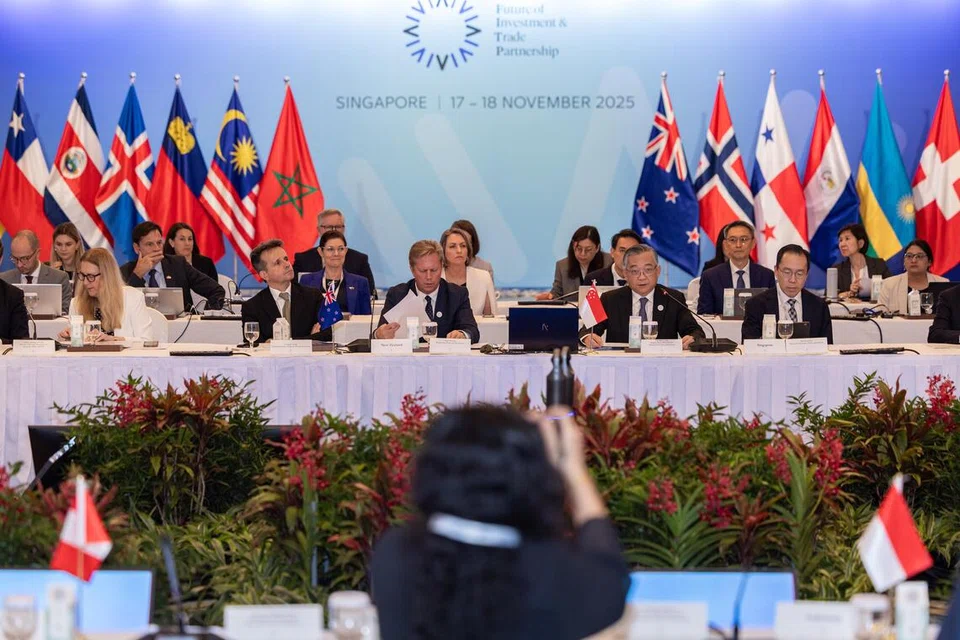
Mr Gan emphasised that the group aims not to replace the World Trade Organization (WTO) but to complement and reinforce its work, especially at a time when the multilateral trading system faces pressure from rising protectionism.
Flexible Geometry Approach Gains Traction
The coalition includes co-convenors Singapore, New Zealand, Switzerland and the United Arab Emirates, alongside founding members such as Chile, Norway, Iceland, Costa Rica and Brunei. Its defining feature—“flexible geometry”—allows countries ready to progress on specific initiatives to advance first, while keeping the door open for others to join later.

This approach enables the partnership to innovate quickly, pilot new policy ideas, and maintain an agile structure suited to fast-changing global conditions. Not all members are required to sign every initiative, allowing diverse national interests to coexist within the coalition.
Supply Chain Resilience Takes Centre Stage
A key outcome of the ministerial meeting was the adoption of the Supply Chain Resilience Declaration, endorsed by 13 members including Singapore, Malaysia, New Zealand, Norway, Switzerland and the UAE. The declaration outlines commitments to improve coordination and ensure uninterrupted flow of essential goods during crises.
Under the agreement, members will:
- Exchange information on emerging risks
- Facilitate trade during emergencies
- Refrain from imposing export restrictions, tariffs or non-tariff barriers
- Nominate national contact points for rapid communication
Switzerland’s Helene Budliger Artieda highlighted that these measures will help countries respond swiftly to disruptions similar to those experienced during the COVID-19 pandemic.
New Workstreams to Drive Future-Oriented Trade
The ministers also announced three new workstreams focused on:
- Advancing digital and paperless trade
- Strengthening the rules-based trading system
- Leveraging technology such as AI, blockchain and IoT to secure and streamline global trade

These efforts reflect Singapore’s push to modernise global trade architecture, particularly through technology-driven efficiencies and transparent supply networks.
Not a Reaction to US Tariffs
Both Mr Gan and Malaysia’s Deputy Minister Liew Chin Tong clarified that the FIT Partnership is not a countermeasure against US tariff actions. Discussions began two years earlier, before President Donald Trump returned to office in 2025. Instead, the grouping aims to help smaller economies increase resilience, reduce vulnerabilities and navigate future crises collectively.
Growing Interest but Measured Expansion
While several countries—including Australia, Canada, Indonesia, Peru, the Philippines and Thailand—attended as observers, members have agreed to temporarily defer admitting new countries to focus on developing ongoing initiatives. Mr Gan noted that the coalition seeks to remain relatively small, prioritising economies that are heavily trade dependent.
The expansion of the FIT Partnership signals growing momentum among small and medium-sized economies seeking stability amid global uncertainty. For Singaporeans and Malaysians—whose economies rely deeply on open trade—stronger supply chain cooperation, digital trade advancements and enhanced multilateralism offer long-term benefits for economic security, investment flows and job creation across the region.
Sources: CNA (2025) , Straits Times (2025)
Keywords: FIT Partnership, Open Trade, Supply Chain Resilience, Global Economy, Singapore Trade, WTO Members


