


New law imposes up to S$2,000 fine and jail time for violators starting 1 July 2025
From 1 July 2025, stricter regulations will apply to all cyclists and personal mobility device (PMD) users in Singapore, as pedestrian-only footpaths become off-limits. The move aims to protect vulnerable pedestrians and maintain safer shared spaces in town centers.
Stricter Rules on Footpath Use Begin
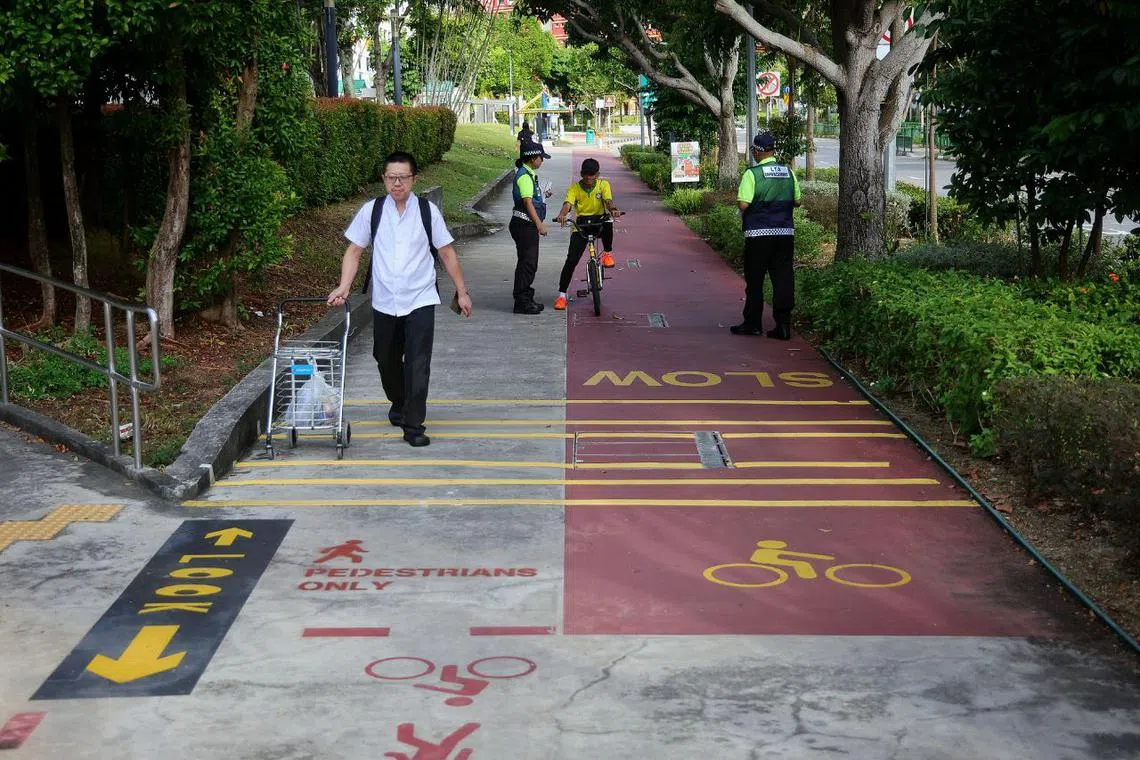
As of 1 July 2025, it is illegal for cyclists and PMD users—including non-motorised ones like kick scooters—to ride on pedestrian-only footpaths in Singapore. These paths, marked with clear “Pedestrians Only” signage and grey coloring, are strictly reserved for walkers and users of personal mobility aids (PMAs) such as electric wheelchairs.
First-time offenders may face fines of up to S$2,000, three months’ jail, or both, under the new regulations set by the Land Transport Authority (LTA). Enforcement officers have been instructed to use discretion but will not hesitate to act against blatant rule-breakers.
Protecting Pedestrians in Busy Towns
This regulation follows a major initiative launched in August 2024, which involved converting more than 200km of footpaths adjacent to cycling lanes into pedestrian-only zones across towns like Tampines, Punggol, Sengkang, Yishun, and Clementi. Toa Payoh was the first to roll out this system in January 2025.
The segregation is part of broader efforts to reduce accidents and promote orderly sharing of public spaces. In 2024, 104 path-related accidents were recorded—down significantly from 303 incidents in 2019, according to The Straits Times.
Public Education and Marking Campaigns

To support the law, LTA has launched the Stay on Track campaign to educate the public about safe path usage. Minister of State for Transport Baey Yam Keng noted that markings have been progressively added across neighborhoods to clearly distinguish pedestrian-only zones from cycling paths, which are colored red.
Baey emphasized that enforcement is a last resort. “We want to enforce the law because it’s there for good reasons — it’s for the safety of all users,” he said. LTA officers are now equipped with body cameras and have CCTV access to monitor compliance.
Speed Limit Changes Coming in 2026
In a further effort to enhance safety, speed limits for PMAs—currently 10km/h—will be reduced to 6km/h by early 2026, aligning with brisk walking speed. This ensures pedestrian-only paths remain safe for slower and more vulnerable users.
While pedestrians may still walk on cycling paths, LTA advises them to use pedestrian-only lanes where possible. Likewise, cyclists and PMD riders on red cycling paths are reminded to stay alert and yield to pedestrians.
Toward Safer Shared Spaces
This regulation reflects Singapore’s commitment to building a safer and more walkable cityscape. It balances the needs of various users—pedestrians, cyclists, and mobility device users—by clearly defining zones and promoting respectful usage.
By empowering both education and enforcement, the government aims to create a culture of gracious path-sharing. Where space limits separate lanes, all users are encouraged to act with caution and care.
As more Southeast Asian cities explore active mobility solutions, Singapore’s model of strict yet balanced enforcement provides a potential template. With reduced accidents, clear zoning, and a people-first approach, the city continues to prioritize safety in shared urban spaces—an example that resonates with both Indonesians and Singaporeans navigating dense urban life.
Sources: The Online Citizen (2025) , Asia One (2025)
Keywords: Cyclist Ban, PMD Law Singapore, Pedestrian-Only Path, LTA Regulation, Footpath Fine, Path Safety


