Electronics and non-electronics drive unexpected export surge as exporters front-load amid global uncertainty
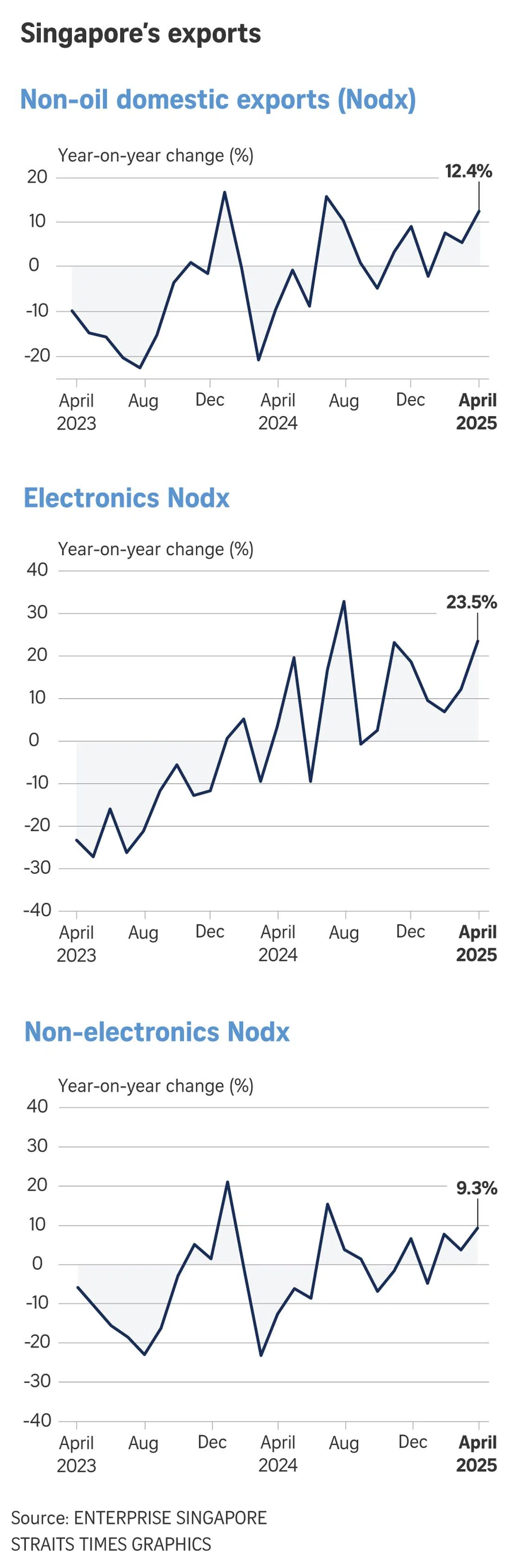
Singapore’s non-oil domestic exports (NODX) surged by 12.4% year-on-year in April 2025, far exceeding market expectations. The increase, driven by strong demand for electronics and machinery, comes amid a temporary easing in US-China trade tensions and signals a short-term lift for Singapore’s trade-reliant economy.
According to Enterprise Singapore, April’s 12.4% growth in NODX marks the strongest expansion since July 2023 and nearly triples analyst forecasts of 4.3%. The electronics segment was a standout performer, soaring 23.5% year-on-year—almost double March’s 12.2% growth—fueled by shipments of personal computers, integrated circuits, and disk media.
Non-electronic exports also rose a healthy 9.3%, compared to March’s 3.7%. Notable contributors included non-monetary gold, up 80.4%, and machinery such as ship structures and measuring instruments.
Export Markets: Indonesia Up, China Down
Among Singapore’s top 10 markets, exports to all but two—China and Malaysia—posted year-on-year growth. NODX to China fell 17% in April, a slower decline than March’s 29.5% plunge. Exports to Malaysia slipped by 1% after a 12.4% gain the month prior.
In contrast, Indonesia became April’s fastest-growing destination, with a 111.2% jump, up from 62.9% in March, driven by gold, PCs, and maritime goods. Shipments to Taiwan rose 47.4%, and exports to South Korea climbed 38.1%, both led by demand for integrated chips and specialised machinery.
Tariff Reprieve Spurs Front-Loading
Economists credit the export spike in part to the temporary easing of reciprocal tariffs between the US and China. In early April, US President Donald Trump suspended new levies for 90 days and exempted electronics, creating a short window for global exporters to front-load shipments.
“The current relief window may allow exporters to push out more orders before the next policy shift,” said Selena Ling, Chief Economist at OCBC Bank. DBS economist Chua Han Teng echoed the view, noting exporters are racing to benefit from the tariff pause while uncertainty remains.
Risks Linger Despite Boost
While the short-term boost is welcomed, economists warn the global trade environment remains fragile. OCBC’s Ling noted signs of softening in US-bound NODX, particularly in non-electronic sectors. Maybank Research’s Chua Hak Bin emphasized that pending sectoral tariffs—especially on semiconductors and pharmaceuticals—could dampen Singapore’s export outlook later in 2025.
Singapore’s government has already prepared for volatility, establishing an Economic Resilience Task Force and revising the nation’s GDP growth forecast to 0%–2%, down from 1%–3% previously.
Enterprise Singapore noted it is closely monitoring the evolving tariff landscape and hinted at possible revisions to its 2025 NODX forecast. While month-on-month seasonally adjusted data was not disclosed, officials acknowledged the trade rebound may be temporary unless structural trade relations improve.
With exports playing a vital role in Singapore’s economy—where international trade exceeds GDP—resilience and strategic adaptation remain critical.
Singapore’s export rebound in April offers a brief but encouraging sign amid turbulent trade dynamics. As regional economies like Indonesia benefit from increased trade flows, Singapore’s strong export infrastructure and policy agility provide a model for adapting to shifting global tides. The challenge ahead lies in sustaining momentum beyond the current tariff reprieve.
Sources: CNA (2025), The Straits Times (2025)
Keywords: Singapore Exports, NODX April 2025, Electronics Growth, US-China Trade, Tariff Suspension, Global Trade Outlook