


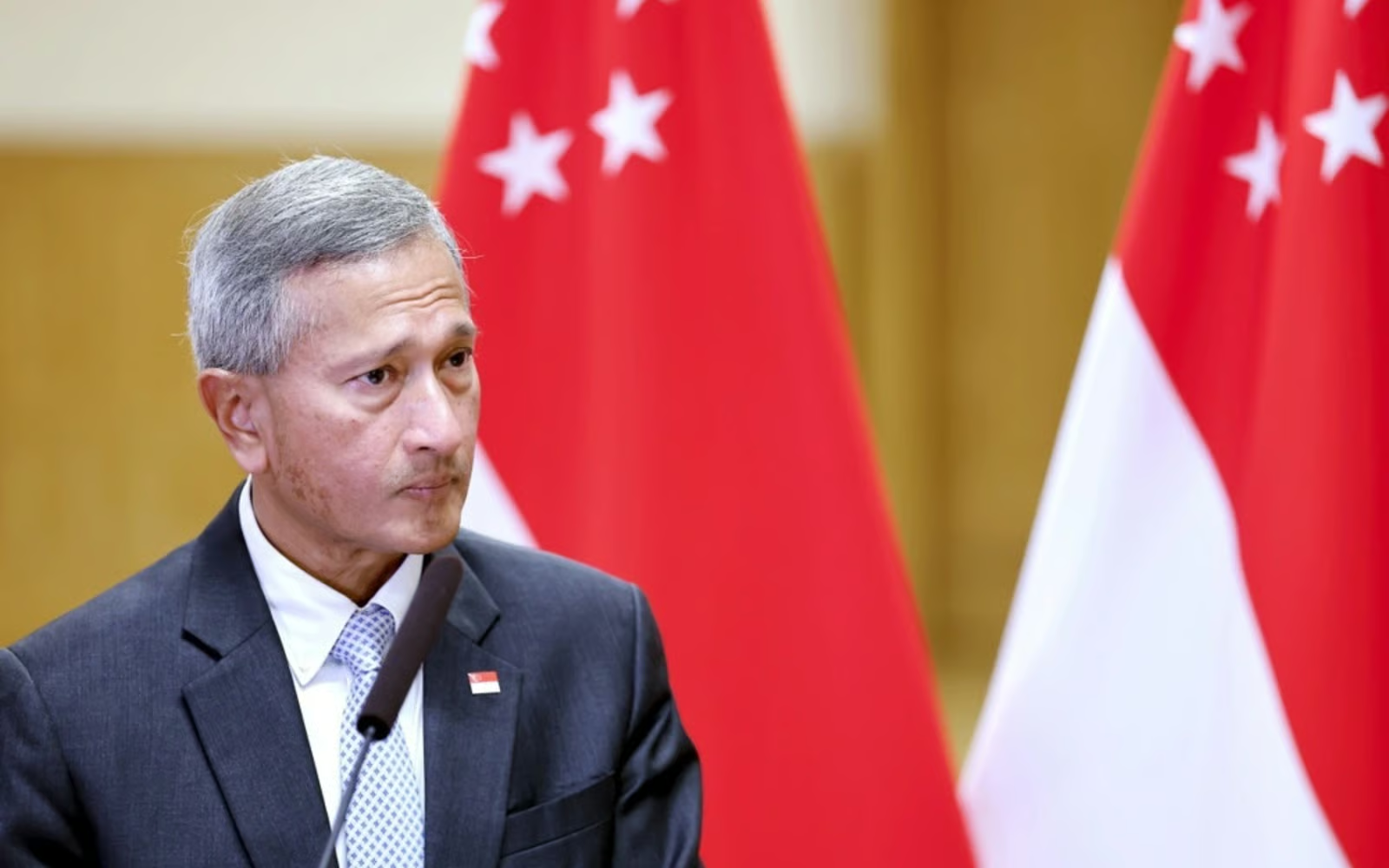

Vivian Balakrishnan calls for open trade routes and stronger global cooperation amid uncertainty
As global trade faces increasing fragmentation, Singapore is pushing for stronger international cooperation to safeguard economic stability.
Call for Stronger Multilateral Cooperation
Singapore is urging the European Union and ASEAN to deepen cooperation as globalisation faces mounting pressure. Speaking at a business forum, Foreign Minister Vivian Balakrishnan emphasized that both regions must “double down” on multilateralism, rule of law, and open trade.
He noted that rising geopolitical tensions and protectionist policies are weakening global trade systems, making collaboration between like-minded economies more critical than ever.
Push for Broader Trade Agreements
Singapore is advocating for the acceleration of a comprehensive EU-ASEAN free trade agreement, building on existing bilateral deals between the EU and countries such as Singapore, Vietnam, and Indonesia.
Beyond this, the city-state is also exploring broader partnerships between the EU and trade blocs like the Comprehensive and Progressive Agreement for Trans-Pacific Partnership. These efforts aim to strengthen economic integration across regions.
Maintaining Singapore’s Strategic Position
Amid global uncertainty, Singapore is focused on preserving its reputation as a trusted and reliable business hub. Officials stressed that the country will avoid reactionary measures such as trade restrictions or supply hoarding.
Instead, Singapore aims to emerge from the current crisis with stronger credibility, positioning itself as a key gateway for businesses looking to access Southeast Asia and beyond.
Straits of Malacca Must Remain Open
A critical part of Singapore’s strategy involves safeguarding key global trade routes. Balakrishnan reaffirmed that passage through the Straits of Malacca must remain free and unrestricted.
Singapore, along with Malaysia and Indonesia, has aligned its position to ensure that no attempts are made to close, control, or impose tolls on the vital maritime corridor. The strait is one of the world’s most important chokepoints for energy and goods moving between the Indian and Pacific oceans.
Geopolitical Risks and Global Supply Chains
The importance of keeping trade routes open has been underscored by rising tensions in the Middle East and broader geopolitical rivalries. Disruptions in key regions have already affected energy supplies and shipping patterns, highlighting vulnerabilities in global supply chains.
Balakrishnan warned that escalating conflicts between major powers could have far-reaching consequences, potentially impacting critical routes like the Straits of Malacca.
ASEAN’s Long-Term Potential
Despite current challenges, Singapore sees strong long-term potential in Southeast Asia. The region’s young population, growing infrastructure investments, and expanding energy capabilities position it as a future economic powerhouse.
Officials highlighted opportunities in renewable energy, artificial intelligence, and biotechnology as key drivers of growth in the coming decades.
Balancing Globalisation and Domestic Pressures
Balakrishnan also acknowledged that globalisation is facing backlash in some regions, partly due to political challenges and concerns over job losses. He stressed the need for governments and businesses to better communicate the benefits of free trade to the public.
Stronger policies, innovation, and competitive business environments will be essential to sustaining global economic integration.
Singapore’s stance reflects a broader effort to preserve open trade in an increasingly fragmented world. For Indonesians, particularly given the strategic importance of nearby shipping routes, maintaining free passage is vital for regional stability. For Singapore and its partners, the challenge lies in reinforcing trust, cooperation, and resilience in the global trading system.
Sources: CNA (2026) , Free Malaysia Today (2026)
Keywords: Global Trade Tensions, ASEAN EU Partnership, Vivian Balakrishnan, Free Trade Routes, Multilateralism


