


More Singaporeans fall into deep debt after falling for scams as Southeast Asia targets syndicates.
While Singapore saw record-breaking scam losses of S$1.1 billion in 2024, an alarming trend is emerging — many victims not only lose their life savings but also spiral into crippling debt as they struggle to recover financially.
Credit Counselling Singapore (CCS) has reported a sharp rise in scam victims seeking help for debts, with over 200 cases logged since 2023. In the first quarter of 2025 alone, 33 new scam-related debt cases were recorded, projecting a 23% increase by the end of the year compared to 2024. Victims often fall prey to investment scams where they are lured to invest repeatedly, thinking they can eventually reclaim their capital and profits.
Personal Accounts Reveal the Scale of Devastation
For 40-year-old delivery driver Ali (not his real name), a Facebook acquaintance spiraled into a nightmare. Wooed with romantic promises, he pumped over S$25,000 — his life savings and borrowed money — into a fake marketing scheme tied to a luxury fashion brand. After emptying his savings, taking loans from colleagues, cash advances from banks, and licensed moneylenders, Ali now faces a monthly struggle on his S$2,500 income, with little hope of easily clearing his ballooning debt.
Similarly, another expatriate, Mr. V.J., found himself shackled to a staggering S$650,000 debt after falling for an investment scam. Despite selling property and slashing his living expenses to survive, he said: “There were three months when I was skipping meals because I didn’t have money.”
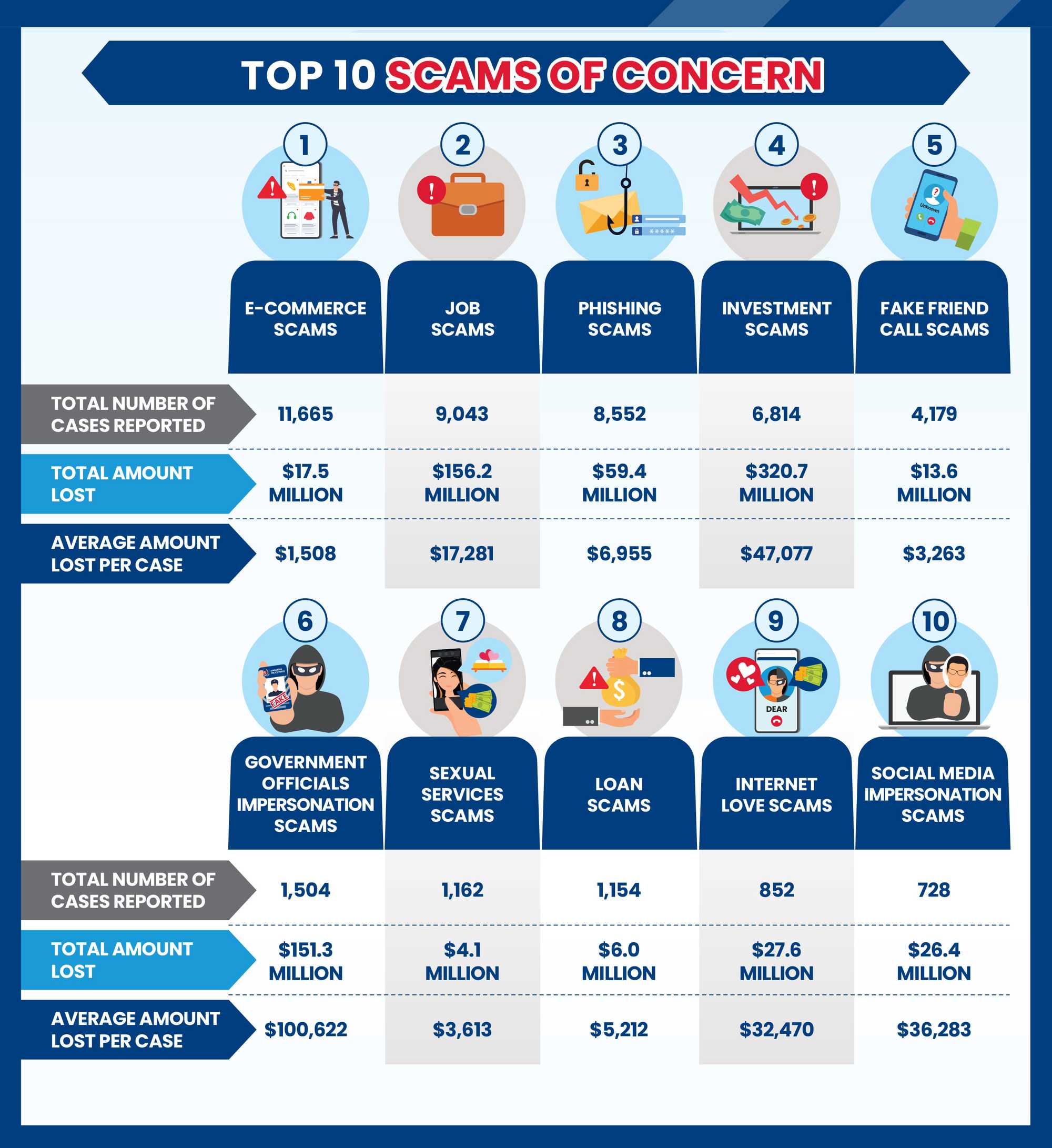
Both CCS and AMP Singapore’s Debt Advisory Centre (DAC) are seeing a surge in scam-linked cases. DAC reported that scam-related cases have tripled from 5% in 2023 to 15% in 2024. These organizations provide counseling, help negotiate debt repayment plans, and guide victims through legal options, such as police reporting and bankruptcy filing when necessary. CCS’ Tan Huey Min stressed: “Borrowing more money only grows the problem.”
Scam Centers: A Broader Southeast Asian Threat
Meanwhile, the crisis of scams is not isolated to Singapore. Southeast Asian countries, including Indonesia, Thailand, and the Philippines, are intensifying their crackdown on large scam syndicates, particularly those operating from Myanmar’s lawless border zones like Myawaddy. These centers, often run by Chinese-linked criminal networks, engage in human trafficking, online fraud, and financial scams, further destabilizing the region.
Efforts have intensified in recent months. Thailand cut off fuel and electricity to scam hubs in Myanmar in February 2025. Indonesian and Philippine authorities collaborated to arrest a fugitive former mayor tied to massive scam compounds. In Singapore, the Anti-Scam Centre, partnering with major banks, thwarted over S$58 million in potential scam losses in early 2025 through automated customer protection alerts.
Financial Institutions Adjust Responses Amid Scam Surge
Singapore’s Financial Industry Disputes Resolution Centre (Fidrec) has also seen scam-related disputes jump sharply from 325 in 2022 to 879 cases in 2024. Many victims requested banks to waive debts or arrange easier repayment plans, with mediation success rates rising from 27% to 67% in the past two years. Nonetheless, cases where victims voluntarily authorized loans or were negligent often faced dismissal during adjudication.
With scam syndicates becoming more sophisticated and aggressive, experts emphasize that early help-seeking is critical. Victims burdened by debt must prioritize reaching out to organizations like CCS or DAC, rather than falling deeper into financial despair. “The earlier victims seek help, the better the chances of finding sustainable solutions,” said Ms. Tan.
As Singapore strengthens its anti-scam initiatives and Southeast Asia cracks down on cross-border fraud rings, public vigilance and stronger institutional support remain vital. The rising number of scam-induced debt cases serves as a stark reminder that scams today are not just about lost savings but also about a devastating loss of financial security and emotional stability.
Sources: The Straits Times (2025), ABC News (2025)
Keywords: Singapore Scams, Financial Debt, Scam Victims, Southeast Asia Crackdown, Anti-Scam Efforts


