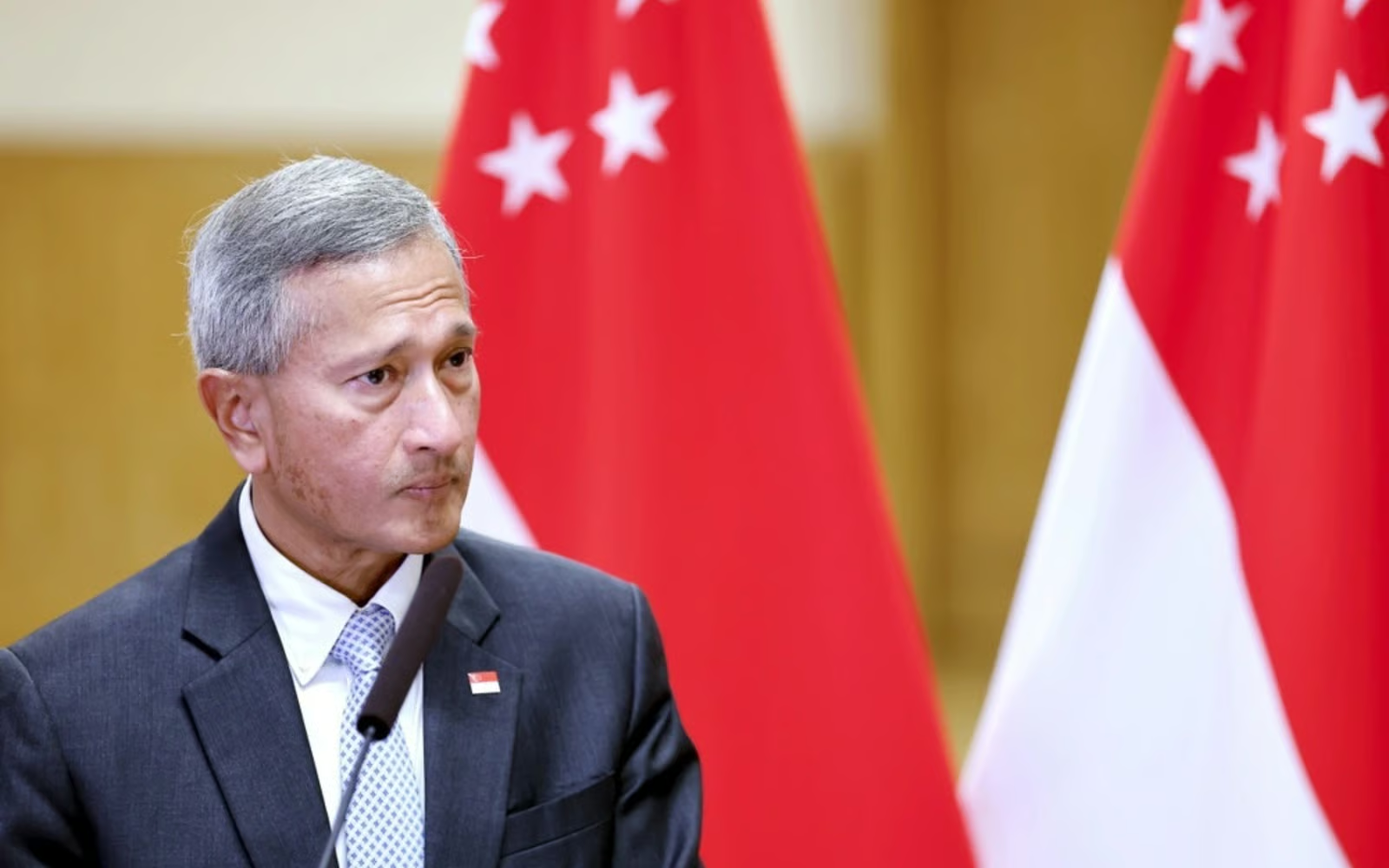
Major restructuring in BP Batam sees the appointment of seven deputies, aiming to enhance investment and economic growth.
The Batam Free Trade and Free Port Zone Council (DK Batam) has announced a major leadership overhaul in BP Batam, appointing seven new deputies for a five-year term. The restructuring, which was formally approved this week, aims to strengthen Batam’s economic governance and investment climate. The newly appointed deputies are expected to play a pivotal role in advancing Batam’s transformation into a key regional investment hub.
Batam, a strategic industrial and trade hub in Indonesia, has long been regarded as a key economic corridor competing with Singapore and Malaysia. The leadership restructuring within BP Batam is part of a broader effort to streamline governance, enhance efficiency, and attract global investors.
New Deputies and Their Roles
The newly appointed deputies were officially announced on March 13, 2025, during an event led by Coordinating Minister for Economic Affairs, Airlangga Hartarto, who also chairs DK Batam. The new deputies and their respective roles are:
- Alexander Zulkarnain – Deputy for Administration and Finance

- Sudirman Saad – Deputy for Strategic Policy and Licensing

- Syarlin Joyo – Deputy for Land, Coastal, and Reclamation Management

- Fary Djemy Francis – Deputy for Investment and Business Development

- Ruslan Aspan – Deputy for Airport, Port, and Logistics Management

- Ariastuty Sirait – Deputy for Public Services

- Mouris Limanto – Deputy for Infrastructure

Minister Airlangga emphasized that the expansion of the deputy structure from four to seven positions reflects the government’s commitment to strengthening Batam’s growth and ensuring efficient administration.
Government’s Vision for Batam’s Transformation
In his address, Airlangga Hartarto underscored the strategic importance of Batam in Indonesia’s economic framework, highlighting its potential to surpass Singapore and Malaysia in investment appeal. He stated:
“With the leadership of BP Batam’s new Head, Amsakar Achmad, and Deputy Head, Li Claudia Chandra, alongside the newly appointed deputies, I am confident Batam can transform into a leading regional economic hub.”
The restructuring aims to enhance investment policies, improve public services, and facilitate major infrastructure developments, including port expansions, digital transformation, and regulatory enhancements.
Acknowledgment of Outgoing Leadership

As part of the restructuring, Wan Darussalam and other former deputies have officially ended their terms. Airlangga expressed gratitude for their dedication and contributions over the years, stating:
“We appreciate the hard work and commitment of the previous BP Batam leadership team, and we hope they will continue contributing to Indonesia’s development in other capacities.”
Implications for Investment and Economic Growth
The restructuring comes as Batam continues to attract foreign investment, particularly in manufacturing, logistics, and technology sectors. The government hopes that with stronger governance and streamlined decision-making, BP Batam can:
- Accelerate infrastructure projects, including the expansion of Batam’s ports and airport
- Enhance regulatory frameworks to attract foreign direct investment (FDI)
- Improve business services for local and international investors
- Strengthen Batam’s position as a competitive alternative to Singapore
With its geographic advantage and economic incentives, Batam has long been a preferred location for multinational companies, particularly those in electronics, shipping, and industrial manufacturing. The leadership overhaul is expected to strengthen investor confidence and boost economic activity in the region.
With Batam positioned as a key economic competitor to Singapore, these changes signal a more aggressive push towards investment and trade liberalization. The leadership shake-up aims to solidify Batam’s role as a strategic hub, improving infrastructure, policy clarity, and business-friendly regulations.
For international investors, these developments present new opportunities in trade, logistics, and industrial growth, particularly in manufacturing, technology, and renewable energy sectors. As Batam undergoes its transformation, it will likely intensify its economic links with Singapore and Malaysia, fostering greater regional connectivity and investment flow.
Sources: Media Indonesia (2025), BP Batam (2025)
Keywords: BP Batam Restructuring, Batam Investment Hub, Indonesia Free Trade Zone, Economic Growth Batam, Regional Business Development