Explore the rise and fall of O.K. Lim, founder of Hin Leong Trading, and the lessons learned from one of Singapore’s most significant corporate fraud cases.
The recent sentencing of Lim Oon Kuin, commonly known as O.K. Lim, to 17.5 years in prison marks a pivotal moment in Singapore’s corporate history. As the founder of Hin Leong Trading, once a titan in the oil trading industry, Lim’s downfall serves as a stark reminder of the perils of unchecked ambition and the critical importance of corporate governance.

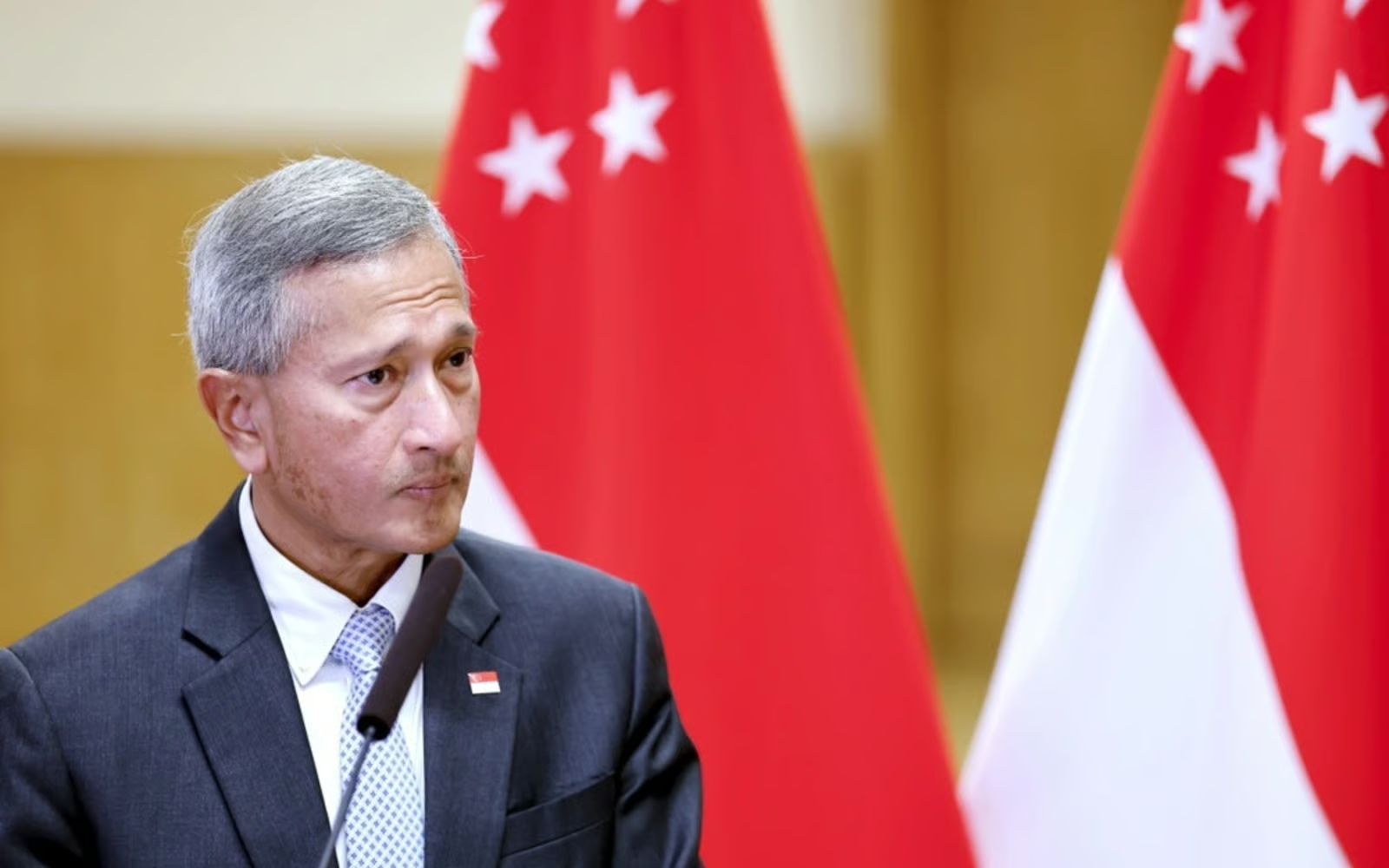
Photo: The Business Times
Established in 1963, Hin Leong Trading rapidly ascended to become one of Singapore’s largest independent oil traders. Lim’s entrepreneurial spirit and strategic acumen were instrumental in this rise. However, beneath the veneer of success, a web of deceit would eventually unravel.

In March 2020, as the global economy grappled with the COVID-19 pandemic, Hin Leong’s financial stability came under scrutiny. It was revealed that the company had concealed approximately $800 million in losses over several years. Lim admitted to directing the company to falsify accounts to secure financing from banks, leading to a debt of about $3.85 billion owed to 23 lenders, including a significant exposure of $600 million to HSBC.
The gravity of Lim’s actions cannot be overstated. By orchestrating fraudulent activities, he not only jeopardized the livelihoods of his employees but also undermined the trust of financial institutions and stakeholders. The repercussions extended beyond Hin Leong, casting a shadow over Singapore’s reputation as a global financial hub.

In November 2024, the Singaporean courts delivered their verdict, sentencing Lim to 17.5 years in prison for cheating and forgery. Prosecutors described the case as “one of the most serious cases of trade financing fraud that have ever been prosecuted in Singapore.” This sentence underscores the judiciary’s commitment to upholding the integrity of the financial system and serves as a deterrent to potential wrongdoers.
Lim’s case also highlights the critical role of corporate governance. The lack of oversight and internal controls at Hin Leong allowed fraudulent activities to persist unchecked. This underscores the necessity for robust governance frameworks and ethical leadership in safeguarding the interests of all stakeholders.
Furthermore, the scandal has prompted financial institutions to reassess their risk management practices. The significant losses incurred by banks due to Hin Leong’s collapse have led to more stringent due diligence processes and a reevaluation of lending practices within the commodity trading sector.
In conclusion, the downfall of O.K. Lim and Hin Leong Trading serves as a cautionary tale of how ethical lapses and governance failures can lead to catastrophic outcomes. It is imperative for corporate leaders to prioritize transparency, accountability, and integrity to maintain trust and ensure sustainable success.
Sources:
[1] The Straits Times
[2] CNA
[3] Reuters