


Ageing population accelerates as government weighs immigration and family support
Singapore’s birth rate has plunged to its lowest level in history, intensifying debate over immigration, workforce sustainability, and the nation’s long-term survival.
Record-Low Birth Rate
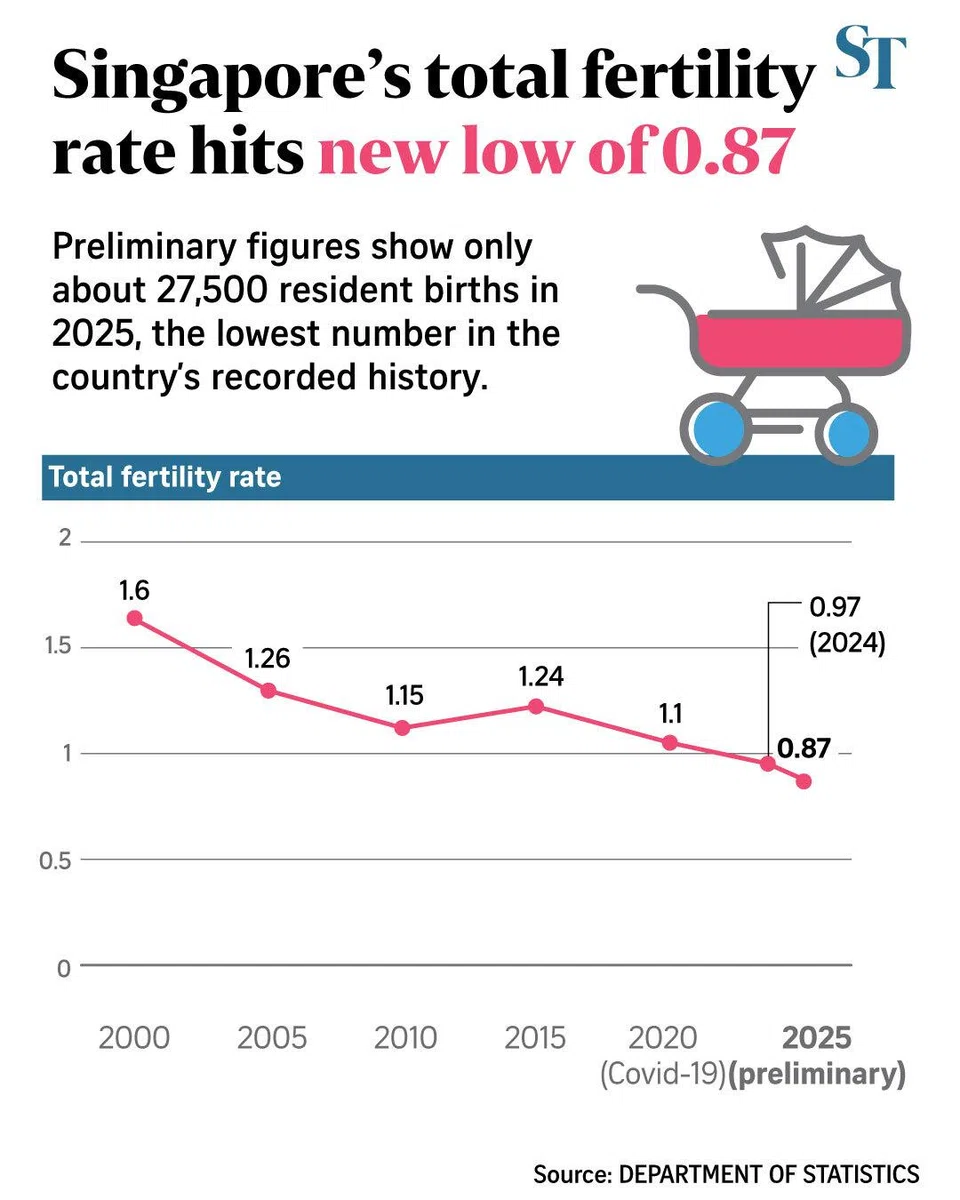
Singapore’s resident total fertility rate fell to 0.87 in 2025, down from 0.97 in 2024 and 1.24 in 2015. Preliminary figures show about 27,500 resident births in 2025, an 11 percent drop from 30,808 births in 2024. This marks the lowest number of resident births in Singapore’s recorded history.
Deputy Prime Minister Gan Kim Yong warned during the Prime Minister’s Office budget debate on Feb 26 that if the TFR remains at 0.87, every 100 residents today would translate to just 44 children and 19 grandchildren in the next generation. He cautioned that the citizen population could begin shrinking by the early 2040s without new interventions.
Aging at Unprecedented Speed
Singapore’s population is aging faster than ever. In 2025, one in five citizens was aged 65 and above, compared with one in eight in 2015. Even with immigration, citizen population growth slowed to 0.7 percent in 2025.
Gan stressed that low birth rates combined with rapid aging will reshape the economy, weaken family support networks, and strain national security. He posed a stark question about whether Singapore can remain vibrant and relevant over the next 50 to 100 years if current trends persist.
Immigration as a Balancing Tool
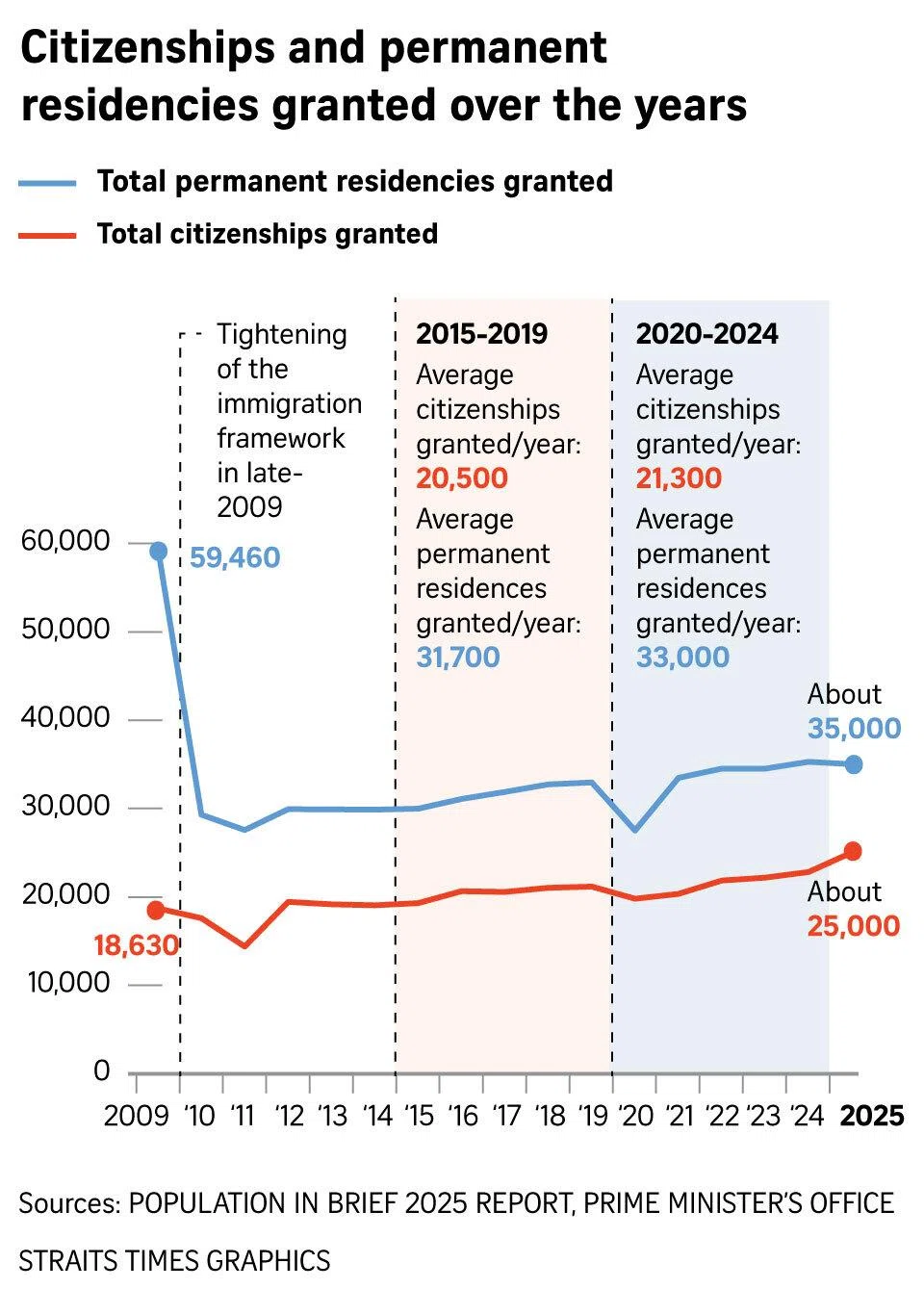
To offset demographic decline, the government expects to grant between 25,000 and 30,000 new citizenships annually over the next five years. About 25,000 individuals became citizens in 2025, higher than the average of 21,300 per year from 2020 to 2024.
Permanent residency approvals are also expected to rise to around 40,000 annually, compared with 35,000 in 2025. Gan emphasized that immigration will be carefully managed to maintain a stable citizen core, preserve ethnic balance, and ensure that infrastructure such as housing and transport keeps pace with growth.
Population Size and Long-Term Planning
Singapore’s total population stood at 6.11 million in June 2025. Gan reiterated that the previously discussed 6.9 million figure for 2030 is a planning parameter, not a target. Based on current trends, reaching that figure would take considerable time, and the government will review projections by 2030.
He also acknowledged public concerns about overcrowding and job competition, pledging to carefully manage the pace and composition of immigration to safeguard social cohesion.
Jobs, Foreign Workforce and Competition
Gan noted that local workforce growth has slowed, making skilled foreign workers necessary to fill manpower gaps and build new capabilities. Over the past decade, the number of Singaporeans in professional, managerial, executive, and technical roles rose by 308,000, while Employment Pass and S Pass holders increased by 24,000.
Foreign workforce growth averaged 3.3 percent annually over the past five years, largely driven by post-pandemic construction demand. Excluding construction work permit holders, growth averaged 2.5 percent per year. Gan stressed that migrant workers such as construction workers and domestic helpers do not directly compete with Singaporeans, but their numbers must be supported by adequate infrastructure.
Government Commitment to Families
Despite the grim figures, Gan reaffirmed the government’s commitment to supporting marriage and parenthood. Marriage rates have fallen, and more couples are having fewer or no children. Prime Minister Lawrence Wong previously stated that the government has not given up on boosting births. Gan echoed this sentiment, saying the country cannot afford to give up.
He added that authorities will strengthen fair employment practices, step up integration efforts for new immigrants, and ensure that population policies ultimately improve Singaporeans’ quality of life.
Singapore’s record-low fertility rate signals a profound demographic turning point. With births declining and the population ageing rapidly, policymakers are walking a tightrope between supporting families, managing immigration, and sustaining economic vitality. The choices made today will shape Singapore’s workforce, social fabric, and regional competitiveness for decades to come.
Sources: Straits Times (2026) , Straits Times 2 (2026)
Keywords: Singapore TFR 0.87, Gan Kim Yong Population, Resident Births 2025, Immigration Singapore Policy, Ageing Society Singapore


