


National push creates thousands of AI-ready internships while testing next-generation energy systems
Singapore is accelerating its artificial intelligence ambitions by strengthening its talent pipeline and rethinking how data centers consume energy. A new nationwide initiative is opening thousands of early career opportunities while piloting technologies designed to support the explosive growth of AI computing.
Expanding AI-Ready Career Pathways
More than 8,000 internships, training programs, and industry attachment openings have been developed in Singapore’s data centre sector as part of efforts to build an AI-ready workforce. The initiative was announced on Jan 26 by ST Telemedia Global Data Centres (STT GDC), which signed a memorandum of understanding with the Institute of Technical Education (ITE), Singapore Polytechnic (SP), Nanyang Technological University (NTU), and the National University of Singapore (NUS).
Hands-On Experience Across Institutions
Over the next five years, STT GDC will offer internship placements across these institutions, giving students direct exposure to data centre operations and corporate functions such as information technology, sustainability, finance, and marketing. Around 800 ITE students annually will also benefit from immersive training, including the deployment of a data centre virtual reality system designed to simulate real-world operational environments.
Addressing Talent Gaps in a Growing Industry
ITE chief executive Peter Lam highlighted that Singapore’s data centre and electrification sectors are expanding rapidly, but awareness and talent remain limited. He noted that while electrical engineering plays a central role, students trained in sustainability, data science, data engineering, information technology, and mechanical engineering are increasingly essential to supporting complex systems such as cooling infrastructure and performance optimization.
Launch of the FutureGrid Accelerator
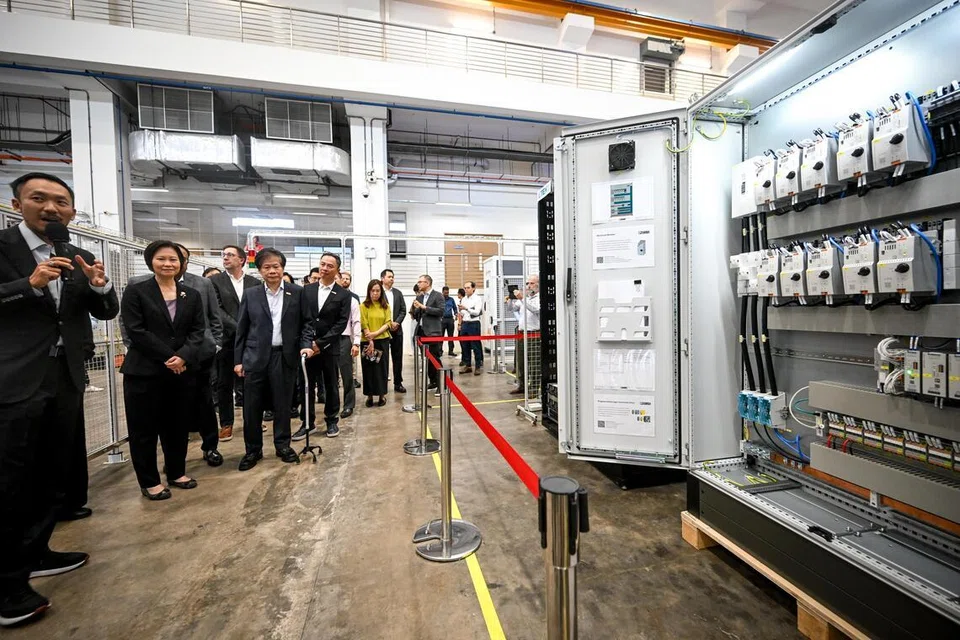
At the same event, STT GDC launched the FutureGrid Accelerator, the region’s first live test bed demonstrating how high-voltage direct current technology can support AI computing more sustainably. Located at the Electrification and Power Grids Centre on Jurong Island and operated by the Energy Research Institute at NTU, the platform enables real-world testing before commercial deployment.
Tackling AI’s Rising Energy Demands
Data centres that power AI systems consume massive amounts of electricity. The International Energy Agency projects global data centre electricity demand will more than double by 2030 to about 945 terawatt-hours, exceeding Japan’s current national consumption. ERI@N executive director Professor Madhavi Srinivasan said the facility allows students to participate in testing emerging energy technologies, helping bridge the gap between research and commercialization.
Why HVDC Matters for the Future
Traditional alternating current power systems suffer significant losses due to multiple conversion steps. HVDC technology can deliver up to 30 percent higher energy efficiency by reducing these losses. STT GDC Singapore country head Lim Mingcheng explained that AI server racks demand far more power than conventional systems can sustainably support, making HVDC critical for future-ready data centres. STT GDC plans to refine the technology in Singapore before deploying it across its facilities in 12 countries, including six in Southeast Asia.
Building Standards for Global Deployment
STT GDC president and group chief executive Bruno Lopez emphasized that the FutureGrid Accelerator is a working test bed rather than a one-off demonstration. By testing HVDC systems with real AI servers, the company aims to help develop new industry standards that balance performance, resilience, and sustainability while reinforcing Singapore’s role as a global digital innovation hub.
By pairing large-scale talent development with cutting-edge energy experimentation, Singapore is positioning itself at the intersection of AI growth and sustainable infrastructure. The initiative strengthens workforce resilience, supports regional innovation, and offers a scalable model for countries balancing digital expansion with responsible energy use, including close economic partners like Indonesia.
Sources: Straits Times (2026) , Malay Mail (2026)
Keywords: AI Talent, Data Centre Industry, HVDC Technology, Sustainable Energy, Singapore Innovation


