


Student initiative raises funds and awareness to retrofit NTU’s ADM building for safer bird migration.
A landmark building at Nanyang Technological University is finally getting a long-awaited transformation after years of bird collisions. What began as a student-led environmental effort has now become a national example of how public awareness, science and institutional support can converge to protect wildlife in a rapidly urbanizing city.
A Long-Awaited Fix for a Celebrated Building
The award-winning School of Art, Design and Media building at NTU, completed in 2006, has long been admired for its sleek glass curves and energy-saving design. Yet its reflective surfaces and funnel-shaped architecture have unintentionally created one of Singapore’s most dangerous sites for migratory birds.
Over the past three migratory seasons alone, Project Avigate documented 122 collisions affecting 22 species. Birds often mistake the mirrored glass for open sky. Many die on impact or fall into surrounding water features where they drown. Survivors frequently struggle to escape the enclosed courtyard.
Students Mobilize and the Public Responds
Momentum shifted on Oct 20 when Project Avigate launched an online fund-raiser to retrofit the most dangerous glass panels. Within weeks, the campaign raised 60,000 dollars, double its original target. NTU will fund the remaining amount of the 120,000 dollar project.
Second-year student Izzul Adham Noor Amidin recalled the early uncertainty, noting how a week-long bazaar raised only about 3,000 dollars. Public attention, sparked by media coverage, triggered a surge of support that made the project possible.
Retrofitting for a Safer Migratory Path
By September 2026, the team aims to install bird-safe decals on roughly a quarter of the building’s glass surfaces. These visual markers help birds detect the panels, dramatically reducing collisions. Although the high cost had previously deterred action, students uncovered regional supply gaps, equipment needs and weather-related challenges that drove prices up.
NTU emphasized that the retrofit reflects shared stewardship rather than blame. The ADM spokesman highlighted that the initiative showcases how student leadership, paired with institutional support, can yield meaningful environmental improvements.
A Historic First for Singapore
Bird scientists praised the effort as a milestone. Avian researcher Tan Yen Yi described it as the first student-led movement in Singapore to successfully push an institution toward bird-friendly building practices.
Bird Society of Singapore president Movin Nyanasengeran noted that ADM is only one monitored example of a larger national issue. Many other structures with similar high-risk designs remain undocumented. Early research suggests existing collision data represents only a fraction of the true impact.
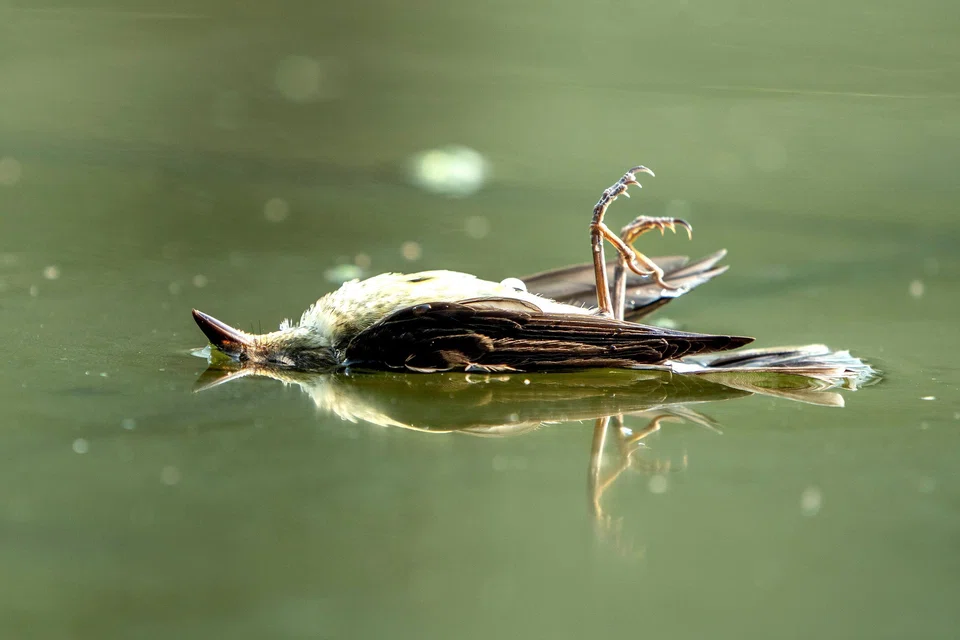
Urban Nature and Emerging Risks
As Singapore advances its vision of becoming a city in nature, more green spaces and wildlife corridors are introduced into dense urban areas. Experts warn this increases the likelihood of birds interacting with buildings, making proactive architectural changes crucial.
Dr Tan, who manages the national dead-bird hotline, stressed the importance of expanding monitoring and awareness, calling current reports the “tip of the iceberg.”
A Call for Collective Responsibility
For Project Avigate co-founder Tang Kean Seng, the work does not end with ADM. He encourages building managers and the public to report collisions and explore mitigation solutions. Rather than assigning blame, he hopes the initiative encourages a citywide shift toward ecological accountability.
Members of the public can report dead birds to the Lee Kong Chian Natural History Museum’s hotline via WhatsApp at +65-9876-4997 or Telegram at @deadbirdhotline.
The ADM retrofit represents more than a single building upgrade. It signals a cultural shift in how Singaporeans and Indonesians view urban development, environmental responsibility and community action. As cities in the region continue expanding, this initiative demonstrates how collaborative leadership can inspire practical solutions for coexisting with nature.
Sources: Straits Times (2025)
Keywords: NTU ADM Building, Bird Collisions Singapore, Project Avigate, Wildlife Conservation, Singapore Architecture


