


How climate change is disrupting jobs, heightening stress, and driving migration worldwide.
Climate change, once viewed narrowly as an environmental challenge, has now infiltrated every corner of human life—including the way we work. Rising global temperatures, shifting weather patterns, and intensifying natural disasters are not just reshaping ecosystems; they are reshaping the very structure of work, the health of workers, and the psychological stability of entire communities. From outdoor laborers enduring punishing heatwaves to traditional fishermen chasing vanishing fish stocks, the climate crisis is accelerating workplace stress and driving migration—often across borders—in search of survival and stability.
The Escalating Link Between Climate Change and Work Stress
The relationship between climate change and work stress is an emerging but dangerously under-recognized crisis. Heatwaves and extreme weather events directly impair health, safety, and productivity. Research shows that for every degree Celsius above 20°C, productivity can decline by 2–3%, largely due to heat stress, dehydration, and fatigue. Outdoor and manual workers are among the hardest hit.

But the physical impact is only half the story. Climate change also delivers a profound psychological toll. Eco-anxiety, fear of job loss, trauma from natural disasters, and chronic uncertainty about safety have begun to erode workplace morale. The result is a dangerous cocktail: rising stress, workplace hostility, impaired decision-making, and surging turnover intentions.
This dual impact—physical and psychological—creates a cascading cycle. Deteriorating health and mounting fatigue reduce productivity, which in turn fuels economic stress. In poorly adapted workplaces, the cycle intensifies, particularly for marginalized workers with fewer resources to cope.
Fisheries and the Climate Crisis: A Case Study of Loss and Migration
Traditional fishermen embody one of the clearest case studies of climate-driven work disruption. Marine ecosystems—once stable lifelines—are collapsing under rising sea temperatures, altered migration patterns, and widespread coral damage. The outcome is devastating: fewer fish, longer and costlier trips, and drastically reduced catches. In Indonesia, home to 2.7 million traditional fishermen, these pressures are translating into poverty, poor living conditions, and limited access to healthcare and education. Families are forced to survive on dwindling incomes while their cultural and economic lifeblood disappears.

The human cost is stark. Fathers returning empty-handed from the sea. Mothers unable to feed their children. Communities fractured as migration becomes the only way out. For many, survival now means abandoning fishing and seeking work abroad or in urban centers—a pattern repeated across the globe as environmental degradation drives rural populations away from their ancestral livelihoods.
Human and Economic Impacts of Climate-Induced Work Stress and Migration
The toll of climate disruption on work extends well beyond physical illness. Mental health strains, economic precarity, and social displacement deepen existing inequalities. Vulnerable groups—low-income workers, small-scale fishers, and indigenous communities—bear disproportionate losses. The poorest often suffer income declines up to 70% greater than average populations due to climate hazards.

Migration, though a survival strategy, often creates new risks: job insecurity, exploitative working conditions, legal vulnerabilities, and family separation. Migrants frequently face marginalization in host societies, even as their labor becomes critical to new economies.
On the macroeconomic front, the scale of losses is staggering. By 2030, climate-induced heat stress could cut 3.8% of total global work hours, equivalent to around USD 2.4 trillion (~SGD 3.25 trillion) in productivity losses. Agriculture, fisheries, and tourism—sectors most sensitive to climate fluctuations—stand at the frontline of this disruption. Left unaddressed, the crisis threatens global supply chains, labor markets, and long-term economic stability.
The Growing Demand for Climate-Resilient Work and Migration Solutions
As climate crises escalate, the demand for climate-resilient workplaces and migration policies intensifies. Governments, businesses, and communities must innovate to protect workers both physically and mentally. Strategies include flexible work schedules during heatwaves, climate-responsive infrastructure, expanded cooling systems, and accessible mental health support for eco-anxiety and trauma.
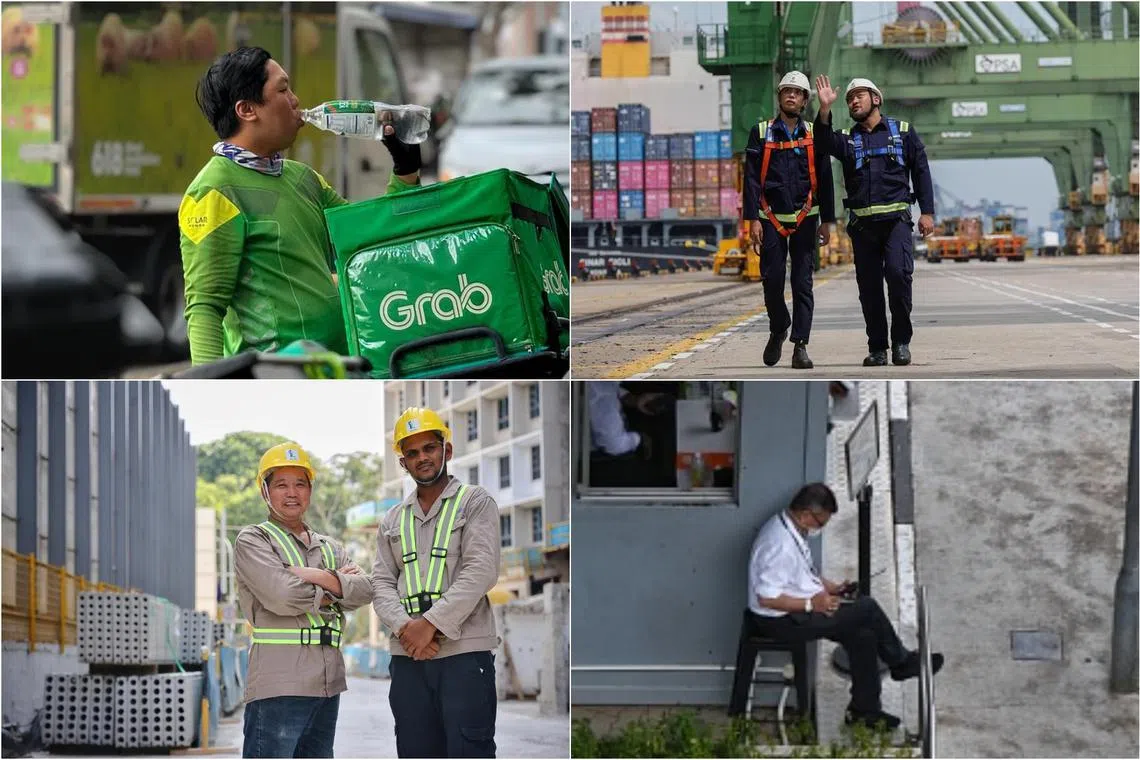
At the same time, migration is emerging as an unavoidable adaptation strategy. The World Bank projects that 216 million people could be internally displaced by climate change within the coming decades, with many seeking employment in urban centers or abroad. This mass migration demands urgent legal recognition of climate migrants, robust social support networks, and inclusive policies that uphold rights and human dignity while accommodating shifts in labor demand.
What Must Be Done: Building a Sustainable and Just Future
Confronting the intertwined crises of climate, work stress, and migration requires urgent and coordinated action:
– Climate Adaptation in Workplaces: Invest in cooling infrastructure, pollution mitigation, and flexible labor regulations that safeguard workers’ health and productivity.
– Supporting Mental Health: Normalize climate-related mental health support, including counseling, peer networks, and wellness initiatives targeting eco-anxiety and trauma.
– Empowering Vulnerable Workers: Provide financial aid, microfinance, and technology upgrades in vulnerable sectors like fisheries and agriculture to diversify livelihoods and reduce dependence on climate-sensitive jobs.
– Legal and Social Protections for Migrants: Recognize climate migrants formally and ensure legal rights, fair wages, and access to social services in host countries.
– Global Climate Action: Above all, reducing carbon emissions and transitioning to sustainable energy remain the only long-term solutions to prevent worsening climate-induced work crises.
Why It Matters: The Moral and Economic Imperative
This collision of climate change and work stress marks a watershed moment for humanity. It reveals how environmental degradation magnifies inequality, drives migration, and destabilizes economies. Workers form the backbone of every economy; neglecting their well-being under climate duress risks unraveling global stability itself.
Addressing this crisis is not just an economic necessity but a moral obligation. Protecting livelihoods and dignity in the age of climate change demands solidarity across borders, sectors, and generations.
Confronting Climate Change at Work and Beyond
The climate crisis is no longer a looming threat. It is here, reshaping work and lives in real time. From exhausted laborers in scorching cities to fishermen abandoning their seas, the nexus of environmental stress, workplace disruption, and migration is undeniable—and accelerating.
The response must be comprehensive: climate-adaptive workplaces, stronger mental health support, protections for migrants, and above all, bold action to curb emissions.
Local initiatives already point to what is possible. Tanjung Uma Empowerment Program (TUEP) in Batam enhances education, fosters economic growth, and advances environmental sustainability, envisioning resilient communities prepared for the future. Livingseas Foundation in Bali works to preserve and rebuild coastal and marine ecosystems by empowering local communities, ensuring long-term livelihoods and ecological balance. These examples highlight how community-driven action can create sustainable futures even under mounting climate pressures.
Humanity’s choices in the coming years will determine not only economic futures but also the very foundations of justice and dignity in a warming world. The time to act—with urgency, compassion, and resolve—is now.
Sources:
[1] Climate change and workplace heat stress
[2] Climate change effects on mental health: are there workplace implications?
[3] 3 ways the climate crisis is impacting jobs and workers
[4] The Economic Impact of Climate Change on Workers
[5] The Impact of Climate Change on Workers and Four Ways Leaders Can Help
[6] Impact of Work Climate, Workload, and Stress on Fatigue for Improving Health and Work Outcomes
[7] Fishermen’s Adaptation Due to Global Climate Change
[8] Small-scale Fishermen’s Adaptation to Climate Change Impacts in Coastal Areas and Small Islands in Pangkep Regency
[9] The Impact of the Climate Crisis on Indonesia’s Traditional Fishermen: Declining Fish Catches, Income, and Sustainable Solutions
[10] Chapter 8: Poverty, Livelihoods and Sustainable Development
[11] Preparing for Rising Climate Migration
Keywords: Climate change and work, Climate change driving migration, Rising heat workplace stress, Climate change mental health, Global economy climate impact, Climate change affecting jobs, Climate migration economic impact, Climate change workplace adaptation, Heat stress worker productivity, Fisheries collapse climate change, Climate crisis labor markets, Sustainable jobs climate adaptation, Migration challenges climate change, Mental health eco anxiety, Climate change global workforce


