


How the Singapore-Johor Special Economic Zone Could Reshape Southeast Asia’s Economic Future—or Collapse Under Its Own Ambition
On 7 January 2025, Singapore and Malaysia formally launched the Johor–Singapore Special Economic Zone (JS-SEZ)—a project heralded as one of the most ambitious cross-border economic undertakings in Southeast Asia. Backed by unprecedented political will, rapid investment inflows, and sweeping tax incentives, the SEZ aims not merely to reshape the economies of Malaysia and Singapore, but to set a new benchmark for regional integration in an increasingly fractured, protectionist world.
For policymakers, investors, and millions of cross-border workers, the stakes could not be higher.
The Scale and Vision
Stretching across 3,500 km² of Johor—nearly five times the size of Singapore—the JS-SEZ is carved into nine flagship zones. Its purpose is clear: fuse Singapore’s global expertise in R&D, finance, and advanced services with Johor’s vast land, lower operating costs, and growing industrial base.
“The JS-SEZ represents a paradigm shift in regional economic cooperation,” says Yulia Nikulicheva, Head of Research at JLL Malaysia. “It builds new avenues for cross-border opportunity, positioning Malaysia and Singapore not as competitors but as co-hosts for high-value global investments.”

Singapore’s Minister for Trade and Industry, Gan Kim Yong, was equally explicit: “This project is both important and timely. It deepens our economic symbiosis and shields the region from tariff shocks and supply-chain fragmentation.”
Institutions and Implementation
At the heart of the initiative lies new cross-border governance. Singapore’s Joint Project Office (JPO)—anchored by Enterprise Singapore and the Economic Development Board—serves as a one-stop shop for companies expanding into Johor. Its Malaysian counterpart, the Invest Malaysia Facilitation Centre – Johor (IMFC-J), mirrors this role by streamlining licenses, permits, and due diligence.
“This gives businesses greater clarity and predictability,” notes Ken Chia, Equity Partner at CNPLaw. “It removes unnecessary drag that has historically slowed cross-border projects.”

Infrastructure is being fast-tracked too. A QR-based passport-free clearance system, piloted in Singapore, aims to process half a million daily commuters by the end of 2025 with target clearance times under 20 minutes. The 4 km Johor Bahru–Singapore RTS Link, now more than 56% complete, is set for operation in December 2026. Designed to carry 10,000 passengers per hour, it promises to finally ease the infamous congestion at the Causeway.
Early Momentum: Investments and Impact
Johor has already broken records. In Q1 2025 alone, the state attracted RM 27.4 billion (≈ SGD 7.8 billion) in new investments—up from just RM 4 billion a year earlier. By April, another RM 23 billion (≈ SGD 6.6 billion) was in the pipeline, pushing H1 2025 totals to RM 56 billion (≈ SGD 16 billion).
Over 80% of inflows are foreign, led by investors from Singapore, China, and Japan, and heavily concentrated in SEZ-priority sectors such as advanced manufacturing, petrochemicals, and digital logistics. According to Business Times, “Johor’s investment numbers have more than quadrupled in 2025 compared to the same period in 2024—driven almost entirely by SEZ-enabled deals.”

Bilateral targets are ambitious: at least 50 projects and 20,000 skilled jobs within five years, underpinned by matching funds from both governments for infrastructure and strategic ventures.
Strategic Sectors and Aggressive Incentives
The incentives are as sweeping as they are generous. Malaysia has pledged corporate tax rates as low as 5% for up to 15 years for high-value industries such as AI, quantum technologies, aerospace, and global service hubs. Knowledge workers will face income tax capped at 15% for a decade.
These rates are among the most competitive in Southeast Asia. Crucially, the SEZ’s scope is not limited to factories. Its 11 target sectors span manufacturing, logistics, digital economy, tourism, food security, energy, financial services, business services, education, healthcare, and the green economy.
“It’s about moving the entire innovation stack—R&D, logistics, and even regional headquarters—into a new cross-border ecosystem,” says Selena Ling, Chief Economist at OCBC.
Regional Integration—and Rising Tensions
For Malaysia, the SEZ is hailed as Johor’s golden ticket to ascend the value chain. But union leaders caution: “World-class incentives mean little if Johor becomes merely a backyard factory. The SEZ must nurture Malaysian SMEs and talent, not just serve multinational giants.”
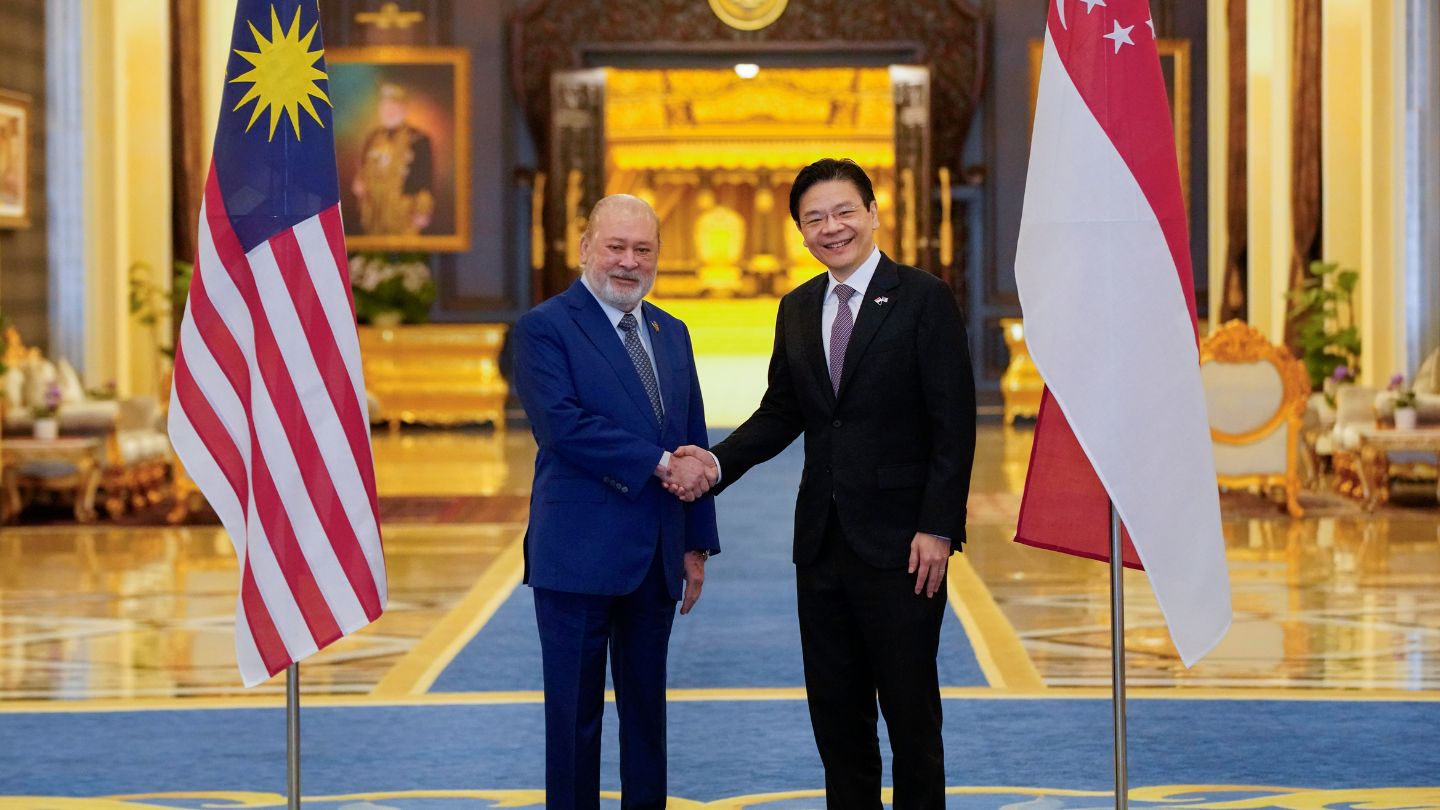
For Singapore, the SEZ is about future-proofing. Prime Minister Lawrence Wong declared: “This is how we keep both nations competitive—by pooling our complementary strengths and attracting investments neither could capture alone.” Yet some business voices warn of talent loss and the risk of hollowing out high-value industries.
For Indonesia, the developments are a wake-up call. While not a formal partner, the Riau Islands—Batam and Bintan in particular—risk being overshadowed. Former chief trade negotiator Dr. Iman Pambagyo warns: “Unless Indonesia reforms its free-trade zone governance, Singapore and Johor may leave our islands behind.”
Global Tensions and Supply Chains
The SEZ is more than an economic experiment; it is a geopolitical hedge. Amid US–China decoupling, the ability for firms to anchor innovation in Singapore while running manufacturing in Johor offers insulation against tariff shocks and supply-chain disruption.
As Minister Gan Kim Yong put it, “This is about resilience as much as growth.”
Social and Political Challenges
But risks loom. Cross-border crime and customs frictions remain unresolved. Singaporeans worry about law-enforcement disparities, while Malaysians voice fears of rising living costs and wage pressures. Without affordable housing and public services, Johor could see its gains unevenly distributed.
Civil society groups argue for a joint ombudsman to oversee labor standards, environmental safeguards, and anti-corruption compliance. Yet, thus far, both governments have kept governance within closed-door committees, stoking unease.
Human Capital: The Critical Bottleneck
A skilled workforce may prove the SEZ’s make-or-break factor. Johor faces shortages in technical talent, prompting joint training programs between Singapore and Malaysia. Partnerships such as Singapore Polytechnic with Malaysia’s Federation of Malaysian Manufacturers, and ITE with Johor Skills Development Centre, aim to create a “place-and-train” pipeline co-funded by both governments.

“The risk is clear,” warns Dr. Nazrin Nasir of the Johor Talent Development Council. “Without sufficient talent, the SEZ’s lofty industrial ambitions could collapse under their own weight.”
Mirage or Mega-Engine?
The promise is immense: record investment, infrastructure in motion, and incentives unmatched in the region. If execution holds, the Singapore–Johor SEZ could cement itself as one of Asia’s most strategically integrated and resilient economic corridors—redefining competition and cooperation across ASEAN. But execution risk is enormous. The next 24 months will determine whether the SEZ becomes Southeast Asia’s mega-engine of shared prosperity—or just another grand design lost to delay, division, and unmet ambition.
As the Straits watch, it is not headlines but lived realities—jobs, wages, housing, and fairness—that will decide whether this borderless dream endures.
Sources:
[1] Singapore and Malaysia officially launch the Johor-Singapore Special Economic Zone
[2] Malaysia and Singapore agree to launch a special economic zone in a rare move to attract investors
[3] Malaysia, Singapore announce deal on Johor economic zone
[4] Johor-Singapore Special Economic Zone borders on success
[5] Malaysia ties fortunes to Singapore as US-China tensions mount
[6] Johor Records RM27.4 Bln FDI In 1Q 2025, Fuelled By JS-SEZ Momentum
[7] JS-SEZ attracts nearly RM25 Billion in Q1 investments, spurs SME growth
[8] JS-SEZ draws nearly 90% of Johor’s RM27.4 bln 1Q investments
[9] Johor Records RM56 Billion In Approved Investments For H1 2025
[10] First train unveiled for Johor Bahru-Singapore RTS Link; service will run from 6am to 12am
[11] Johor Bahru – Singapore Rapid Transit System Link
Keywords: Singapore Johor Economic Zone, Southeast Asia Economic Growth, Cross Border Investment Opportunities, Johor Singapore Bilateral Cooperation, Future Of Global Trade, Malaysia Singapore Economic Corridor, Special Economic Zone Strategy, Johor Investments And Incentives, Singapore Johor RTS Link, Supply Chain Risk Hedge, Southeast Asia Growth Engine, High Value Industry Incentives, Regional Economic Integration Southeast Asia, Johor Skilled Workforce Training, Singapore Malaysia Trade Partnership


