


New driverless train marks major progress as 56% of RTS Link system now completed
Singapore and Malaysia marked a historic milestone on June 30 with the unveiling of the first RTS Link train. Designed to significantly ease Causeway congestion and deepen cross-border ties, the fully automated train signals strong progress toward a 2026 launch.
First RTS Link Train Delivered
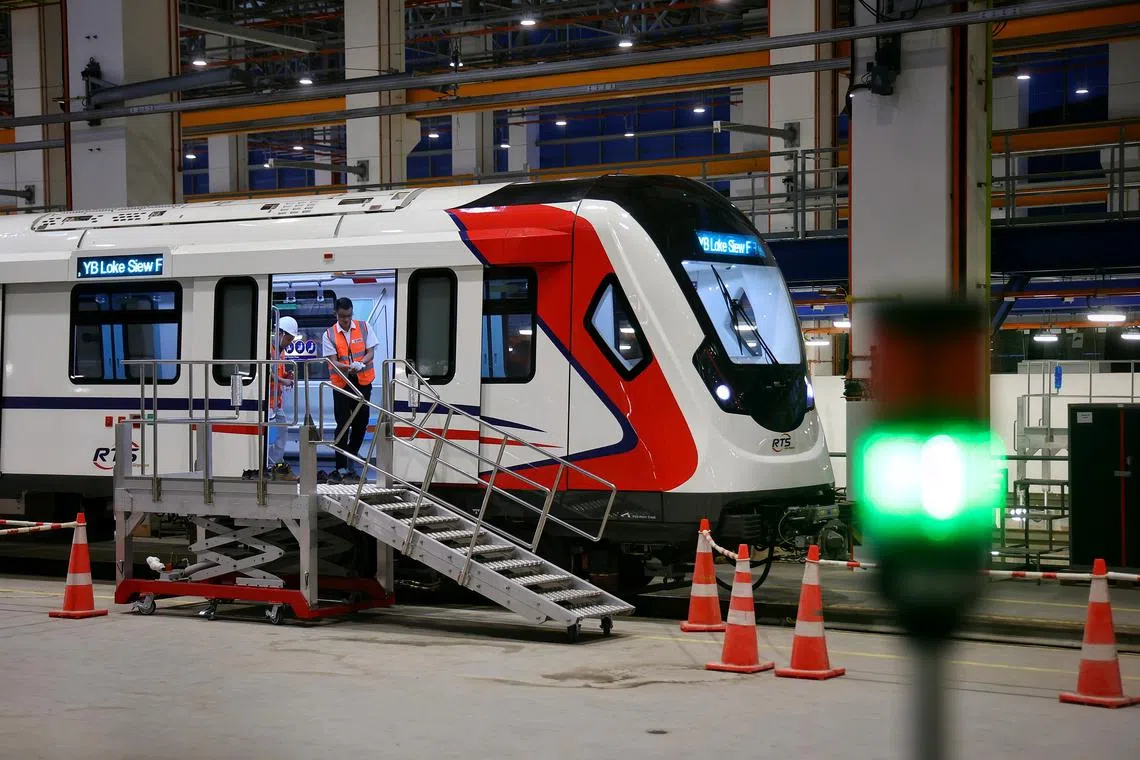
The first of eight Rapid Transit System (RTS) Link trains, a four-car, 76.5-meter-long driverless model, has arrived in Singapore and was unveiled on June 30 at the Singapore Rail Test Centre (SRTC) in Tuas. This marks a pivotal moment in the Johor Bahru–Singapore rail project, which is now 56% completed in terms of system works.
Acting Singapore Transport Minister Jeffrey Siow and Malaysian Transport Minister Anthony Loke led the launch, accompanied by Johor Chief Minister Onn Hafiz Ghazi. The train will now undergo rigorous testing to ensure integration with existing rail systems, including signalling and safety features. These initial off-site tests at SRTC are set to conclude by late 2025.
Strong Symbol of Bilateral Partnership

Datuk Khairil Anwar Ahmad, chairman of RTS Operations (RTSO)—a joint venture between Singapore’s SMRT and Malaysia’s Prasarana—noted the deeper significance of the RTS Link. “It is actually a powerful symbol of our partnership that will deepen bilateral relations,” he said during the ceremony.
The trains, manufactured by China’s CRRC Zhuzhou Locomotive, feature cutting-edge design and accessibility, including 32 seats per car (with four foldable ones), space for wheelchairs and prams, and a unique hearing induction loop system—the first in both countries’ rail history.
Testing and Completion Timeline
Key systems being installed include traction power equipment and advanced communications and control components. By the end of July, track installation is expected to be completed. The traction power system, essential to run the trains, will undergo testing throughout July and August, ahead of train trials at Wadi Hana depot in Johor Bahru starting September.
The first train will eventually move from Singapore to the actual RTS Link track—spanning Woodlands North and Bukit Chagar—for final testing beginning in 2026. Passenger service is scheduled to commence by December 2026.
Capacity and Operations
Each RTS Link train can carry up to 1,087 passengers, with a peak-hour capacity of 10,000 passengers per hour per direction. Trains will operate daily from 6am to midnight at intervals of 3.6 minutes during peak periods. The 4km cross-border journey will take approximately five minutes, offering a fast and efficient commute between the two cities.
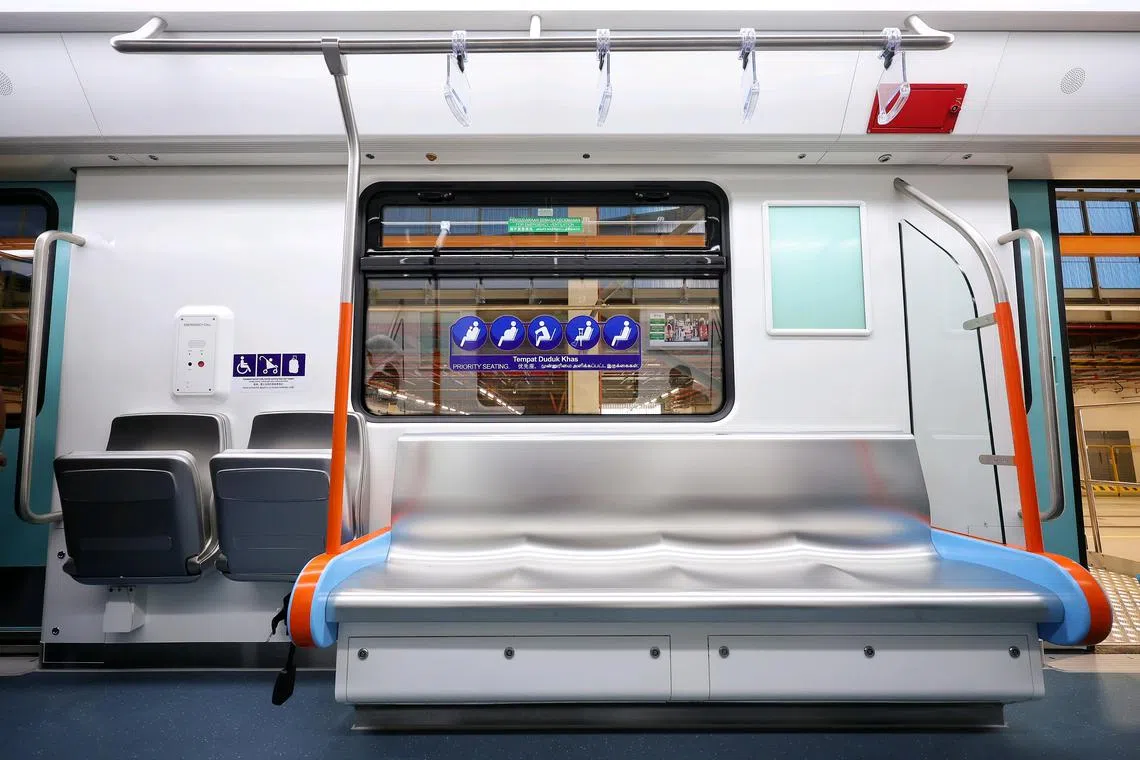
The train’s safety features include fire detectors, hopper windows for ventilation, emergency call buttons, and manual door release levers that activate only when the train is stationary and aligned with emergency walkways.
A Long-Awaited Project Resumes
Originally set to integrate with Singapore’s Thomson-East Coast Line (TEL), the project was suspended in 2019 after Malaysia requested a more cost-efficient light rail system. It resumed under revised terms in July 2020. The manufacturing contract was awarded to CRRC in 2021, with trains currently being assembled in Batu Gajah, Malaysia.
The next four trains will arrive later this year, with the final unit expected by December. All units will undergo additional testing before full service begins.

The RTS Link project is more than a transport solution—it’s a landmark of regional cooperation with long-term impact for workers, businesses, and families commuting daily across the Malaysia-Singapore border. For both nations, the RTS Link promises improved mobility, economic growth, and a new standard of cross-border public transit.
Sources: The Star (2025) , The Straits Times (2025)
Keywords: RTS Link, Johor Bahru, Singapore Transport, Train Launch, Cross-Border Rail, Rapid Transit


