


URA’s Draft Master Plan 2025 outlines new urban villages, parks, and integrated towns islandwide
Singapore’s next decade of urban development is taking shape. The Urban Redevelopment Authority (URA) announced on June 25 that at least 80,000 new public and private homes will be built across more than 10 new neighbourhoods under its Draft Master Plan 2025, transforming both city centre and suburban landscapes.
Prime Locations to Be Reimagined
The Newton and Orchard Road areas will be transformed into high-density, mixed-use “urban villages” featuring around 6,000 private homes. Newton will see clusters rise around Newton Circus, Scotts Road, and Monk’s Hill, with heritage enhancements such as converting Monk’s Hill Road into a linear park. At Orchard MRT, a new integrated development combining residences, retail, food and beverage outlets, and offices is planned.
Paterson will receive 1,000 new private homes, with improved pedestrian and cycling paths linking it to a heritage corridor that includes Tiong Bahru, Balestier, and Lavender.
High-Tech and Green Living in One-North
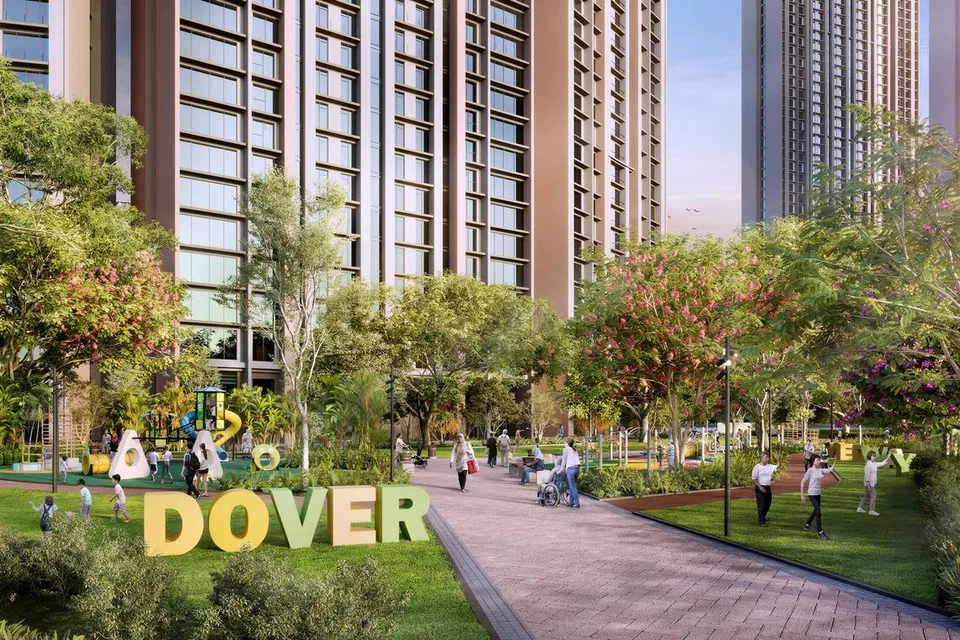
The Dover-Medway precinct, near One-North and Kent Ridge MRT stations, is set to house 6,000 public and private homes in its first phase. Close to the technology and biomedical hubs, it’s designed for professionals working in media, ICT, and science sectors. A further 5,000 private homes are planned in Mediapolis, offering residents proximity to green spaces such as the Rail Corridor, Wessex estate, and One-North Park.
While some existing tenants, such as the Singapore Institute of Technology and United World College, are relocating, Anglo-Chinese School (Independent) will remain unaffected.
From Turf Clubs to Townships
The former Singapore Racecourse in Kranji will become a housing estate with 14,000 homes near the Kranji Nature Corridor, offering access to waterways like Sungei Mandai and Sungei Pang Sua. This move is part of a larger strategy to redevelop brownfield land and support housing demand.
Similarly, Sembawang Shipyard will be reimagined as a waterfront district after its closure in 2028. Public spaces will line the former berths, and British naval heritage buildings may be repurposed for community and cultural use.
Paya Lebar Air Base to Free Up 800 Hectares
The largest land release will come from the relocation of Paya Lebar Air Base in the 2030s, freeing 800 hectares—five times the size of Toa Payoh. Once height restrictions are lifted, surrounding towns like Defu in Hougang will transform into “new-generation” neighbourhoods with green corridors, mixed-use spaces, and integrated mobility networks.
Historical aviation structures will be adaptively reused, preserving the site’s legacy while introducing walkable and liveable communities.

Supporting Ageing and Active Lifestyles
To support an ageing population, URA’s plan includes more senior-friendly homes such as community care apartments and private assisted living units like those coming to Kovan by 2026. Six new sport-in-precinct projects and multiple integrated hubs will also combine healthcare, retail, sports, and recreation under one roof in towns such as Tampines North, Whampoa, and Ulu Pandan.
Underutilised urban spaces like MRT viaducts and car park rooftops will be activated for art and leisure. A new pedestrian and cycling bridge linking Marina Centre to Bay East Garden will be completed by 2029, boosting connectivity along the Round Island Route.
Singapore’s Draft Master Plan 2025 reflects a bold, balanced approach to meet the housing, mobility, and lifestyle needs of a future-ready nation. With more homes near the city centre, improved access to nature, and smarter neighbourhood design, the plan holds valuable insights for fast-growing urban hubs in Southeast Asia, especially as the region tackles climate change, land scarcity, and demographic shifts.
Sources: CNA (2025) , Straits Times (2025)
Keywords: URA Draft Master Plan, Newton Urban Village, Orchard MRT Homes, Dover Medway Housing, Sembawang Shipyard Redevelopment, Paya Lebar Air Base


