


President’s deployment of federal troops sparks legal backlash and fears of authoritarian overreach
In a rare and controversial move, U.S. President Donald Trump has deployed 700 Marines and an additional 2,000 National Guard troops to Los Angeles to clamp down on protests sparked by mass immigration arrests. The action triggered legal challenges and fierce opposition from California officials.
Military Escalation Ignites Outrage
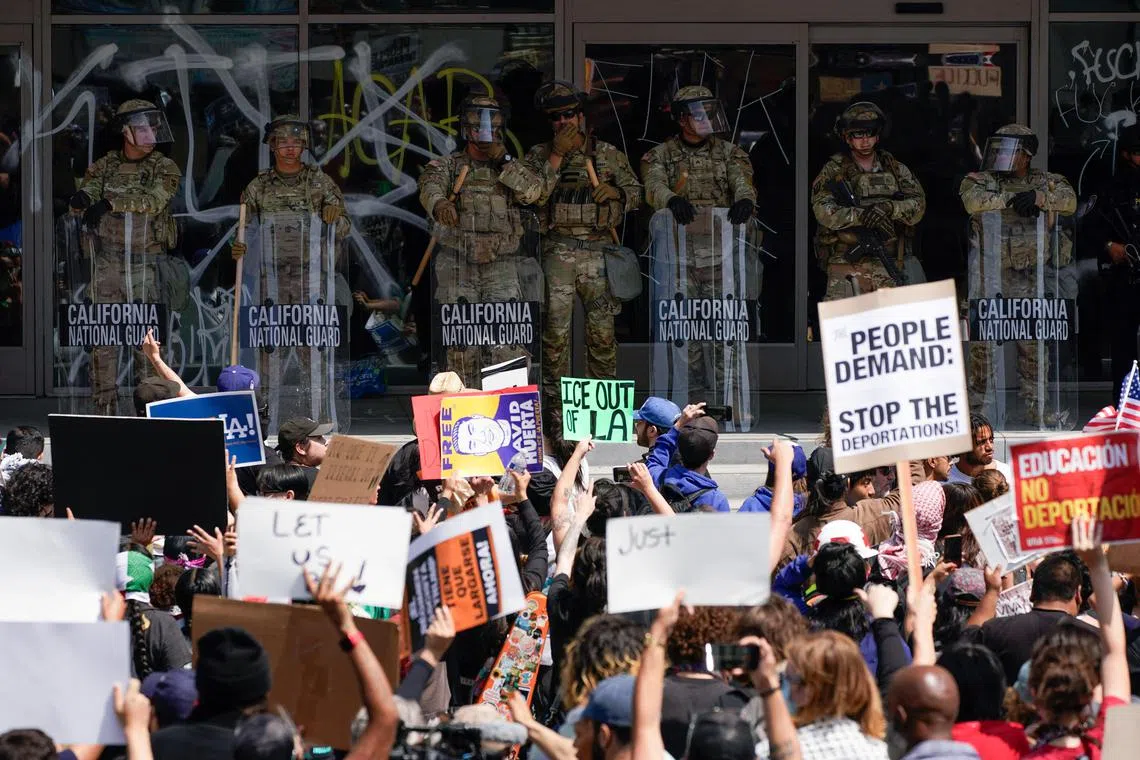
The deployment, confirmed on June 9, follows days of protests in Los Angeles after more than 40 people were arrested in immigration raids. Trump claimed the federal response was necessary to prevent the city from being “completely obliterated.” However, California Governor Gavin Newsom denounced the action as “reckless” and “un-American,” arguing it bypasses state authority.
Protests initially escalated over the weekend, with demonstrators torching cars and clashing with police. The situation stabilized by Monday, with thousands gathering peacefully outside City Hall and a federal detention center in Downtown LA.

Local Leaders Push Back

Mayor Karen Bass and Police Chief Jim McDonnell emphasized that local authorities were managing the situation without federal assistance. McDonnell warned that the uncoordinated military presence created “significant logistical and operational challenges.”
Newsom, supported by Attorney General Rob Bonta, filed a lawsuit against the federal government, seeking to block the unauthorized use of California’s National Guard. “Trump has trampled our sovereignty,” Bonta said, calling the action an abuse of presidential authority.
Clashes and Arrests Across Cities
While Monday’s demonstrations were largely peaceful, tensions flared in areas like Santa Ana and Manhattan, where police used tear gas and flash-bang grenades to disperse crowds. In Austin, Texas, law enforcement responded similarly to anti-ICE protesters.
According to the Los Angeles Police Department, at least 56 individuals were arrested, and five officers sustained minor injuries. Another dozen arrests occurred in New York and San Francisco as protests spread across major U.S. cities.

Legal Precedents and Risks
Trump’s directive invoked a federal statute allowing military intervention in case of rebellion—something not used since 1965 during the civil rights movement. Experts warned of the dangers posed by deploying combat-ready troops like Marines in domestic policing roles.
Professor Rachel VanLandingham, a former Air Force officer, called the move a “command and control nightmare,” highlighting the lack of training and coordination between military forces and local law enforcement.
Protesters’ Demands Intensify
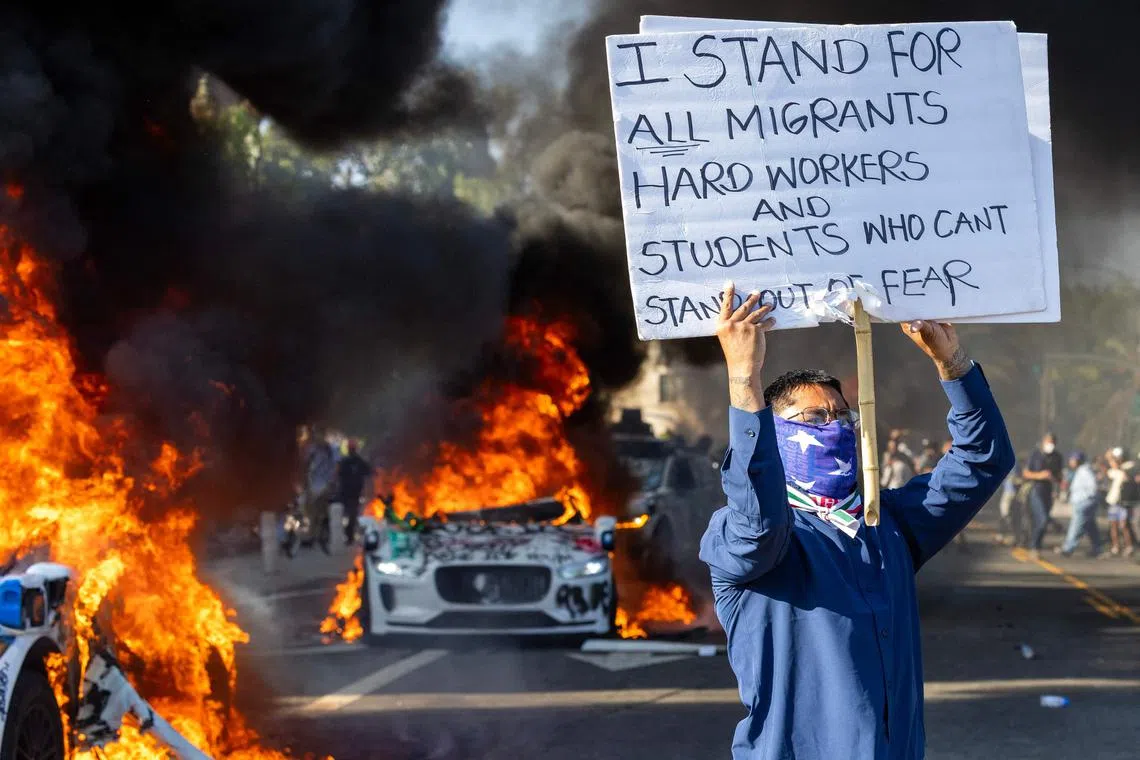
Chants of “Free them all!” and “National Guard go away!” echoed through the streets, especially outside detention centers where arrested individuals, including labor leader David Huerta, were held. Huerta’s release on bail turned into a symbolic moment of resistance, fueling calls for an end to immigration raids.
Protesters and civil rights groups argue the military presence is a tactic to intimidate and silence dissent, rather than protect public safety.
This unprecedented military deployment to a major U.S. city signals a sharp turn in domestic protest response, with potentially global implications. For Southeast Asians observing from across the Pacific, the situation raises alarms about rising authoritarianism, civil liberties under pressure, and the growing militarization of domestic unrest—even in long-standing democracies.
Sources: Straits Times (2025) , AP News (2025)
Keywords: Trump Los Angeles Troops, Immigration Arrest Protests, National Guard Deployment, US Military Civil Unrest, Gavin Newsom, ICE Raids


