


Inside the Glittering Facade of SIJORI’s Nightlife Lies a Sophisticated Web of Criminal Financiers and Billion-Dollar Laundering Schemes
The glittering lights and pulsating beats of discos and nightclubs across the Johor-Singapore-Batam triangle often mask a dark and dangerous reality. Beyond the velvet ropes and VIP sections, a sophisticated and sprawling criminal enterprise is hard at work, transforming these entertainment hotspots into pivotal cogs in the global money laundering machine. Recent high-profile arrests and staggering financial seizures have cast a harsh spotlight on this shadow economy, revealing how billions in illicit funds from scams, fraud, and other nefarious activities are meticulously washed clean, often right under the noses of unsuspecting revelers. This is not just about isolated incidents; it’s a systemic exploitation of the nightlife industry, challenging regulators and tainting the region’s financial integrity.
The scale of the problem is immense. Singapore, a global financial hub, was rocked by a S$3 billion money laundering scandal in 2023–2024, one of the largest in the world, involving foreign nationals and the seizure of luxury properties, gold bars, and high-end cars. While not exclusively tied to nightclubs, this case underscored the vulnerabilities within the system to sophisticated laundering schemes. More specific to the nightlife scene, coordinated police operations in Johor and Singapore have repeatedly dismantled transnational syndicates using the region as a base to launder millions. In Batam, a prominent nightlife entrepreneur, known as “AM,” stands accused of channeling proceeds from a massive love scamming syndicate into his burgeoning hotel and disco empire. These are not just random acts of crime but calculated strategies employing a playbook of laundering techniques refined within the unique environment of discos and nightclubs.

Investigative insights and court records reveal several key methods criminals employ to exploit these establishments:
1. The “Flower Garland” Gambit: Phantom High-Value Sales
A classic technique involves the creation and sale of ridiculously overpriced, often intangible or low-intrinsic-value items within the club. The Singapore case of Soon Kok Khoon, operator of Club Posh Entertainment and West Palace Entertainment, provides a stark example. Khoon was convicted for a scheme where flower garlands, priced anywhere from S$50 to an astounding S$100,000, were “sold” to customers for performing artists. These transactions served as a convenient way to inject large sums of illicit cash into the club’s revenue stream, making dirty money appear as legitimate earnings from enthusiastic patrons.

2. Shell Company Veils: Diverting Revenue and Obscuring Ownership
Nightclubs involved in laundering often operate a complex web of shell companies. Soon Kok Khoon, for instance, instructed his staff to divert sales revenue from his GST-registered clubs to two shell entities that were not GST-registered and had no actual business activities. This was facilitated by using separate point-of-sale (POS) terminals linked to these shell entities. The undeclared revenue, including from the flower garland sales, was then disguised in the accounts of these shell companies as proceeds from fictitious sales of items like souvenirs. Such corporate structures with opaque ownership are a central enabler in major laundering schemes, providing a mask for criminal networks to move and hide funds.

3. Cash-Rich Haven: Layering Illicit Funds with Daily Takings
The fundamental nature of nightclubs—high volumes of cash transactions from cover charges, drink sales, and VIP services—makes them ideal for commingling illicit funds with legitimate daily takings. This layering process makes it exceedingly difficult for authorities to trace the criminal origins of the money. The constant flow of cash provides a plausible explanation for large deposits, especially if the club’s books are manipulated. This is particularly relevant for laundering proceeds from prevalent scams like investment, job, and e-commerce fraud, which often yield physical cash or require quick conversion.

4. Exploiting Bank Accounts: The Money Mule Network Connection
A critical component of these laundering operations is the use of money mule accounts. Syndicates, sometimes operating from or linked to nightclub figures, actively procure Singaporean bank accounts through chat platforms like Telegram and Facebook. These accounts, often belonging to vulnerable individuals unaware of the full extent of their involvement, are then used to launder the syndicate’s scam proceeds. In one notable case, a 22-year-old Malaysian was believed to be responsible for bringing foreigners to Singapore specifically to open bank accounts to facilitate money laundering linked to scams. As Deputy Director of Singapore’s Commercial Affairs Department (CAD), Shee Tek Tze, highlighted, “Scammers need bank accounts from money mules to launder and move the scam proceeds out of Singapore in order to avoid detection and confiscation by the police.”
5. Strategic Investments: Building Empires on Dirty Money
Criminals are increasingly channeling their ill-gotten gains into acquiring, establishing, or significantly expanding nightlife venues. By investing in the physical assets and operations of discos and hotels with integrated nightlife, they convert “dirty” money into seemingly legitimate business equity. The Batam-based nightlife entrepreneur “AM” is a case in point. He is suspected of funneling money from a love scamming syndicate, involving 88 arrested Chinese nationals and victim losses exceeding IDR 20 billion (approx. S$1.7 million), into his rapidly expanding hotel and disco businesses. A local entrepreneur in Batam remarked, “No wonder he was able to build this and that in a short period of time.”

6. Systematic GST Evasion: Defrauding Tax Authorities and Masking Illicit Income
Aiding the money laundering process is the deliberate evasion of Goods and Services Tax (GST). By making false entries in GST returns—specifically, omitting sales revenue and the corresponding output tax—club operators like Soon Kok Khoon not only defraud the tax system but also create a financial discrepancy. This underreporting can help mask the introduction of illicit funds into the business or allow criminals to retain a larger portion of the laundered money. Soon was found to have wilfully intended to evade S$210,287 in GST, for which he was penalized S$630,861, three times the evaded amount, in addition to jail time for money laundering.
7. Luxury Asset Conversion via Club Profits
Once money is successfully laundered through a nightclub’s operations, appearing as legitimate profit, it is often quickly converted into high-value assets. This is a common secondary stage of laundering, further obscuring the funds’ criminal origins and integrating them into the legal economy. The massive S$3 billion money laundering case in Singapore saw accused individuals using criminal proceeds to buy luxury cars, upscale condominiums, and even Tether stablecoins. While the initial laundering might occur elsewhere, nightclubs can provide the “cleaned” cash flow that enables these purchases.

8. Facilitating Illicit Cross-Border Fund Movement and Operations

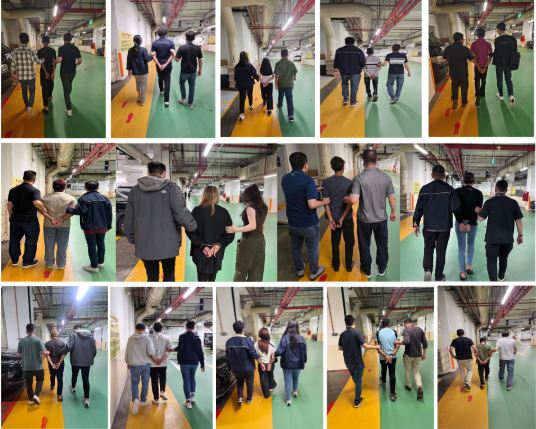
The geographical proximity and interconnectedness of Johor, Singapore, and Batam are exploited by these criminal syndicates. Nightclubs can serve as initial collection points or layering stages for illicit cash that is then systematically moved across borders. Joint operations have revealed Singaporean money launderers based in Johor, managing cross-border transfers of scam proceeds from Singaporean victims. For instance, three Singaporean men arrested in Johor were linked to over 50 scam reports involving losses exceeding S$2.9 million. The alleged escape of Batam entrepreneur “AM” to Malaysia with a Chinese syndicate leader further highlights the transnational nature and the use of neighboring jurisdictions as potential safe havens. Director CAD, Mr David Chew, emphasized the resolve to combat these groups: “The SPF will continue to collaborate closely with our Malaysian counterparts to detect and deter these transnational syndicates who use the anonymity of the Internet to commit crimes and launder through criminal proceeds through the banking system.”
The Broader Regional Impact and the Uphill Battle
The pervasive use of nightclubs and similar entertainment venues for money laundering is not an isolated phenomenon but part of a larger, evolving criminal ecosystem in Southeast Asia. The United Nations Office on Drugs and Crime (UNODC) has highlighted how casinos, junkets, and the proliferation of online gambling platforms have revolutionized regional underground banking, enabling faster, anonymized movement of massive volumes of illicit funds, including cryptocurrencies. Nightclubs, with their cash-intensive operations and potential for high-value transactions, fit neatly into this landscape.

For Malaysia, Indonesia, and Singapore, the implications are severe. Such activities erode public trust, damage the reputation of legitimate financial and entertainment sectors, and can fuel further crime. The “failure to address this landscape will have consequences for Southeast Asia and other regions as organized crime reinvest to further innovate, professionalize, and consolidate operations,” warns the UNODC.
Authorities are fighting back. Joint task forces and enhanced information sharing between police forces in Singapore and Malaysia have led to significant arrests and syndicate disruptions. Singapore’s Monetary Authority (MAS) is also stepping up enforcement, emphasizing stringent anti-money laundering (AML) and counter-financing of terrorism (CFT) measures for financial institutions. However, the criminals are adaptive, constantly seeking new methods and exploiting technological advancements like digital banks, e-wallets, and cryptocurrencies.
A Resonating Call for Vigilance
The fight against money laundering in the region’s nightlife is more than a law enforcement challenge; it’s a societal concern. For readers in Malaysia, Indonesia, and Singapore, understanding these illicit undercurrents is the first step towards fostering greater vigilance. The allure of a vibrant night out should not inadvertently support criminal enterprises that inflict widespread harm, from scamming vulnerable individuals of their life savings to corrupting local economies.
The battle lines are drawn in a complex war against an enemy that thrives in the shadows of our entertainment districts. Continued cross-border cooperation, robust regulatory frameworks that adapt to new criminal methodologies, and an informed public are crucial. The party may continue, but the region must work concertedly to ensure the music doesn’t drown out the sounds of justice and financial integrity.
Sources:
[1] Three Singaporeans arrested in Johor for allegedly laundering scam money
[2] Nightclub operator manipulated sales of flower garlands – CNA
[3] Shocking Revelations Unfold in Batam: Nightlife Entrepreneur AM
[4] Three charged with money laundering involving RM1.7b
[5] Singapore’s banking giants entangled in US$740 million money laundering scandal
[6] Night Club Operator Sentenced to Six months and 34 Weeks’ Jail and Penalties
[7] Casinos, Money Laundering, Underground Banking, and Transnational Crime
[8] What Singapore’s AML Risk Landscape Means for Compliance Teams
[9] Money Laundering Syndicate Based In Johor Bahru Busted In Joint Operation
[10] The $2bn dirty-money case that rocked Singapore
Keywords: Money Laundering, Nightclub Crime, SIJORI Triangle, Scam Syndicates, Singapore Nightlife, Batam Nightclubs, Johor Crime, Financial Crime, GST Evasion, Luxury Laundering, Shell Companies, Love Scams, Cross-Border Crime, Illicit Finance, Southeast Asia Crime


