


How Carl Lumholtz’s Century-Old Borneo Expedition Became a Roadmap for Cultural Survival, Sustainable Tourism, and Southeast Asia’s Next Economic Chapter
In an age when Southeast Asia is racing toward megacities, mineral extraction, and cultural reinvention, the future may hinge on a century-old notebook. Long before Borneo became a battleground between development and preservation, Carl Lumholtz ventured into its interior to document societies the modern world barely understood. His work—once dismissed as colonial-era anthropology—has quietly become one of the most relevant guides for navigating Indonesia’s cultural, ecological, and economic crossroads today.
Exploration Was Never Innocent
The history of exploration is rarely a tale of pure discovery. More often, it is a chronicle of collision—between cultures, worldviews, and power. Few figures embody this tension more vividly than Carl Lumholtz (1851–1922), the Norwegian ethnographer whose life’s work unfolded at the fragile boundary between documentation and disruption.

Carl Lumholtz was no romantic adventurer. Trained as a theologian before reinventing himself as a naturalist and ethnographer, he was driven by a precise, almost obsessive mission: to document human societies before steamships, telegraphs, and colonial administration erased them. His earlier expeditions among Indigenous Australians and remote communities in Mexico had already established Carl Lumholtz as one of the most meticulous ethnographers of his time. Yet it was his final expedition—to the interior of Borneo—that would prove most consequential, not only for anthropology, but for understanding the future of Southeast Asia.
From New Guinea to Borneo: A War Alters the Map
Carl Lumholtz’s original ambition lay eastward. He had meticulously planned an expedition to New Guinea, securing backing from both the Norwegian and British Geographical Societies. But history intervened. The outbreak of the First World War in 1914 shattered those plans, and the Governor-General of the Dutch East Indies, A.W.F. Idenburg, withdrew the military escort required for safe passage.
Rather than abandon the field, Carl Lumholtz pivoted. He redirected his focus to the vast, unmapped interior of Dutch Central Borneo, a territory that, at the time, remained one of the world’s last great geographical enigmas. Large tracts were, in Lumholtz’s own words, “unexplored and unknown to the outside world.” He famously—and provocatively—referred to it as the “Land of the Head-Hunters.” What began as a contingency plan would become the defining chapter of Carl Lumholtz’s legacy.
Inside the “Land of the Head-Hunters”
From 1913 to 1917, Carl Lumholtz and his team—comprising a Dutch surveyor and a Javanese taxidermist—undertook one of the most ambitious ethnographic expeditions of the early twentieth century. They did not merely traverse Central Borneo; they lived among its people.
Carl Lumholtz immersed himself in the societies of the Dayak—among them the Kayan, Kenyah, Murung, and nomadic Punan—documenting their social hierarchies, religious systems, and artistic traditions with extraordinary detail. His observations culminated in Through Central Borneo, published in 1920, a work that remains both foundational and contested in modern anthropology.
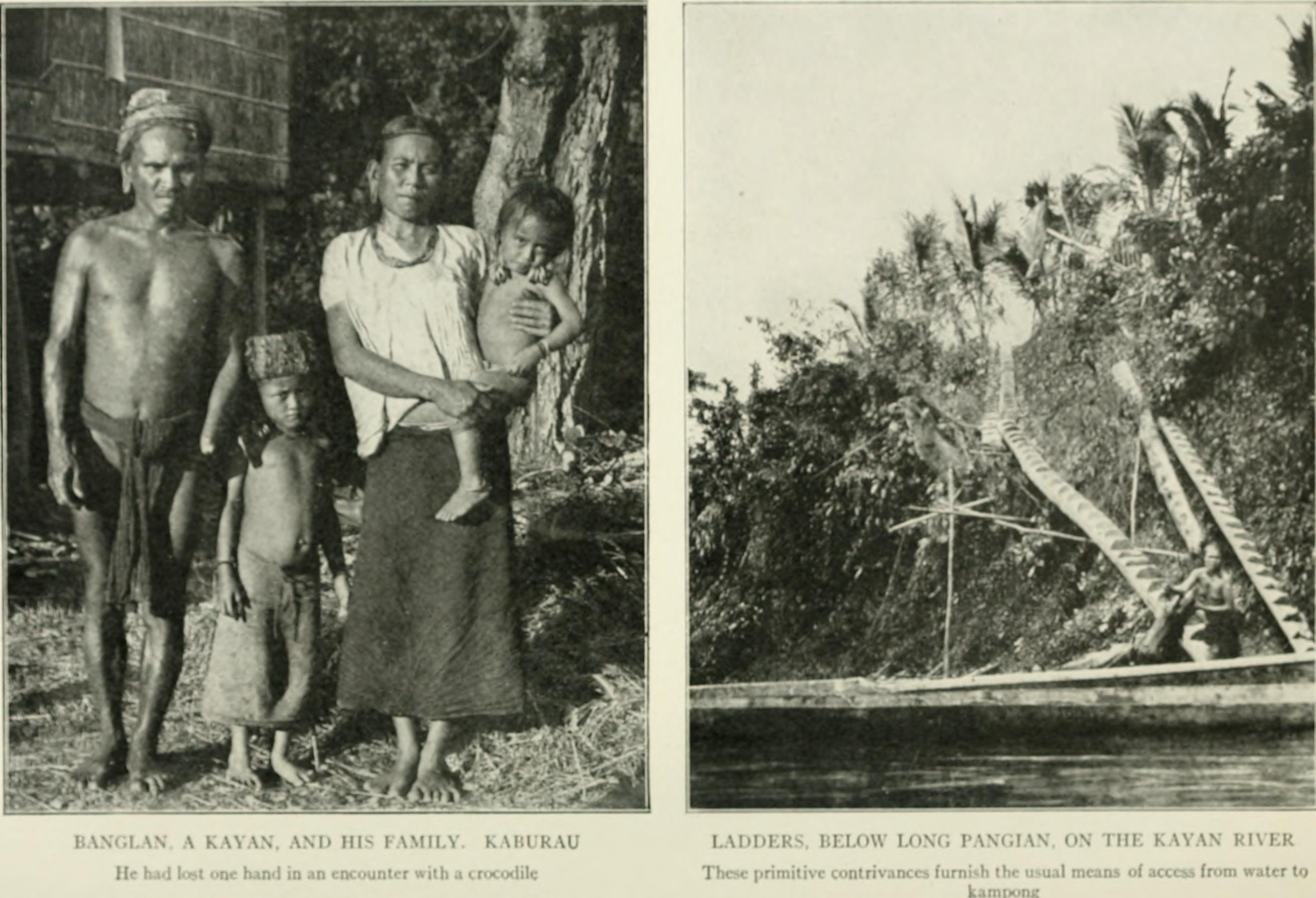
Of particular note was Carl Lumholtz’s documentation of Dayak tattooing practices. These were not ornamental flourishes but a sophisticated visual language. Motifs such as the durian pattern and the Tree of Life functioned as spiritual protection, markers of social status, and expressions of cosmology. In recording them, Carl Lumholtz preserved an entire symbolic system that might otherwise have vanished without trace.
Carl Lumholtz the Naturalist
Carl Lumholtz was not only an ethnographer. His scientific rigor extended deep into zoology. During the Borneo expedition, his collections led to the identification of previously undocumented species, including a new flying maki and two new subspecies of flying squirrels.
These discoveries cemented Carl Lumholtz’s standing as a serious naturalist, underscoring the ecological richness of Borneo’s interior and reinforcing a truth modern conservationists continue to emphasize: cultural diversity and biodiversity are inseparable.
Why Carl Lumholtz Matters Now
A century later, Carl Lumholtz’s work has acquired renewed urgency. His records are no longer historical curiosities; they are baseline data for a region undergoing seismic transformation.

The development of Nusantara (IKN)—Indonesia’s new capital in East Kalimantan—has accelerated global attention on Borneo. Tourism to the region has surged, driven by eco-tourism, cultural travel, and a global appetite for authenticity. In 2024, tourism contributed 10.41% to East Kalimantan’s Gross Regional Domestic Product (GRDP), a striking figure for a sector often dismissed as supplementary. Across the border, the Malaysian state of Sarawak generated RM 12.45 billion in tourism revenue in 2024, equivalent to approximately SGD 3.6 billion at current exchange rates.
Preservation Versus Progress
Carl Lumholtz’s documentation exposes the central tension shaping modern Borneo. The very communities he studied now stand at the front lines of environmental conflict. Indigenous Dayak groups continue to raise alarms over land appropriation, deforestation, and the erosion of Hutan Adat—customary forests integral to both cultural survival and ecological balance.
Carl Lumholtz recorded these systems not as folklore, but as functional, adaptive knowledge frameworks. His work demonstrates that so-called “primitive” societies possessed sophisticated environmental intelligence—wisdom modern policymakers frequently ignore in favor of extractive development models.
Cultural Heritage as Economic Strategy
The preservation of intangible heritage—rituals such as the Hudoq ceremony, oral histories, and artistic traditions—is no longer merely a moral imperative. It is an economic strategy. High-value, responsible tourism thrives on authenticity, continuity, and narrative depth—precisely what Carl Lumholtz’s work substantiates.

For international visitors, Borneo offers more than scenery. It offers a living archive that challenges Western assumptions about civilization, progress, and sustainability. The question facing the region is stark: will industrial expansion erase this cultural capital, or will it be cultivated as the foundation of a resilient, future-facing economy?
A Legacy That Demands Action
Carl Lumholtz did not set out to shape Southeast Asia’s future. Yet his meticulous documentation now forces a reckoning with the region’s present. His work reminds us that once culture is lost, no amount of capital can resurrect it.
The legacy of Carl Lumholtz is not nostalgia—it is instruction. It urges governments, investors, travelers, and readers alike to recognize that Borneo’s greatest asset is not hidden beneath its soil, but living within its people. To explore that legacy more deeply—and to understand why it matters now more than ever—visit our homepage and continue the journey.
Sources:
[1] Carl Sofus Lumholtz
[2] Journal of the Southwest
[3] THROUGH CENTRAL BORNEO
[4] Tourism Visits to Borneo Post-IKN Have Indeed Surged
[5] Dissecting the Economics of Tourism and Its Influencing Variables—Facts on the National Capital City (IKN)
[6] Philippines, China, Singapore, Indonesia and Brunei Drive Sarawak’s Spectacular Tourism Growth in 2025 as Visitor Arrivals Near Two Million and Miri Emerges as a Borneo Travel Hotspot
[7] Indigenous Dayak sound alarm as palm oil firm razes orangutan habitat in Borneo
[8] “HUTAN ADAT” (INDIGENOUS FORESTS) AS A MODEL FOR SUSTAINABLE FOREST GOVERNANCE: A CASE STUDY OF THE DAYAK COMMUNITY IN BORNEO
[9] The Role of Regional Government in Preserving Intangible Cultural Heritage through Tourism: A Case of Kain Lunggi in Sambas, Kalimantan, Indonesia
Keywords: Carl Lumholtz Borneo Expedition, Carl Lumholtz Southeast Asia, Carl Lumholtz Dayak Culture, Borneo Indigenous Cultural Heritage, Central Borneo Ethnographic History, Dayak Traditional Ecological Knowledge, Borneo Sustainable Tourism Development, IKN Nusantara Cultural Impact, Southeast Asia Cultural Economy, Indigenous Heritage Economic Value, Borneo Environmental Cultural Preservation, Colonial Era Ethnographic Exploration, Carl Lumholtz Anthropological Legacy, Borneo Cultural Tourism Future, Indigenous Knowledge Southeast Asia


