


665km East Coast Rail Link hits 92 percent completion milestone
Malaysia’s ambitious East Coast Rail Link has moved a step closer to reality after a preview train run signaled tangible progress on one of Southeast Asia’s most closely watched infrastructure projects.
Preview Run Marks Major Milestone
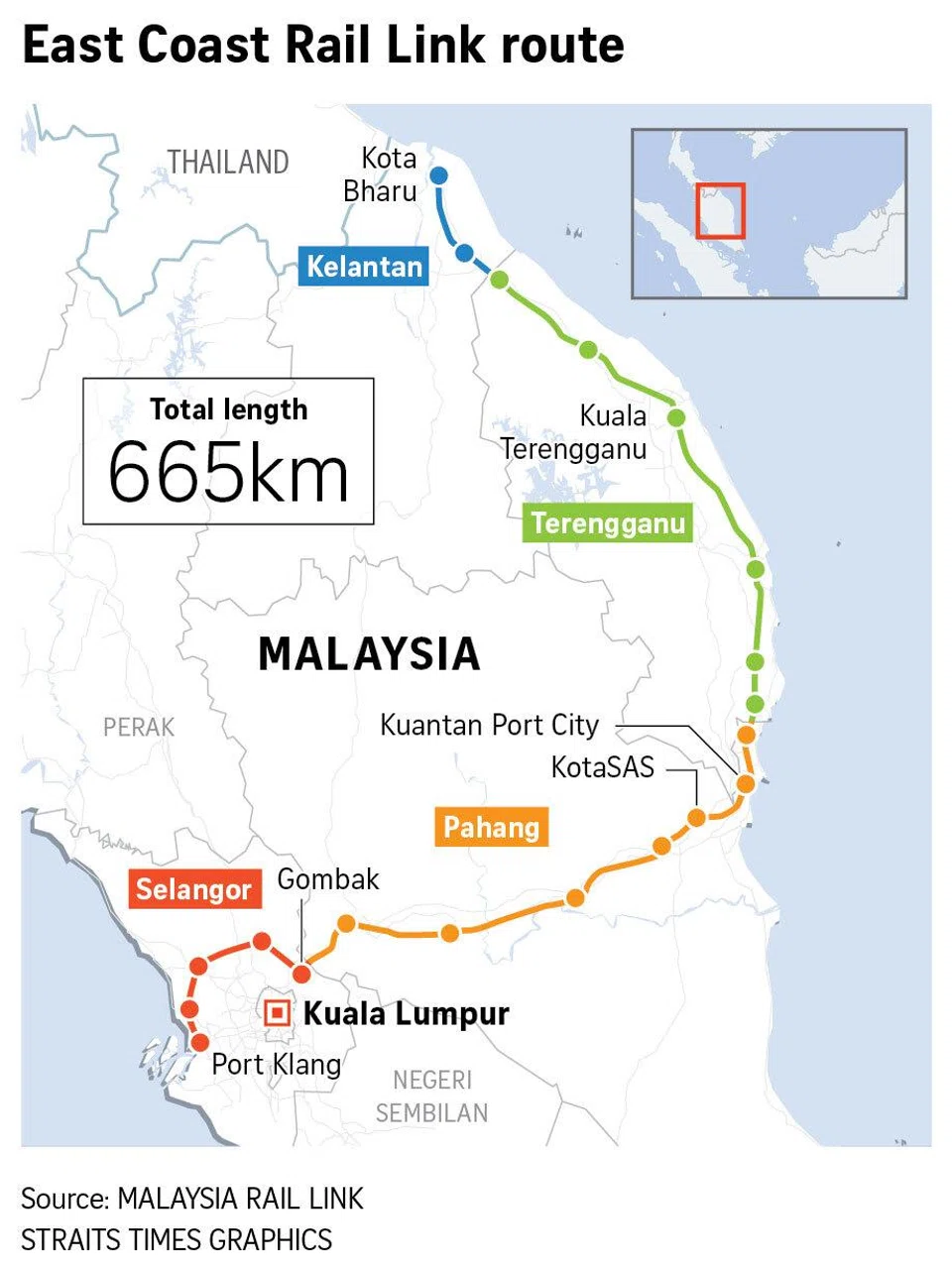
Malaysia’s East Coast Rail Link staged a preview run on Feb 11 using newly delivered trains from China, reaffirming that the project remains on track for a 2027 launch. Transport Minister Anthony Loke said the 665km railway is nearly 92 percent complete, marking significant progress toward linking Kuala Lumpur with Kuantan, Kuala Terengganu, and Kota Bharu.
Speaking at the preview event in Kuantan, Loke described the upcoming service as a transformative moment for Malaysia’s transport system. He stated that within 11 months, the first passenger train is expected to run from Gombak to Kota Bharu, connecting the western and eastern coasts more efficiently than ever before.
Introducing the CR200J Trainset
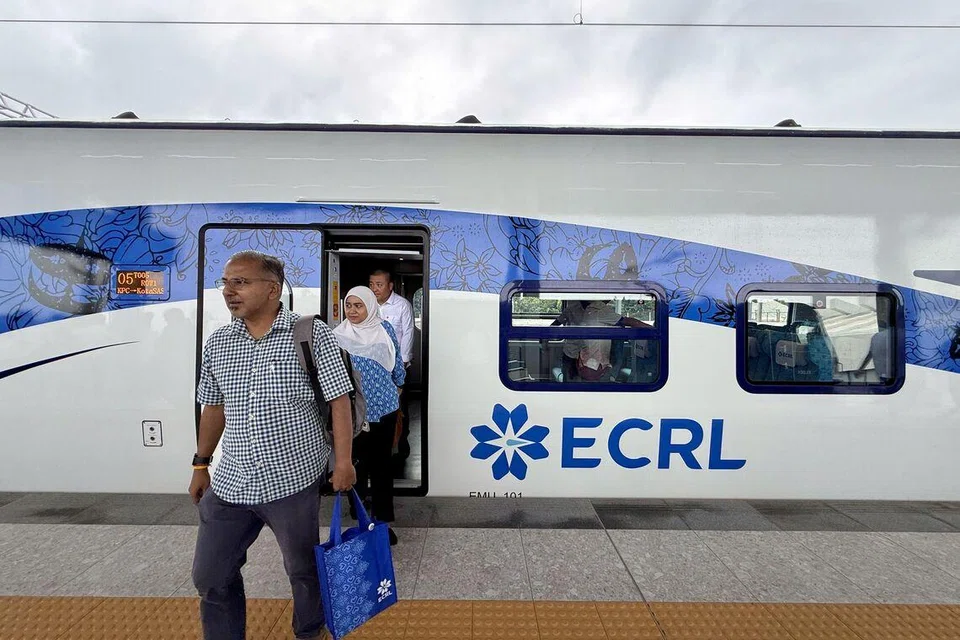
The preview also introduced the Chinese-made CR200J trainset to Malaysia. The demonstration run covered approximately 20km between KotaSAS, or Kota Sultan Ahmad Shah, and Kuantan Port City.
Communications Minister Fahmi Fadzil, who toured the train alongside Chinese Ambassador Ouyang Yuying, highlighted the spacious interior. He described the coaches as less claustrophobic, noting their increased size and comfort compared to existing services.
A Shift to Standard Gauge
The ECRL represents a significant technical shift for Malaysia’s rail network. Unlike the national operator Keretapi Tanah Melayu, which uses a narrow 1,000mm gauge, the ECRL operates on a 1,435mm standard gauge.
This allows coaches to be about 30cm wider, offering five seats per row instead of four on KTM’s Electric Train Service. Each seat provides ample legroom and a full-sized power socket, and the trainset includes a dining car that will be operational once services begin.
Cutting Travel Time to the East Coast
For residents of Kelantan, Terengganu, and Pahang, the new line promises dramatic reductions in travel time. Malaysia Rail Link estimates the journey from Gombak to Kota Bharu will take four hours and 45 minutes.
Currently, the same trip by road typically takes around six hours and can exceed 12 hours during festive periods. Travelers like Kuala Lumpur-based marketing executive Muaz Hussin see the train as a more relaxing alternative, allowing passengers to rest or move around during the journey.
Economic and Strategic Impact
Owned by Malaysia Rail Link, a subsidiary of the Minister of Finance Incorporated, the project is expected to cost RM50.27 billion, equivalent to approximately S$16.2 billion. Launched in 2017 under China’s Belt and Road Initiative and built by China Communications Construction Company, the project is financed through loans from the Export-Import Bank of China.
The Malaysian government projects that the ECRL will boost the national economy by 3.8 percent over 20 years by improving cargo efficiency and stimulating industrial spillover effects. Loke also emphasized its role as a land bridge between Kuantan Port on the South China Sea and Port Klang on the Strait of Malacca.
Overcoming Political and Financial Hurdles
The ECRL faced uncertainty after Malaysia’s 2018 change of government triggered a cost and alignment review. The final project cost was confirmed in 2021 at RM50.27 billion.
Despite earlier delays, visible progress has restored confidence among locals such as Kuantan restaurant owner Hazri Mokhtar, who described seeing trains run on elevated tracks as an encouraging sign. Plans are also underway to connect the ECRL in Kelantan to the Trans-Asian Railway network via Thailand, strengthening Malaysia’s regional logistics ambitions.
The East Coast Rail Link represents more than a transport upgrade. It signals Malaysia’s long-term push to modernize infrastructure, deepen regional trade integration, and position itself as a strategic logistics hub in Southeast Asia. Improved connectivity between ports and inland cities could reshape supply chains across the region, including trade flows that matter to Indonesia and Singapore as key maritime and economic partners.
Sources: Straits Times (2026) , Malay Mail (2026)
Keywords: ECRL Malaysia, Anthony Loke Transport Minister, Malaysia Rail Link, CR200J Trainset, Kuantan Port, Port Klang Connection


