


Coordinated cyberespionage campaign tests Singapore’s telecom resilience and national digital security
A sophisticated cyberespionage operation targeting Singapore’s digital backbone has underscored how vulnerable even the most advanced nations remain to state-backed cyber threats.
Coordinated Attacks On All Major Telcos
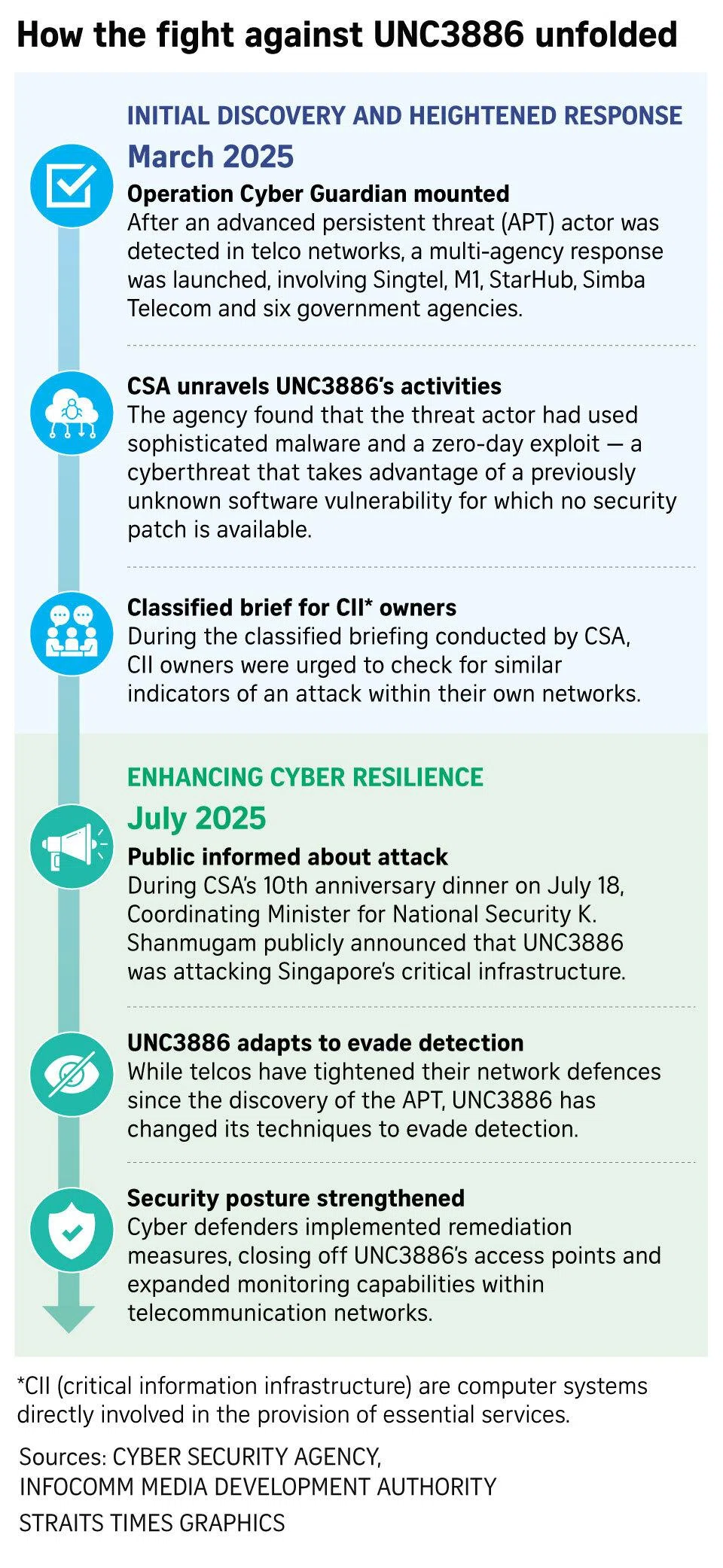
Singapore’s four major telecommunications providers, Singtel, StarHub, M1 and Simba Telecom, were all targeted by the state-sponsored cyberespionage group UNC3886. The attacks, first disclosed publicly in July 2025, were confirmed by authorities to be deliberate, targeted and carefully planned.
No Data Breach But Serious Risks
Minister for Digital Development and Information Josephine Teo said investigations found no sensitive customer data was accessed or exfiltrated. Critical systems, including 5G core networks, were also not compromised. However, attackers managed to extract a limited amount of technical data after breaching select systems.
Zero-Day Vulnerability Entry Point
According to findings shared on Feb 9, UNC3886 gained initial access through a zero-day vulnerability in perimeter firewalls. Mrs Teo described this as discovering a hidden key with no existing fix, allowing attackers to bypass conventional defenses before detection measures were activated.
Operation Cyber Guardian Mobilized
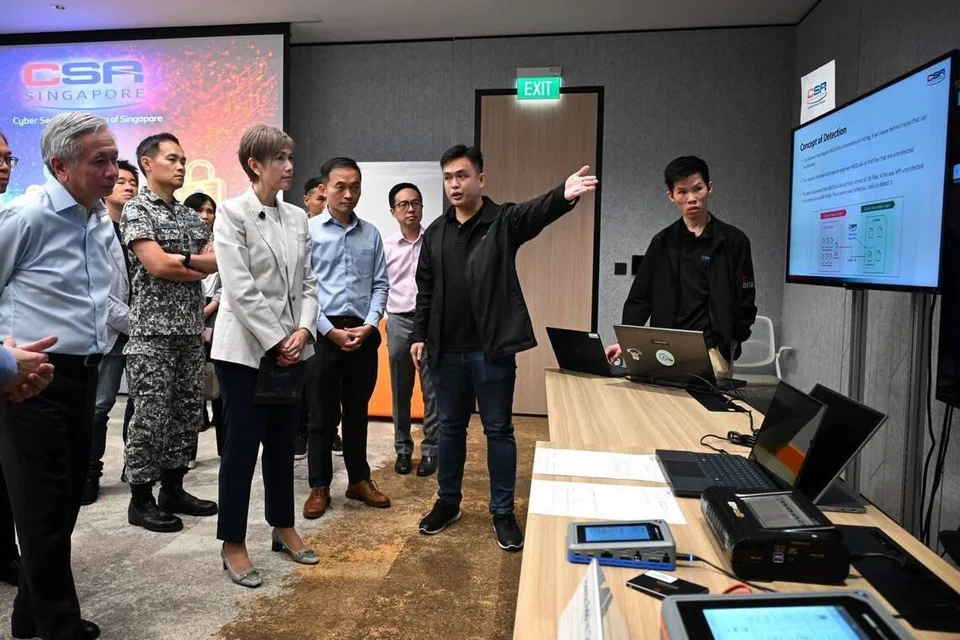
Suspicious network anomalies detected by telcos in March 2025 were promptly reported to the Cyber Security Agency of Singapore, even though they did not meet formal alert thresholds. This enabled the launch of Operation Cyber Guardian, Singapore’s largest coordinated cyberresponse involving over 100 cyberdefenders across six government agencies.
Global Context Raises Alarm
Authorities warned that compromised telecom infrastructure can have devastating consequences. Mrs Teo cited South Korea’s April 2025 breach involving SK Telecom, which exposed SIM data of nearly 27 million users, as well as US disclosures that APT group Salt Typhoon infiltrated multiple American telecom providers.
Economic And Strategic Implications
Successful cyberattacks could erode confidence in Singapore as a trusted financial, logistics and digital hub. Mrs Teo emphasized that multinational companies choose Singapore for its secure and reliable connectivity, and uncertainty around system integrity could deter future investments.
Ongoing Defense And Vigilance
Defensive measures now include enhanced detection, network redesign, system hardening and purple teaming exercises to test resilience. Despite these efforts, authorities cautioned that advanced persistent threats backed by nation-states will continue attempting to penetrate critical infrastructure.
The attempted breach of Singapore’s telecom networks highlights how cyber warfare increasingly targets essential services that underpin economies and daily life. For both Singaporeans and Indonesians who rely heavily on cross-border digital connectivity, the incident reinforces the urgency of sustained investment, cooperation and vigilance to safeguard regional digital security.
Sources: Straits Times (2026) , India Times (2026)
Keywords: Singapore Telcos, Cyber Espionage, UNC3886, Critical Infrastructure, CSA Singapore


