


Singapore’s National Gallery becomes Asia’s first Healing Arts Centre, reshaping health through culture.
Singapore is redefining how art supports public health. With two major recognitions in 2024 and 2025, the National Gallery Singapore is now a global leader in integrating arts into wellbeing, inspiring new care models across Asia.
A Global First for Museums
The National Gallery Singapore has become the first museum worldwide to earn the title Healing Arts Centre of Excellence, an accreditation awarded by the Jameel Arts & Health Lab in collaboration with the World Health Organization. It now stands beside institutions like Carnegie Hall and the Scottish Ballet, marking a powerful recognition of the role museums can play in supporting public wellbeing.
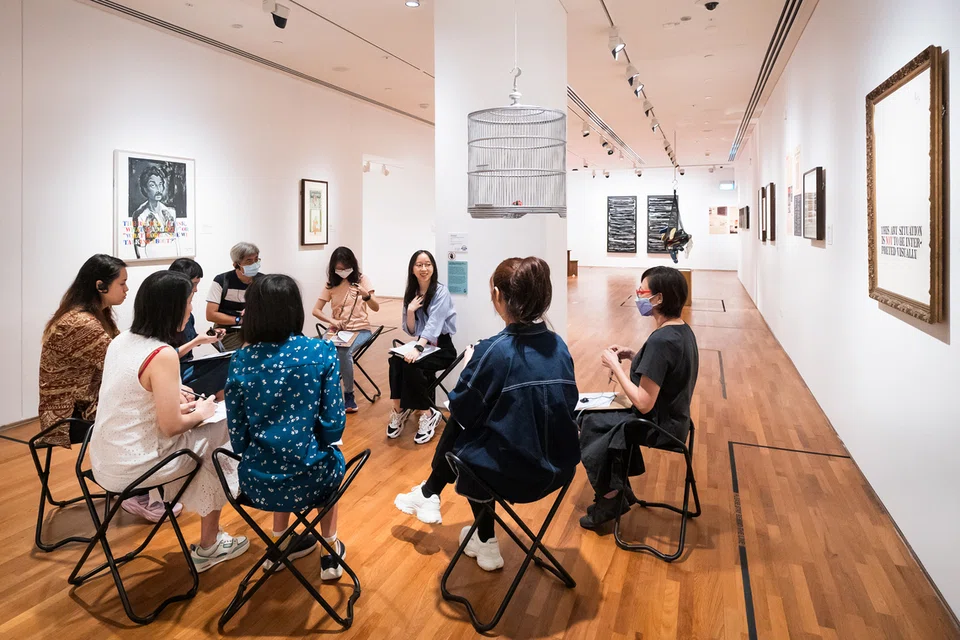
The gallery was evaluated on its inclusive programming, expert team, and consistent outreach to underserved communities. Its offerings include Slow Art sessions, tactile collections, specialised tours for blind and low-vision visitors, dementia-friendly programmes, and a sensory calm room with adjustable lighting and weighted blankets.
Strengthening Singapore’s Arts-and-Health Ecosystem
Beyond recognition, the gallery’s designation signals the beginning of a multi-year national initiative. Healing Arts Singapore, launched on December 8, aims to embed arts-based approaches within systems of care across hospitals, community centres, and cultural institutions.
According to deputy director Alicia Teng, the gallery now serves as an anchor institution in Singapore’s arts-and-health landscape. This effort is co-led by partners including the National University of Singapore’s Centre for Music and Health, the Nanyang Academy of Fine Arts, and the Jameel Arts & Health Lab.

Why the World Is Turning to the Arts
Founding co-director Stephen Stapleton noted that during the pandemic, individuals instinctively turned to art for emotional stability. This insight inspired the creation of global Healing Arts initiatives, which now seek to bridge gaps between scientific, cultural, and policy communities.
A growing body of research supports the movement. A 2019 WHO review of over 3,000 studies found strong links between arts engagement and reduced stress, healthier behaviors, and lower risks of anxiety and depression. More recently, an October 2025 study in the British Journal of Psychiatry showed that group singing substantially reduced symptoms of postnatal depression for up to six months.
Bringing Art Beyond Museum Walls
The National Gallery is expanding access by collaborating with community care partners. A recent 10-week pilot with All Saints Home adapted the gallery’s Art with You programme for eldercare settings, offering creative engagement for residents living with dementia. Staff were trained to use curated artworks to spark interaction, with highly encouraging feedback.
The gallery plans to replicate this model with more social service organisations, bringing arts-based wellbeing directly into familiar community environments.
Shaping Policy Through Evidence
To embed the arts into healthcare systems, Stapleton stressed that measurable outcomes are essential. The Jameel Arts & Health Lab will begin selecting two to three pilot programmes in Singapore by mid-2026. These pilots will be evaluated over two years and their outcomes may inform future national health policies.
If successful, some initiatives could be adapted across the Western Pacific region, where WHO officials say social prescribing is becoming a critical tool to address mental health challenges, loneliness, and social isolation.
A Regional Blueprint for Arts and Wellbeing
Experts believe museums have untapped potential as anchor institutions that support community wellbeing much like schools or clinics. Dr Nisha Sajnani of the Jameel Arts & Health Lab highlighted the National Gallery’s approach as grounded in “creativity and care and rigour,” emphasising its thoughtful evaluation methods and culturally rooted programming.
The initiative aims not only to transform Singapore’s healthcare ecosystem but also to set an example for Southeast Asia, where arts-based therapies and community interventions are gaining momentum.
Singapore’s elevation of the National Gallery as a Healing Arts Centre of Excellence signals a broader shift in how societies understand health. By integrating art into clinical care, community programmes, and policy frameworks, both Singapore and neighbouring Indonesia stand to benefit from a more holistic and accessible approach to wellbeing that strengthens social connection and supports mental resilience across urban communities.
Sources: Channel News Asia (2025) , Straits Times (2025)
Keywords: Healing Arts Centre, National Gallery Singapore, Public Health Integration, Arts and Wellbeing, Jameel Arts And Health Lab


