


Facing farm closures and rising costs, Singapore resets its local food production targets to 2035.
Singapore has dropped its “30 by 30” food security goal and set new 2035 targets for fibre and protein production, reflecting a more realistic path toward resilience amid high costs, farm closures, and shifting global food dynamics.
From ‘30 by 30’ to Targeted Goals
Singapore’s original plan to produce 30 per cent of its nutritional needs locally by 2030 has been replaced with category-specific goals by 2035. Minister for Sustainability and the Environment Grace Fu announced the shift at the Asia-Pacific Agri-Food Innovation Summit on Nov 4, unveiling targets for 20 per cent of local fibre and 30 per cent of local protein production. Fibre includes leafy and fruited vegetables, bean sprouts, and mushrooms, while protein covers eggs and seafood.
In 2024, the Republic produced just 8 per cent of fibre and 26 per cent of protein consumed locally, according to the Singapore Food Agency (SFA). Fu noted that while the original goal inspired innovation, the nation’s land and cost constraints demanded a more focused approach.
The State of Local Farming
Local agriculture continues to face steep challenges. Only 1 per cent of Singapore’s land is reserved for farming, and many high-tech agri-firms—like VertiVegies and I.F.F.I.—have shut down or scaled back operations. Sea-based farms also declined, with 25 per cent exiting in 2024 due to rising costs and tighter regulations.

SFA data shows that in 2024, just 3 per cent of vegetables and 6.1 per cent of seafood consumed were farmed locally, though eggs fared better at 34.4 per cent. Despite setbacks, the government highlighted notable progress in productivity—vegetables by 10 per cent, seafood by 17 per cent, and eggs by 50 per cent since 2019.
A New Four-Pillar Strategy
Fu outlined a refreshed four-pronged food security framework:
- Diversifying Imports: Maintaining a wide network of over 180 source countries.
- Local Production: Supporting urban and coastal farms to boost output.
- Stockpiling: Ensuring reserves of long-shelf-life essentials like rice and frozen meat.
- Global Partnerships: Strengthening government-to-government food trade agreements to prevent supply disruptions.
Recent agreements with Vietnam on rice and New Zealand on essential food items exemplify the new “global partnerships” pillar. This follows incidents like Malaysia’s 2022 chicken export ban, which underscored the need for diplomatic assurance in food trade.
Multi-Tenanted Farms for Cost Efficiency
To help local farms remain viable, SFA is studying a pilot multi-tenanted agri-food facility that will host multiple farm types—such as land-based aquaculture and greenhouses—under one roof. Shared utilities, logistics, and processing facilities aim to lower production costs and reduce start-up hurdles.
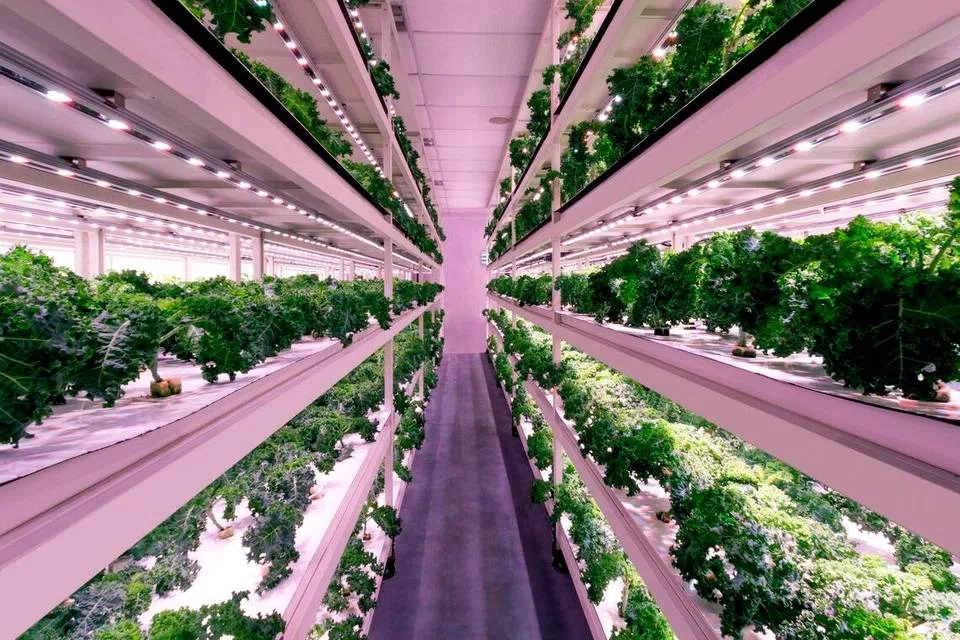
The feasibility study, expected to conclude within 18 months, could make Singapore a pioneer in multi-tenant agricultural hubs. “If production costs drop, local farmers can lower prices and increase sales,” said SFA chief executive Damian Chan. The initiative complements the delayed 390-hectare Lim Chu Kang high-tech agri-food hub.
The Future of Alternative Proteins
Despite its 2020 milestone as the first country to approve cultivated meat, Singapore’s alternative protein sector has stalled. High production costs and weak global consumer demand have tempered early optimism. Fu confirmed that cultivated and plant-based proteins will not factor into the near-term food security strategy, though R&D will continue in anticipation of future competitiveness.
Resilience Through Adaptation
Singapore’s recalibration of its food production goals signifies a strategic shift—from broad ambitions to practical sustainability. By coupling local innovation with regional cooperation, the city-state aims to safeguard food supply amid climate challenges and market volatility.
For Indonesia and Singapore, this renewed focus could open avenues for agri-tech collaboration, cross-border trade, and sustainable supply chain partnerships—ensuring both nations remain resilient in a changing food landscape.
Sources: The Business Times (2025) , CNA (2025)
Keywords: Singapore Food Agency, Grace Fu, Local Farms, Agri-Food Innovation, Fibre Production, Protein Supply


