


How Singapore engineered its leap to the top of the Happy City Index — and why its success story is both inspiring and deeply revealing for Southeast Asia’s future.
In a remarkable turnaround last week that has startled urban planners and policy experts worldwide, Singapore has catapulted from 34th to 3rd place in the prestigious Happy City Index for 2025, trailing only Copenhagen and Zurich.
This meteoric rise, announced last week by the London-based Institute for the Quality of Life, positions the island nation as Asia’s happiest urban center and the only Southeast Asian city to achieve “gold” status among the world’s top 31 metropolises. With a score of 979 points – just 60 points behind top-ranked Copenhagen – Singapore’s dramatic ascent raises profound questions about how we measure happiness in rapidly developing Asian societies and whether data-driven metrics truly capture the lived experiences of ordinary citizens across the region.
Behind the Numbers: Understanding the Happy City Index
The Happy City Index, now in its sixth edition, evaluates cities using an intricate methodology designed to capture the multidimensional nature of urban happiness. For 2025, the Index expanded its assessment framework to include 82 indicators across six major thematic categories: Citizens, Governance, Environment, Economy, Health, and Mobility.
“We firmly believe that data provide the clearest reflection of a city’s condition and quality of life,” states the Institute for Quality of Life in its methodology explanation. This data-driven approach allows for objective comparisons between vastly different urban environments, from Nordic social democracies to Asian developmental states.
The Institute’s researchers are careful to acknowledge the limitations of their methodology. “No single city can be labelled as the absolute best at ensuring the happiness of its citizens over the long haul,” they concede in the 2025 report. Instead, the Index aims to identify a group of “Gold Cities” that demonstrate excellence across multiple dimensions of urban well-being.
Within this framework, Singapore’s ascent from 34th place in 2024 to 3rd in 2025 represents one of the most dramatic year-on-year improvements in the Index’s history. This leap begs the question: what changed so dramatically in Singapore’s urban landscape in just twelve months?
Singapore’s Happiness Formula: Inside the City-State’s Success
The Institute’s assessment paints Singapore as “a global beacon of economic prosperity, governance, and urban innovation”. Breaking down the city-state’s impressive 979-point total reveals particular strengths in governance (192 points), economy (174 points), and citizens (210 points).
In the governance dimension, Singapore received high marks for transparency and civic engagement, with the report highlighting an “impressive” voter turnout in recent elections. The city operates an extensive open data platform with 8,086 datasets accessible to the public and has developed a seamless digital governance system that facilitates everyday transactions from fault reporting to online payments.
“Digital governance is seamlessly integrated into daily life,” notes the Index, praising Singapore’s e-services infrastructure. This digital transformation extends beyond government services to create a technology-enabled ecosystem where 55% of citizens possess advanced digital skills, and the innovation economy generates an impressive 7.37 patents per 10,000 residents.
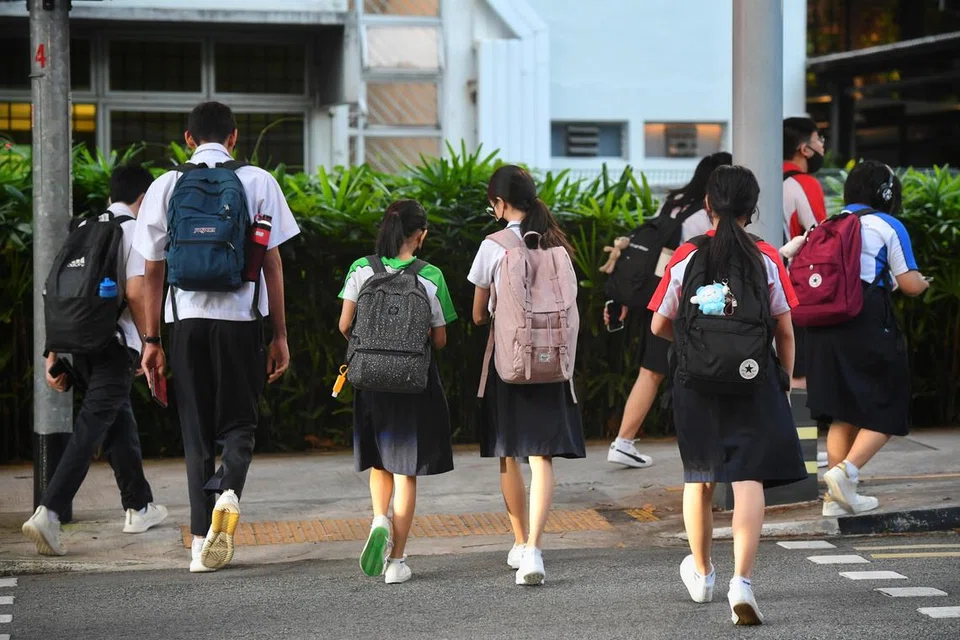
Education and linguistic capability further distinguish Singapore, with 63% of residents speaking at least one foreign language. The city’s universities rank in the global top 50, maintaining Singapore’s competitive edge in the knowledge economy.
Perhaps most striking is Singapore’s performance in the newly added Health category, where universal medical coverage, a life expectancy of 83 years, and accessible mental health services (reaching 15% of adults) helped the city achieve a strong score. Public safety metrics – with just 3.31 recorded incidents of public violence per 1,000 residents – further cement Singapore’s reputation as “one of the safest cities in the world”.
The city’s transportation infrastructure, described as “among the most advanced globally,” earned praise for its intelligent traffic management systems, fully accessible public transit options, and remarkably low traffic fatality rate of 0.24 per 10,000 residents. Meanwhile, environmental initiatives have ensured that 100% of Singapore’s population benefits from modern sewage treatment facilities, even as the Index acknowledges ongoing challenges in waste management and recycling.

The Regional Context: A Southeast Asian Outlier
Singapore’s stellar performance stands in stark contrast to its Southeast Asian neighbors. The next highest-ranked city in the region, Kuala Lumpur, appears at a distant 167th place, followed by Petaling Jaya at 183rd. Several Philippine metropolises make only modest showings, with Quezon City at 169th, Cebu City at 174th, and Makati City at 193rd.
This disparity illustrates the substantial development gap that persists across Southeast Asia, even as the region experiences rapid economic growth. While Singapore has successfully leveraged its advantages in governance, infrastructure, and human capital, other major urban centers struggle with challenges ranging from traffic congestion to environmental degradation.

Malaysia does celebrate its own happiness achievements on a national scale. Bintulu in Sarawak was recently recognized among Malaysia’s 20 Happiest Cities of 2025 under the country’s own Malaysia Happiness Index. The Malaysian index employs different criteria than its global counterpart, focusing on “stress levels, health conditions, family relationships, and level of satisfaction with regards to facilities and quality of services provided by local leaders”.
Indonesia, meanwhile, confronts its own urban happiness challenges. Jakarta continues to grapple with urbanization pressures, though recent years have seen decreasing numbers of post-Eid migrants settling permanently in the capital. The discourse around Indonesian cities increasingly pits global city aspirations against quality-of-life concerns, reflecting a growing awareness that economic development alone does not guarantee resident happiness.

The Happiness Paradox: Metrics Versus Lived Reality
Singapore’s dramatic rise in the Happy City Index comes with a fascinating paradox. Despite ranking as the world’s third-happiest city, ordinary Singaporeans are known for voicing significant concerns about cost of living, housing affordability, and work-life balance on social media and in public discourse.
“If there’s one thing we know about our fellow Singaporeans, it’s that we don’t hold back when it comes to voicing our displeasure,” observes a recent article in TimeOut Singapore, published shortly after the Happy City Index rankings were announced. The publication notes that “polling season or otherwise, one might consider Singapore a rather unhappy nation just based on the sort of commentary circulating on social media on a day-to-day basis”.
This apparent contradiction highlights the complex relationship between objective metrics and subjective well-being. While factors such as economic prosperity, efficient public services, and advanced infrastructure undoubtedly contribute to quality of life, they may not translate directly into felt happiness, particularly for those struggling with financial pressures or work stress.
“A high standard of living and a wide income divide aren’t mutually exclusive,” notes TimeOut Singapore, pointing to the challenges faced by the “sandwich class” and low-income residents “struggling to make ends meet”. These socioeconomic realities can create lived experiences that diverge significantly from the statistical portrait painted by happiness indices.
Indeed, in the separate World Happiness Report (which measures countries rather than cities), Singapore actually fell four places to 34th position in 2025 – its lowest ranking since the report began. This decline in the country-level measurement suggests that broader happiness metrics may capture dimensions of well-being that city-focused indices miss.

The Genius Behind the Social Engineering of Happiness
Singapore’s impressive performance on the Happy City Index reflects decades of deliberate policy choices and careful urban planning. From its inception as an independent nation in 1965, Singapore has pursued what might be called the “social engineering of happiness” – a comprehensive approach to development that prioritizes efficiency, order, and material prosperity.
This approach has yielded undeniable benefits. Singapore’s remarkable transformation from a resource-poor island into a global hub for finance, technology, and education represents one of the most successful development stories of the past century. Citizens enjoy world-class healthcare, education, and public services in a safe, clean urban environment.
Yet the Singaporean model also comes with trade-offs that indices like the Happy City Index may not fully capture. High property prices, a demanding work culture, and persistent concerns about inequality shape the lived experiences of many residents. The pressure to succeed in a hyper-competitive society can take a psychological toll that isn’t easily measured by conventional metrics.
The city-state’s approach to governance also reflects a particular philosophy about what makes citizens happy. Singapore has long prioritized pragmatic solutions over ideological purity, emphasizing material outcomes over abstract principles. This approach has been remarkably effective at delivering tangible improvements in living standards, but it raises questions about whether happiness can – or should – be engineered from above.
Lessons for Regional Neighbors
Singapore’s happiness achievements offer valuable lessons for its Southeast Asian neighbors, even as they highlight the challenges of replicating such success in different contexts.
For Malaysia, Singapore’s experience suggests the importance of governance quality and public service delivery in promoting urban happiness. Malaysian cities like Kuala Lumpur (ranked 167th) and Petaling Jaya (ranked 183rd) could potentially improve their standings by focusing on digital government services, healthcare accessibility, and transportation infrastructure – areas where Singapore excels.
The Malaysian government’s existing happiness initiatives, such as the Malaysia Happiness Index that recognized Bintulu among the nation’s 20 happiest cities, indicate growing attention to quality-of-life metrics beyond economic growth. By incorporating more sophisticated measurement tools and broadening their definition of happiness to include factors like environmental sustainability and civic participation, Malaysian authorities could develop more holistic approaches to urban development.
Indonesia faces different challenges given its vast size and regional diversity. Jakarta’s struggles with urbanization and population management reflect the difficulties of balancing economic growth with livability in a sprawling megacity. Singapore’s experience with efficient public transit, green space preservation, and integrated urban planning offers potential models, although implementation in Indonesia’s complex political environment would require significant adaptation.
For both countries – and indeed for all of Southeast Asia – Singapore’s rise in the happiness rankings raises fundamental questions about development priorities. Should cities focus on “objective” happiness as measured by indices like the Happy City Index, or should they prioritize the subjective well-being expressed by residents themselves? Can the Singapore model be adapted to work in different cultural, political, and economic contexts? And perhaps most importantly, what aspects of the Singaporean approach should be emulated, and which might be reconsidered?
The Human Factor: Voices Behind the Numbers
To understand Singapore’s happiness paradox, one must look beyond statistical averages to the diverse experiences of individual residents. While the Happy City Index celebrates Singapore’s achievements in governance, healthcare, and infrastructure, these metrics can obscure significant variations in lived experience across different demographic and socioeconomic groups.
Take for example the younger generation of Singaporeans, who benefit from world-class education and technological connectivity but increasingly report concerns about work pressure, housing affordability, and social competition. The City Index’s indicators on education and digital literacy capture the advantages this cohort enjoys, but may miss the accompanying anxieties about future prosperity in an increasingly uncertain global economy.
Similarly, Singapore’s growing elderly population experiences the benefits of excellent healthcare and safe public spaces, yet many seniors report concerns about cost of living and social isolation. The universal medical coverage celebrated in the Index (reaching 100% of residents) undoubtedly improves quality of life, but doesn’t necessarily translate to subjective happiness for all beneficiaries.
Migrant workers, who form a significant portion of Singapore’s population, represent another group whose experiences may not be fully reflected in city-wide happiness metrics. While they benefit from the city’s safety, efficiency, and economic opportunities, their living conditions and work experiences often differ substantially from those of citizens and permanent residents.
These diverse perspectives remind us that happiness is ultimately personal and contextual – influenced not just by objective conditions but by expectations, comparisons, cultural values, and individual temperament. The impressive 979 points that Singapore scored on the Happy City Index represent a remarkable achievement in creating the conditions for happiness, but they cannot guarantee that every resident actually feels happy.

Beyond Metrics: Redefining Happiness in Southeast Asia
Singapore’s dramatic rise in the Happy City Index invites a broader conversation about how we define and measure happiness in Southeast Asia’s diverse cultural context. While Western conceptions of happiness often emphasize individual satisfaction and personal freedom, Asian philosophical traditions have historically approached well-being through different lenses – emphasizing harmony, family relationships, community connections, and spiritual fulfillment.
The Happy City Index, with its focus on measurable indicators like GDP, healthcare access, and digital services, may not fully capture these cultural dimensions of happiness. A truly comprehensive understanding of urban well-being in Southeast Asia would need to account for the region’s unique values and priorities, which sometimes differ from the Western models that inform international indices.
This perspective offers important context for interpreting Singapore’s third-place ranking. The city-state’s impressive performance on material and infrastructural indicators undoubtedly contributes to residents’ quality of life. Yet true happiness in the Southeast Asian context may also depend on factors that are harder to quantify – the strength of family bonds, the richness of cultural practices, the sense of belonging to a community, and the spiritual dimensions of everyday life.
For Singapore’s neighbors in Malaysia and Indonesia, this suggests that the pursuit of happiness need not follow a single template. While they can certainly learn from Singapore’s achievements in governance, infrastructure, and service delivery, they might also preserve and celebrate distinctive aspects of their own cultures that contribute to well-being in ways that international indices may not fully recognize.
Working on The Future of Happiness in Southeast Asia

As Singapore celebrates its remarkable achievement as the world’s third-happiest city and Asia’s happiest urban center, its experience offers both inspiration and caution for the broader Southeast Asian region. The city-state’s rise from 34th to 3rd place in just one year demonstrates the potential for dramatic improvements in urban quality of life when governments commit to data-driven policies and comprehensive approaches to city management.
For residents of Singapore, Malaysia, and Indonesia alike, the 2025 Happy City Index provides a valuable opportunity to reflect on what truly makes a city worth living in. Beyond the impressive statistics and international rankings lies the everyday reality of urban life – the morning commute, the neighborhood connections, the sense of safety and belonging, the balance between work demands and family time.
Singapore’s achievement shows that careful planning, efficient governance, and technological innovation can create the foundations for urban happiness. Its top ranking in Asia demonstrates that the region can produce world-class cities that compete with the best of Europe and North America in providing quality of life. This represents a significant milestone for a region that continues to work toward greater prosperity and well-being for its citizens.
Yet the apparent disconnect between Singapore’s stellar performance on happiness metrics and the everyday concerns voiced by many residents reminds us that happiness cannot be reduced to a simple formula or score. True well-being emerges from a complex interplay of material conditions, social connections, cultural values, and individual aspirations.
As Southeast Asia continues its remarkable development journey, the region has an opportunity to pioneer new approaches to urban happiness – approaches that draw on the best of global practices while remaining rooted in local cultures and priorities. Singapore’s success offers valuable lessons, but each city must ultimately find its own path to happiness that resonates with its unique history, culture, and aspirations.
The question for the future is not just whether more Southeast Asian cities can join Singapore among the world’s happiest urban centers, but whether they can develop distinctive models of happiness that truly reflect the region’s diverse values and experiences. In answering this question, Singapore, Malaysia, Indonesia, and their neighbors may contribute not just to their own citizens’ well-being, but to our global understanding of what makes a truly happy city in the 21st century.
Sources:
[1] Copenhagen, Zurich, and Singapore lead 2025 Happy City Index, while Hong Kong misses the list
[2] Indicators | #2025 HAPPY CITY INDEX
[3] Bintulu Among Nation’s 20 Happiest Cities – Sarawak Tribune
[4] Can you guess? These three Asian cities are officially among the happiest in the world
[5] Bintulu listed as top 20 happiest town in Malaysia | DayakDaily
[6] Singapore ranks as world’s 3rd happiest city, after Copenhagen and …
[7] Singapore Ranks 3rd in World’s Most Happy City Index 2025
[8] Happy City Index 2025: Singapore Ranks As Third Happiest City In The World, First In Asia
[9] S’pore named 3rd-happiest city in the world, also happiest city in Asia
[10] Becoming a Global City or a Happy City?
Keywords: Singapore Happiness Ranking 2025, Urban Well-being Southeast Asia, Smart Governance Digital City, Happy City Index Singapore, Smart Cities in Asia, Urban Planning in Singapore


