


How Jin’s “Don’t Say You Love Me” Music Video transforms Singapore’s landmarks into pop culture icons.
When a global icon like BTS’ Jin teams up with a nation’s tourism board, it’s not just a music video—it’s a paradigm shift. Released on 16 May 2025, “Don’t Say You Love Me,” the lead single from Jin’s second solo EP Echo, is more than a visual spectacle. It’s a cinematic tribute to Singapore, filmed across eight breathtaking locations that blend the city’s cultural gravitas with K-pop’s magnetic storytelling. In collaboration with BigHit Music and the Singapore Tourism Board (STB), this project represents a masterclass in city branding, soft power, and the evolving intersection of fandom, entertainment, and travel.
The Art of the Collaboration: K-pop Meets City Branding
Jin’s collaboration with the Singapore Tourism Board isn’t just strategic marketing—it’s a cultural blueprint. As one of the most recognisable names in global entertainment, Jin brings with him the rare ability to transform any location into a site of pilgrimage. With Echo, Singapore becomes not just a backdrop, but a co-star—an emotionally resonant stage for a story that millions around the world are now invested in.

According to Serene Tan, Executive Director for North Asia at STB, the goal was to showcase “Singapore’s charm as a travel destination in a highly engaging and relatable way.” The execution? Seamless. The MV’s emotionally charged visuals paired with Singapore’s iconic skyline create a narrative that feels both intimate and cinematic. This is tourism storytelling powered by fandom.
The rollout was meticulously crafted, with teaser drops and digital countdowns igniting global anticipation. This wasn’t merely a song release—it was a multi-platform event that blurred the lines between entertainment, marketing, and destination branding.
Cinematic Singapore: The Locations That Stole the Show
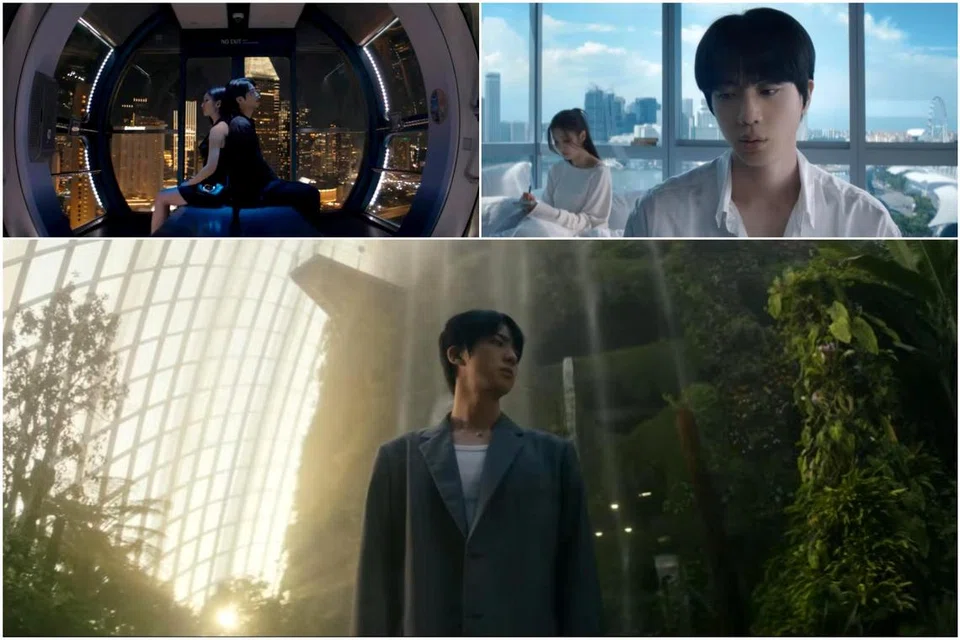
Every frame of “Don’t Say You Love Me” doubles as an invitation to explore Singapore. The lush, mist-filled Cloud Forest at Gardens by the Bay sets a dreamlike tone. The soaring views from Marina Bay Residences offer sweeping drama. At the National Gallery Singapore, Southeast Asia’s most significant art collection plays host to emotional beats between Jin and South Korean actress Shin Se Kyung—most notably in front of Raden Saleh’s historic painting Forest Fire, a nod to regional heritage.

Elsewhere, the music video captures the vibrant energy of Emerald Hill, the nostalgia-laden charm of Anderson Bridge, and the glowing elegance of the Singapore Flyer at night. The inclusion of Goldhill Plaza and the Michelin-recognised zi char favourite Keng Eng Kee Seafood grounds the story in local flavour—urging fans to step beyond the postcard-perfect and into the authentic.
This is tourism through narrative immersion: Singapore seen through the eyes of global stardom and emotional storytelling.
Storytelling with Global Stakes: Jin, Shin Se Kyung, and Emotional Tourism
At its core, “Don’t Say You Love Me” is a story of love and loss. Jin and Shin Se Kyung play estranged lovers navigating distance, memory, and unresolved emotion. But the cityscape of Singapore isn’t just a setting—it’s a narrative device. From an intimate high-rise apartment scene in Marina Bay to a final, silent ride on the Singapore Flyer, the locations mirror the emotional terrain of the characters.
BigHit Music’s spokesperson remarked that the project “beautifully brought together the charm of the local scenery and the message Jin hopes to share through his music.” For fans, these settings now carry emotional weight. These are no longer just tourist attractions—they are narrative touchpoints, loaded with meaning and memory. In essence, the video creates a form of emotional tourism, where audiences are compelled to visit not out of curiosity, but connection.
The Economics and Influence of K-pop Tourism
The numbers tell the story. Within hours of release, “Don’t Say You Love Me” surpassed 1.9 million YouTube views—just the beginning of its cultural ripple effect. In 2023, South Korea welcomed over 1.3 million tourists driven specifically by K-pop, a figure expected to surge as more artists integrate their storytelling with global destinations.
For Singapore, the stakes—and returns—are significant. Consider this: if a fan from Indonesia spends IDR 10,000,000 (approximately SGD 830) on a trip inspired by the music video, multiplied by thousands, the economic injection is staggering. With fans often willing to spend on luxury experiences, merchandise, and local cuisine, the ROI on pop culture tourism is unrivalled.
The STB’s previous campaigns with acts like SEVENTEEN and BTS’s J-Hope have laid the groundwork. But Jin’s Echo project marks a new high watermark—a full-fledged cultural activation that transforms fandom into foot traffic.
Critique and Complexity: The Future of Cultural Marketing
Despite its brilliance, this kind of tourism marketing is not immune to scrutiny. Detractors argue that such partnerships risk turning vibrant, complex cities into stylised backdrops—curated through the lens of celebrity rather than authenticity. There’s also the issue of sustainability: how do you manage waves of fandom-driven travel without diluting the very culture you’re promoting?
But for many, the results speak for themselves. When done with care, these collaborations can serve as cultural gateways—sparking interest, encouraging discovery, and deepening global appreciation. STB’s Serene Tan puts it succinctly: the aim is to “inspire travellers to visit Singapore” through “impactful storytelling”. It’s not just about what visitors see, but what they feel—and who leads them there.
Redefining Southeast Asia’s Role in the Global Imagination
Jin’s “Don’t Say You Love Me” isn’t just a music video—it’s a bold declaration of Southeast Asia’s place on the global cultural stage. It’s proof that cities like Singapore can co-create with global superstars, leveraging entertainment to tell stories that resonate far beyond borders.
In this new era, tourism is no longer about ticking off destinations—it’s about stepping into stories, about living moments that feel cinematic. As K-pop continues to dominate the cultural zeitgeist, expect more cities to follow Singapore’s lead. The message is clear: the future of global tourism belongs to those who dare to turn emotion into economy, and fandom into footprint.
Because when Jin sings in your city, the world listens—and then, it books a ticket.
Sources:
[1] BTS’ Jin partnered Singapore Tourism Board for music video shot in Singapore
[2] BTS’ Jin Films New Music Video At 8 Stunning Singapore Locations
[3] “Creative genius”— Internet in awe as BTS’ Jin kicks off solo comeback with massive ‘Echo’ release date reveal at COEX K-POP Square in Seoul
[4] 7 Tempat Ikonik Singapura dalam Video Musik Jin BTS
[5] BTS’ Jin’s Singapore music video: Here are all the filming locations for Don’t Say You Love Me
[6] BTS’s Jin’s new MV highlights S’pore iconic landmarks like MBS & S’pore Flyer
Keywords: BTS Jin Singapore Video, Jin Echo Music Video, Singapore K-pop Tourism Boom, K-pop Celebrity Travel Campaign, Jin Shin Se Kyung, BigHit Music Collaboration Singapore, STB K-pop Marketing Strategy, Singapore Tourism Through K-pop, Echo MV Filming Locations, Gardens By The Bay, Singapore Flyer BTS MV, Emotional Tourism K-pop Singapore, Pop Culture Travel Trends, Singapore City Branding Strategy, K-pop Fans Travel Guide


