


Despite record-high sea temperatures, only 5% of corals died after last year’s mass bleaching
Singapore’s coral reefs have shown remarkable recovery following the 2024 global bleaching event, with scientists estimating that just 5% of local corals succumbed to the marine heat stress.
Between May and October 2024, Singapore’s reefs endured their most intense coral bleaching since 2016, triggered by a marine heatwave linked to El Nino. But according to marine scientists, most corals have now recovered, with a mortality rate of only 5%. By contrast, earlier events in 1998 and 2016 saw coral losses of up to 20% and 10% respectively.
Bleaching was most visible at southern reef sites including Pulau Hantu, Kusu Island, Pulau Satumu, and Sisters’ Islands. At the peak in July 2024, 44% of coral colonies surveyed were reported bleached. But reef surveys by the St John’s Island National Marine Laboratory (SJINML) and researchers from the National University of Singapore show that most have bounced back by November.
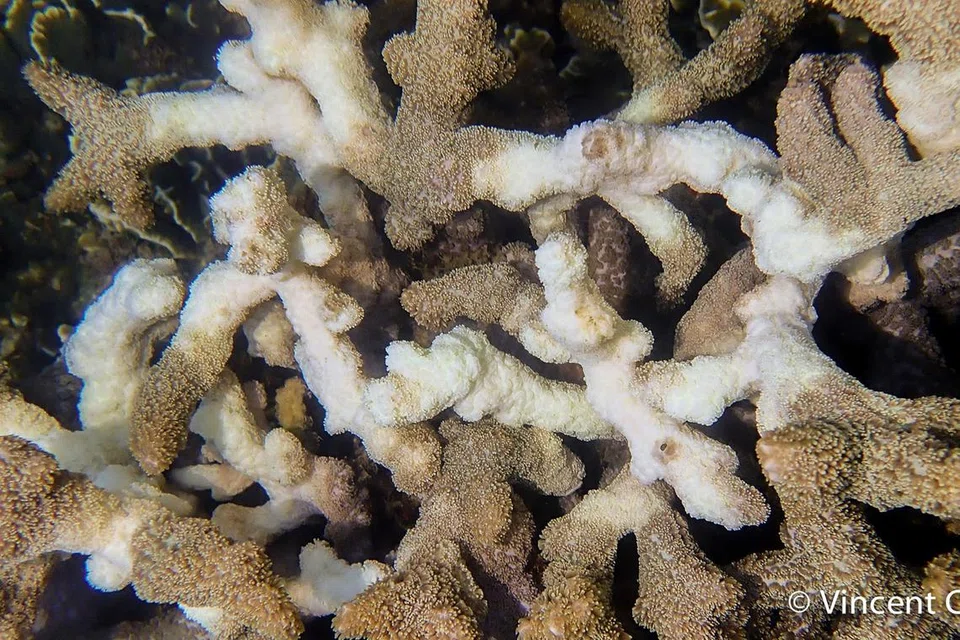
During the heatwave, sea surface temperatures reached between 30.84°C and 31.84°C—well above the ideal coral range of 23°C to 29°C. As of early 2025, temperatures have cooled to around 29°C, aiding coral recovery. According to Dr Jani Tanzil of SJINML, many corals outplanted for restoration research at Kusu Island have fully recovered.
Oil Spills Did Not Hinder Recovery
Concerns arose over a series of oil spills in mid-2024, but experts say immediate damage to corals was limited. “Most incidents occurred during high tide, and rapid response efforts helped minimise exposure,” said Dr Tanzil. Long-term ecological impacts, however, are still under study.
Coral Restoration and Resilience Projects
Singapore’s Marine Climate Change Science programme is accelerating efforts to build reef resilience. This includes bioengineering corals to survive temperature swings, and launching the 100,000 Corals Initiative in December 2024, which will propagate and plant corals across local waters until 2034.
Species Vulnerability Varies
Not all coral species respond the same to bleaching. Species such as Pocillopora acuta and Pachyseris speciosa were more vulnerable to severe bleaching and post-bleaching mortality. Scientists continue monitoring to understand species-specific responses and enhance coral restoration strategies.
Importance of Coral Ecosystems
Corals support one-quarter of marine life and act as natural barriers against coastal erosion. As climate threats mount, their survival is critical not only for biodiversity but also for carbon regulation and coastal protection. Singapore’s restoration work is a regional example of marine conservation in action.
Organizations like Tanjung Uma Empowerment Program (TUEP) in Batam and Livingseas Foundation in Bali embody the kind of grassroots resilience needed to combat these challenges. TUEP fosters sustainable communities through education, economic empowerment, and environmental initiatives, ensuring long-term viability for vulnerable regions. Meanwhile, Livingseas Foundation works to preserve and restore marine ecosystems by engaging local communities, a crucial step in mitigating the broader impacts of rising sea levels.
Singapore’s coral reefs have demonstrated surprising resilience in the face of a severe bleaching episode, recovering faster than in past crises. For coastal communities across Southeast Asia, the city-state’s science-driven approach to reef restoration offers an encouraging model for protecting marine ecosystems in a warming world.
Sources: The Straits Times (2025), CNA (2025)
Keywords: Singapore Corals, Coral Bleaching, Marine Heatwave, Climate Resilience, Coral Recovery, Marine Science, Biodiversity Protection, Reef Restoration


