


Consumers struggle to find cooking oil as retailers face months-long supply disruptions.
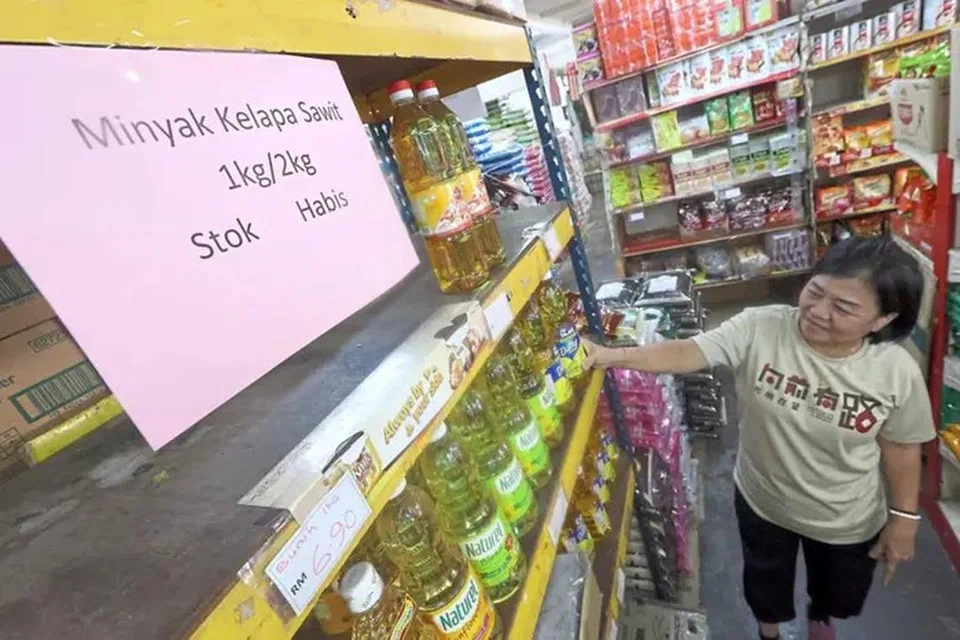
A severe cooking oil shortage has hit Johor, with 1kg and 2kg bottles of locally produced palm oil disappearing from supermarket shelves. Retailers and sundry shop owners report that supplies have been disrupted since January 2025, forcing consumers to turn to expensive alternatives. The crisis stems from surging global crude palm oil prices, which have led factories to scale back production due to government-imposed price controls
Johor consumers have been struggling to buy essential cooking oil as the supply of 1kg and 2kg bottles remains scarce. While subsidised packet cooking oil is still available, its limited stock has led to panic buying. The situation is further exacerbated by rising global crude palm oil prices, making production unprofitable for manufacturers under the government’s price control measures.
Retailers across Johor, including in Larkin, Tampoi, Pasir Gudang, and Kulai, have confirmed that the shortage of 1kg and 2kg bottles began in early 2025. Wong Kok Wai, a second-generation sundry shop owner and secretary of the Johor Federation of Grocery and Sundry Goods Merchants Association, revealed that suppliers have halted deliveries of these smaller cooking oil bottles for months.
“A 1kg bottle of palm oil is priced at around RM6.90 (SGD 2.10), while a 2kg bottle costs RM12.70 (SGD 3.80). However, our stock has been depleted for a long time. We still have alternatives like peanut, canola, corn, and sunflower oil, but those are nearly double the price of palm oil,” Wong said.
While subsidised RM2.50 (SGD 0.08) cooking oil packets remain available, demand has skyrocketed, making it difficult to keep up with consumer needs.
Factories Reluctant to Produce Cooking Oil
The primary cause of the shortage lies in the soaring price of crude palm oil, which has made government-controlled pricing unprofitable for manufacturers. The global market price for crude palm oil recently hit RM5,300 per tonne, a significant increase from its previous high of RM3,800 per tonne.
“Factories are reluctant to increase production because selling at government-controlled prices is not profitable,” Wong explained.
Despite the availability of 5kg bottled cooking oil priced at RM30.90 (SGD 9.55), supply is also limited. Wong has urged consumers to purchase only what they need to prevent unnecessary stockpiling.
Supermarkets Struggle to Maintain Supply
Major supermarket chains have also been affected, with their stocks of 1kg and 2kg cooking oil bottles running out faster than expected. Mas Imran Adam, general manager of a leading supermarket chain, noted that the supply issue began in December and worsened in January.
“We only received 25 per cent of our usual supply. If we normally get 1,000 tonnes, this time we only got 250 tonnes. Many of our branches are affected, and some outlets have only one type of cooking oil in stock, while others have none at all,” he said.
Supermarket owner Tiong Foo Kai highlighted that panic buying is exacerbating the shortage.
“Previously, our 250kg stock of packet cooking oil lasted a week. Now, it sells out within an hour. Even with a three-packet-per-person limit, customers are coming in groups to buy in bulk. We receive at least 2,000kg of cooking oil per month, so the supply is there, but the sudden surge in demand is overwhelming,” he said.
The Johor state government is aware of the cooking oil crisis and is working to resolve it. Johor Investment, Trade, Consumer Affairs, and Human Resources Committee chairman Lee Ting Han confirmed that the issue has been escalated to Johor Menteri Besar Datuk Onn Hafiz Ghazi.
“We will engage with the Domestic Trade and Cost of Living Ministry to explore solutions, such as channelling supply to more populated areas or adjusting the current supply and quota system,” Lee said.
The government is expected to implement measures to stabilise cooking oil supply in the coming months, though no immediate solution has been announced.
The ongoing cooking oil shortage in Johor highlights the broader impact of rising crude palm oil prices on everyday essentials. The crisis has left retailers and consumers frustrated, as limited supply and panic buying continue to drive up demand.
This situation serves as a reminder of how global commodity price fluctuations can directly affect regional economies. Singapore, which imports food products from Malaysia, may need to monitor potential supply chain disruptions and price increases.
Sources: Malay Mail (2025), The Straits Times (2025)
Keywords: Cooking Oil, Shortage, Johor, Palm Oil, Price Surge


