


Why Indonesia’s Tiny Homes for Gen Z Risk Becoming Urban Traps
Indonesia’s push for ultra‑compact tiny homes seeks to resolve a national housing crisis—but experts and residents warn cramped spaces may compromise health, dignity, and urban livability.
A Bold Gamble on Compact Living
Indonesia’s Public Housing and Settlements Ministry recently unveiled prototypes of highly compact homes—14 m² single-bedroom units on 25 m² plots and slightly larger 23.4 m² double-bedroom variants in Greater Jakarta, priced from Rp 100 million (US$6,121) to Rp 140 million. These units, featuring carports almost as large as living spaces, aim to offer affordable, minimalistic living within city belts like Bekasi, Depok, Tangerang, and Bogor.
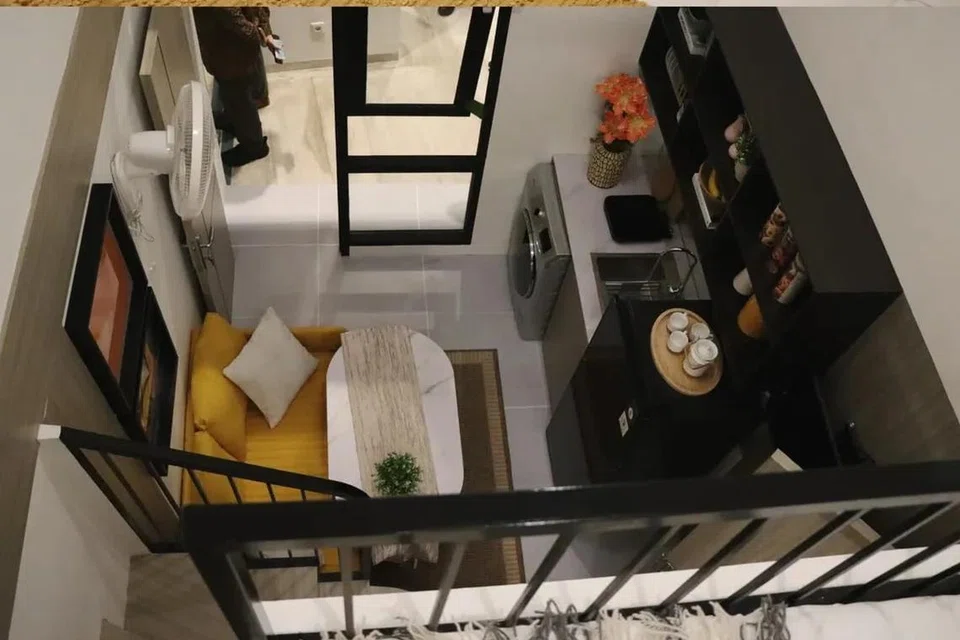

With nearly a 10‑million-unit housing backlog—80 percent in urban hubs—the government champions tiny homes as a practical, budget-friendly option to move low-income Gen Z and young professionals off crowded kost rooms and into formal ownership . Minister Maruarar Sirait clarified the proposal aligns with national standards emphasizing air volume per occupant, rather than raw floor area. But bold concepts do not win hearts without scrutiny.
Cramped, Regulated—or Both?
Voices from experts and civic groups are raising alarms. The Indonesian Empowered Consumers Forum (FKBI) called the units “a step backward” that undermine “the right to a decent home,” warning tiny homes jeopardize physical health, emotional stability, family life, and overall well‑being. Under current regulations, subsidized houses must cover at least 21 m² of floor area on a 60 m² plot, while UN‑Habitat recommends a minimum of 30 m² per home.

Urban planning experts like Anwar Basil Arifin argue that Jakarta’s housing crisis stems not purely from price but from flawed city design. He urges transit-oriented vertical building solutions that respect inhabitability and human dignity.
College student Rahma, who inspected a prototype in Depok, encapsulates growing discomfort: “I couldn’t even imagine stretching out comfortably … I’d rather rent a larger place”.
Lessons from Informal “Tiny” Settlements
What the government terms innovation is, critics argue, just legalizing extreme smallness under formal formats. Slum communities—kampung—have long responded to displacement by shrinking living spaces. Research at UI and AIP showed that for many kampung dwellers, tiny living meant survival, not a lifestyle choice.
Indeed, kampung homes often “have applied the tiny–living principle” in critical ways—but typically lack proper sanitation, ventilation, and regulations to ensure health and environment safety.
Other analyses confirm that government-built “simple housing” (rumah sederhana) often fails to meet safe, healthy, or accessible criteria due to inferior design and materials.
Physical and Psychological Costs of Confinement
Living in ultra-small homes has deep consequences:
- Health & hygiene: With just 14 m² of space, overcrowding, poor airflow, and low light become likely—breeding grounds for disease.
- Mental strain: Smaller, enclosed spaces correlate with stress, isolation, and sluggish psychological well-being.
- Social impact: Families need room to evolve—tiny homes snap shut when households grow or change roles.
- Urban blight: Should these homes become abandoned, degraded micro-neighborhoods could emerge.
This harks back to Jakarta’s periphery high-rise rusunawa: although intended as affordable housing, isolation from economic and community life often worsened livelihoods—up to 80 percent of relocated residents report job losses, debts, and depression.

Beyond Market Logic: Reclaiming Housing as Human Right
The drive toward 3 million homes meets numbers, not human needs. Critics emphasize the dangers of letting market pragmatism swallow dignity.

FKBI’s Tulus Abadi put it bluntly:
“We don’t need cheap homes that diminish the human spirit. We need decent housing that upholds dignity.”
The Ministry must also respond to presidential adviser Hashim Djojohadikusumo’s pushback. While Minister Sirait says Hashim now supports the plan, many see this as political expediency over design rigour.
Towards Human-Centered Alternatives
The solution isn’t selling down quality—it’s reimagining density. Scholars suggest:
- Transit‑Oriented Vertical Living: Move beyond land constraints by building modest, well‑designed walk‑up apartments near transit, balancing cost and access.
- Participatory Design: Empower future residents—especially youth and kampung communities—to co‑design living spaces that match real needs.
- Smart Tiny Homes with Health in Mind: Indonesia’s nascent “smart tiny house” research proposes biominimalist, digitally connected small homes—around 40–80 m²—with green spaces and mobility options, suited for millennials.
- Incremental Buildability: Patterned after kampung evolution—start small, add as needed—to avoid abandonment and ensure adaptability.
- Community Infrastructure: Pair dense housing with shared facilities—communal kitchens, playgrounds, co‑working hubs—so units feel bigger and more socially embedded.
Indonesia’s bold tiny-home push is ambitious—but scale must be matched by substance. Cramped, regulatory-defying units risk building affordable shells—but hollow lives. To avoid that, housing must anchor people: physically, mentally, socially.
Policymakers: pause the roll-out. Expert panels, community pilots, and health-based redesigns are essential. Don’t just adjust regulations—reassess the values at play. If we conclude that dignity and wellness cost more than a few extra square meters, then let’s grow upwards, communal, smart—all evidence-based.
Jakarta’s skyline should rise with ambition—not stack our youth into boxes. Tiny living only works if it’s part of a humane, connected vision. Let’s champion housing that elevates—not shrinks—our future.
Sources:
[1] Tiny homes for Indonesia’s young urbanites draw criticism over livability
[2] Tiny homes for Indonesia’s young urbanites draw criticism over livability
[3] Too Small to Live? Gov’t Says 14m² Homes Are the Future for Gen Z
[4] Investigating “tiny house” in urban Kampung: Sustainable living in tiny house
[5] Investigation “tiny House” in urban kampung: Sustainable living or responding to scarcity?
[6] Status of Livability in Indonesian Affordable Housing
[7] PERUMAHAN SMART TINY HOUSE UNTUK GENERASI MILENIAL DENGAN PENDEKATAN MOBILE ARCHITECTURE
[8] Distance matters: social housing for the poor
[9] Jakarta: Growing Population and Uninhabitable Living Conditions
Keywords: Tiny Homes Spark Debate


