


Changi cargo staff foil S$1.13 million rhino horn shipment in record Singapore bust.
Singapore has seized its largest-ever haul of rhinoceros horns at Changi Airport, exposing how global wildlife traffickers continue to exploit major air hubs—even as penalties and enforcement grow increasingly tough.
Record Rhino Horn Haul At Changi
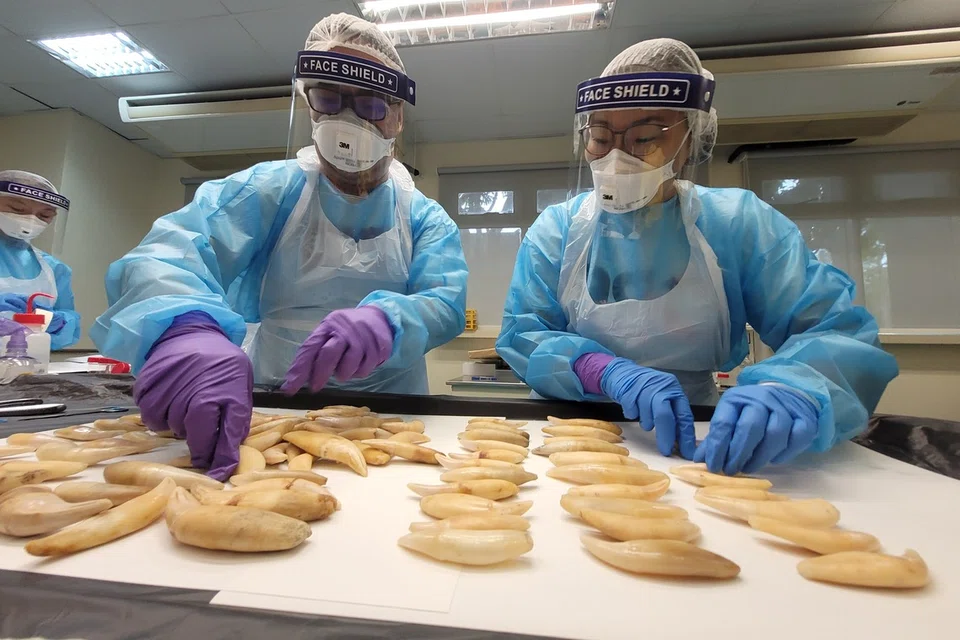
On Nov 8, authorities at Singapore’s Changi Airport intercepted 35.7kg of rhinoceros horns in transit from South Africa to Laos. The shipment, concealed in four cargo pieces falsely declared as furniture fittings, also contained about 150kg of other animal parts, including bones, teeth, and claws. The 20 rhino horns are worth around S$1.13 million (US$870,000), making this the largest rhino horn seizure in Singapore to date and surpassing a previous 34.7kg haul in October 2022.
How A Strong Smell Exposed The Scam
The smuggling attempt was uncovered thanks to the vigilance of SATS cargo staff during routine checks. Operations assistant Vengadeswaran Letchumanan noticed that one package was slightly damaged and emitting a strong odour similar to decomposing flesh. Sensing something was wrong, he escalated the issue to his duty manager, who activated SATS security. Under supervision, one cargo piece was opened, revealing animal parts, while the remaining three pieces were X-rayed and found to contain similar contents. Authorities later confirmed that the horns originated from white rhinoceroses (Ceratotherium simum) in South Africa.

Tougher Laws And Harsher Penalties
The seizure comes after Singapore strengthened its wildlife trade laws. Amendments to the Endangered Species (Import and Export) Act took effect on Nov 1, 2022, significantly increasing penalties for trafficking species listed under CITES Appendix I, which includes rhinos. Offenders now face:
- Fines of up to S$200,000 per specimen, capped at S$1 million
- And/or up to eight years’ jail
Previously, the maximum penalty was S$50,000 per species, capped at S$500,000, and/or up to two years’ jail. These tougher penalties build on earlier enforcement, including a 24-month jail sentence imposed on Jan 26, 2024 on South African national Gumede Sthembiso Joel for attempting to transit rhino horns through Singapore.
What Happens To The Seized Horns?
NParks and SATS said the horns will be disposed of according to CITES guidelines to prevent them from re-entering the black market and to disrupt the global supply chain for illegal rhino horn. The standard practice is incineration. At the same time, the Centre for Wildlife Forensics under NParks is conducting DNA analysis to determine how many rhinos were killed and to trace the animals’ origins. Singapore is collaborating with the University of Pretoria in South Africa, which maintains a rhino DNA database to help link horn shipments to specific poaching sites.
The Bigger Crisis: Rhino Decline And Wildlife Health
Conservation group International Rhino Foundation reports that the number of white rhinos in Africa fell to 15,752 by end-2024, down from 17,464 in 2023, underscoring relentless poaching pressure. Although rhino horns are often falsely believed to have medicinal properties, experts stress they are made of keratin, the same material as human hair and nails. Beyond threatening species with extinction, illegal wildlife trade also bypasses biosecurity controls, raising risks of disease transmission, habitat destruction, and wider environmental damage.
Singapore’s Zero-Tolerance Stance And Regional Responsibilities
As a major air transit hub, Singapore remains a key checkpoint in global trafficking routes between Africa and Asia. NParks emphasises that the Republic adopts a zero-tolerance approach to the illegal trade of endangered wildlife and works closely with multiple agencies and international partners. Training for cargo handlers now includes detecting fraudulent cargo declarations and spotting suspicious animal products. Authorities also stress that the public plays a crucial role by avoiding products made from endangered species and reporting suspected cases to NParks via cites@nparks.gov.sg
This record rhino horn seizure at Changi Airport highlights both the sophistication of transnational wildlife crime and the growing strength of Singapore’s enforcement. For Indonesians and Singaporeans, the case is a stark reminder that Southeast Asia sits at the crossroads of global trafficking routes. Stronger laws, vigilant frontline workers, and responsible consumer choices across the region will be critical to protecting endangered species, safeguarding ecosystems, and preventing illegal wildlife products from passing silently through our airports and markets.
Sources: CNA (2025) , Straits Times (2025)
Keywords: Rhino Horn Seizure, Singapore Wildlife Law, Changi Airport Smuggling, NParks Enforcement, Cites Appendix I


