


From July 1, Singapore-registered cars must have a VEP or face fines before leaving Malaysia
Starting July 1, Malaysia will begin strict enforcement of its Vehicle Entry Permit (VEP) policy for all Singapore-registered vehicles entering the country by land. Motorists without a valid permit and activated RFID tag will face RM300 fines and delays when exiting.
VEP Enforcement Starts July 1

Malaysia’s Transport Ministry has confirmed that full enforcement of the Vehicle Entry Permit (VEP) for Singapore-registered vehicles will begin on July 1, 2025. This marks the end of a phased rollout that began in October 2024. Any foreign vehicle entering Malaysia from Singapore without a VEP will now face a RM300 (S$90) compound fine, payable only via cashless methods at JPJ counters or through MyEG.
This enforcement was announced on June 4 by Transport Minister Anthony Loke, who emphasized that sufficient time had been given for registration, especially after public reminders in May 2024. The VEP was first proposed in 2017 but delayed several times due to administrative and pandemic-related reasons.
Who Needs a VEP?
All privately-owned and company-registered Singapore vehicles must register and activate their VEP RFID tag before entering Malaysia. The RFID tag enables Malaysian authorities to track foreign vehicles, especially for unsettled traffic summonses. As of June 2, only 36,511 out of 194,507 registered foreign vehicles have activated their RFID tags.

Enforcement teams will be deployed near the Causeway and Second Link to manage traffic and verify compliance. Authorities confirmed that drivers without a VEP must settle the RM300 fine and complete registration before exiting Malaysia.
Private vs Company Vehicles
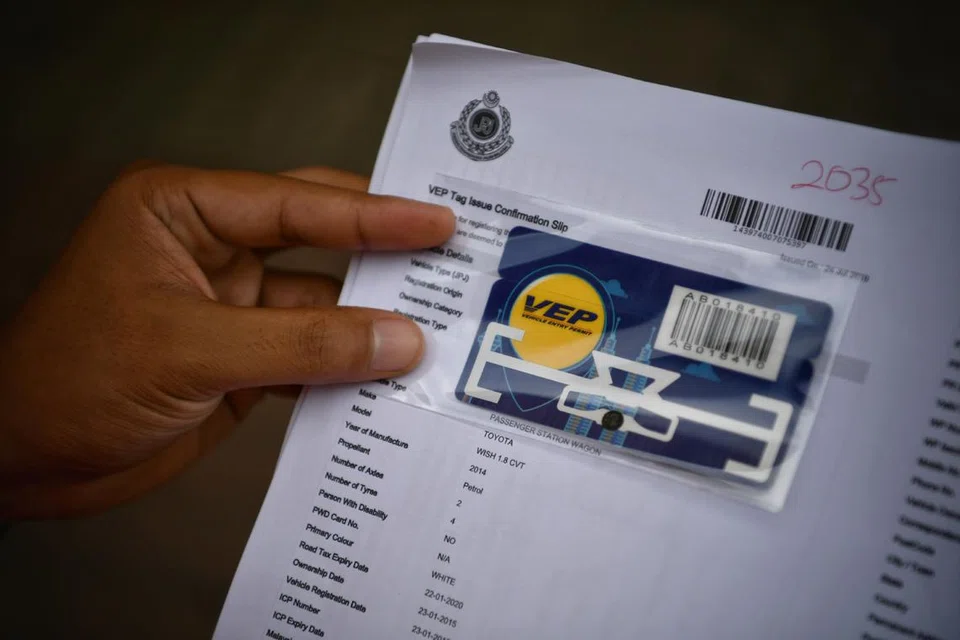
According to Mr. Loke, 231,018 privately owned Singapore vehicles have registered for the VEP, with 15% still needing to activate RFID tags. Additionally, 2,660 company vehicles have received the RFID tags. However, company vehicles with pending approvals will be allowed to exit Malaysia after receiving a reminder notice.
Mr. Loke acknowledged that private company vehicles have struggled with the complex registration, which requires extensive documentation. Still, unregistered vehicles will not be exempt from fines and must fulfill requirements before departure.
Surge in Registrations and Technical Issues
Malaysia’s appointed VEP vendor, TCSens, has reported a recent increase in applications, primarily driven by company vehicles. While registration rates peaked at 300–400 daily in early 2025, they have since declined to around 130 daily in April and May.
However, technical issues persist. Some motorists, like Ms. Zen Lee, reported being unable to log in or receive verification codes from the TCSens portal. Still, others, such as Mr. Jerry Yue, found the process quick and efficient, with some centers processing requests in under five minutes.
Enforcement Logistics and International Cooperation
The enforcement rollout is coordinated with Johor Chief Minister Onn Hafiz Ghazi to prevent congestion at key checkpoints. Minister Loke also expressed gratitude to Singapore’s Acting Transport Minister Jeffrey Siow for cooperation in the bilateral implementation.
Malaysia is also exploring a similar VEP enforcement system for vehicles entering from southern Thailand, signaling broader efforts to regulate foreign vehicles on Malaysian roads.
What It Means for Travellers

This policy is expected to have a direct impact on thousands of Singaporean drivers, including regular commuters, business vehicles, and tourists. Those who frequently travel to Johor Bahru must ensure their VEP registration and RFID activation are complete to avoid unnecessary fines or delays.
Foreign vehicle owners should act swiftly before July 1 to avoid congestion, penalties, and administrative hassle, especially given previous issues with the registration system and peak period queues.
Malaysia’s enforcement of the VEP requirement underscores a new era of stricter cross-border compliance. For Singaporean motorists and Indonesian observers involved in vehicle trade or regional transport logistics, this regulation highlights the growing need for digital border solutions and administrative readiness. The rollout may influence cross-strait travel habits and prompt similar future measures across ASEAN checkpoints.
Sources: Straits Times (2025) , NST (2025)
Keywords: Malaysia VEP Enforcement, Singapore Cars Fined, Vehicle Entry Permit Malaysia, RFID VEP Tags, JPJ Fines Singapore


